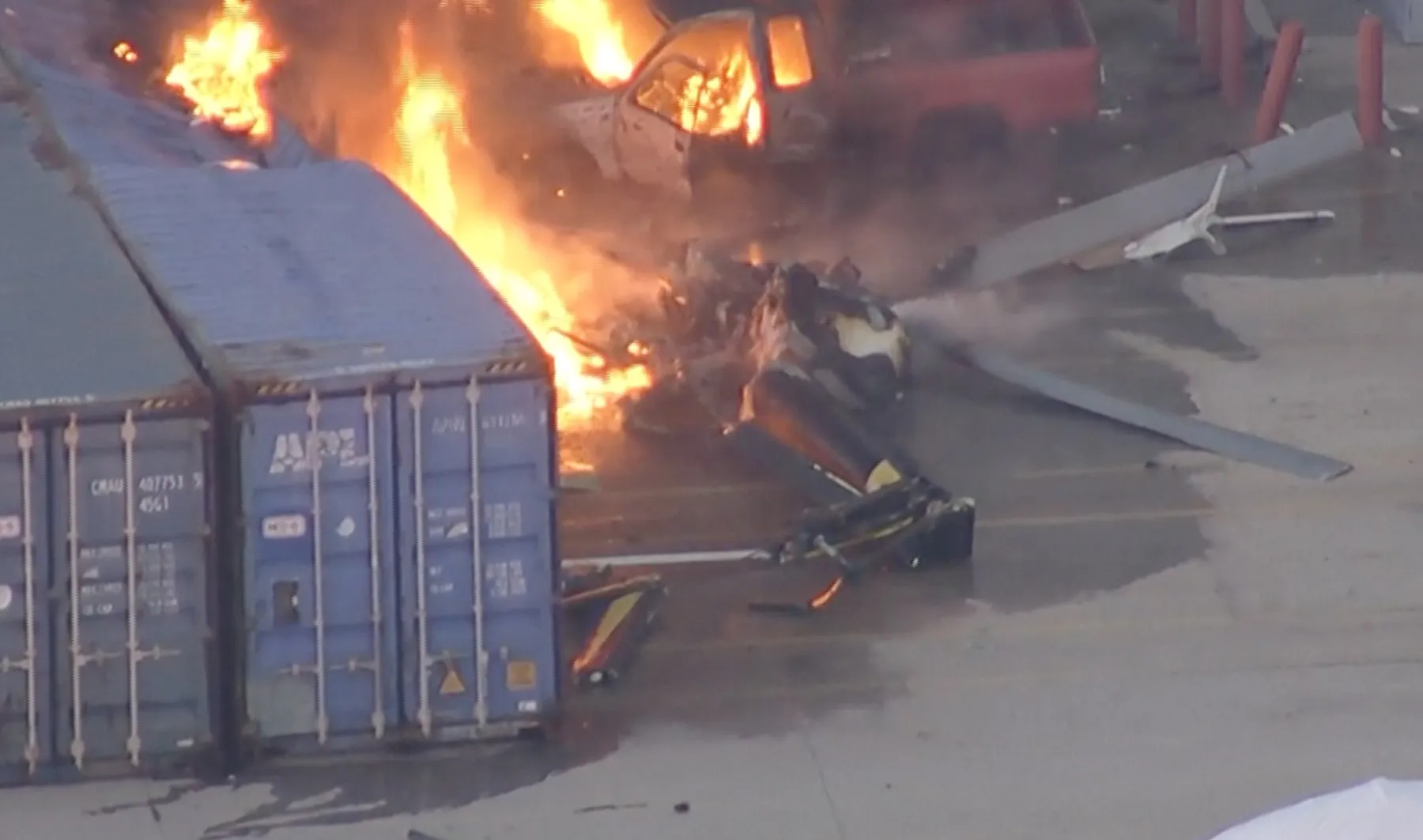
A fatal helicopter crash in Los Angeles has claimed the lives of three people while the news crew was reporting on a separate deadly accident.
A devastating aviation accident occurred in Los Angeles on Tuesday, resulting in the loss of at least three lives. The incident involved a helicopter operated ties. Emergency responders arrived at the scene shortly after the crash, but despite their immediate efforts, the impact proved fatal for several individuals on board.
In addition to those who perished, two other people were recovered from the wreckage and transported to local medical facilities for urgent treatment. The extent of their injuries remains a subject of ongoing concern as medical professionals work to stabilize their conditions. Authorities have cordoned off the area to secure the crash site and allow investigators to begin the complex process of determining what led to the catastrophic mechanical or operational failure.
The tragedy unfolded while the news team was documenting a separate, severe incident in the region. Prior to the helicopter crash, the crew had been dispatched to provide aerial coverage of a deadly bus collision that had occurred earlier in the day. The bus accident itself had already resulted in the loss of at least two lives, marking a particularly grim day for the Los Angeles community and local emergency services.
The convergence of these two separate tragedies has shocked the public and the media industry alike. Aerial reporting is a standard practice in major metropolitan areas like Los Angeles, where traffic congestion and sprawling geography often necessitate the use of helicopters to capture breaking news events. This incident highlights the inherent risks faced he public informed.
Following the crash, the National Transportation Safety Board (NTSB) and the Federal Aviation Administration (FAA) are expected to launch a comprehensive investigation. These federal agencies typically examine a wide array of factors, including weather conditions at the time of the flight, the maintenance history of the aircraft, and the pilot's communication logs with air traffic control. The recovery of the flight data recorder will be a critical step in piecing together the final moments before the impact.
Aviation safety experts note that urban environments present unique challenges for helicopter pilots, including the presence of tall buildings, utility lines, and unpredictable wind patterns. As investigators sift through the debris, they will be looking to see if mechanical issues, human error, or environmental factors played a primary role in the disaster. The findings of this investigation will likely influence future safety regulations and operational procedures for news organizations that utilize aerial reporting platforms.
The loss of life in such a high-profile manner serves as a somber reminder of the dangers inherent in news gathering. Colleagues, city officials, and the public have expressed their condolences to the families of the victims. The dual nature of the day—starting with a fatal bus crash and ending with a media-related aviation disaster—has placed an immense strain on local first responders who have been working around the clock to manage both scenes.
As the city processes these events, questions regarding the necessity of aerial news coverage in dangerous conditions may emerge. For now, the focus remains on the medical recovery of the survivors and the thorough investigation into the cause of the helicopter's downfall. The aviation community is closely watching the developments, as any systemic issues identified in the wreckage could lead to significant changes in how helicopters are maintained and flown for media purposes in the future.