

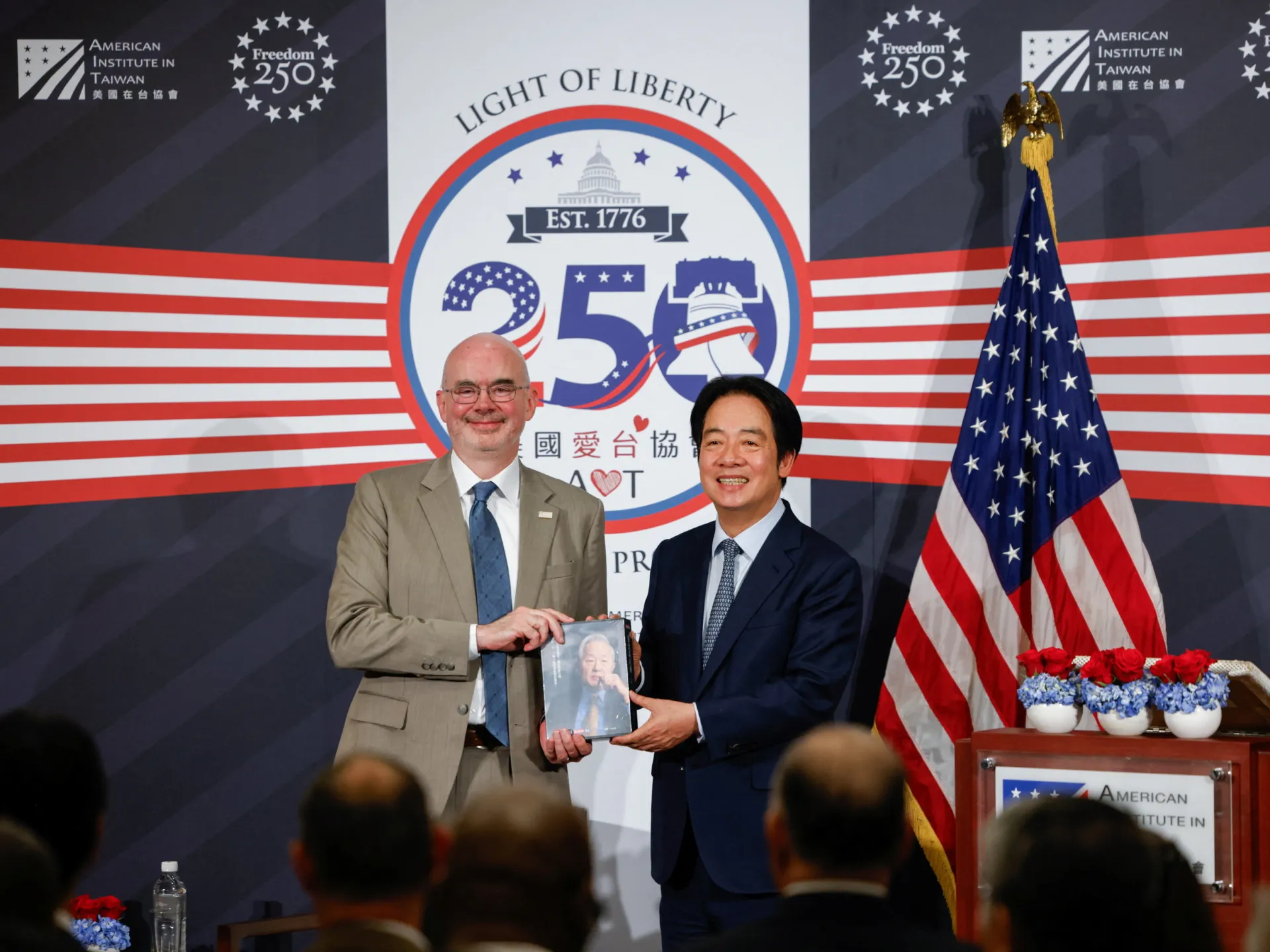
A senior US diplomat has warned that a military conflict in the Taiwan Strait would inflict more severe global economic damage than the Second World War.
The top United States diplomatic representative in Taipei has issued a stark assessment regarding the geopolitical stability of the Taiwan Strait. Raymond Greene, serving as the director of the American Institute in Taiwan, recently articulated that any military escalation in the region would trigger an economic collapse of unprecedented proportions. According to Greene, the fallout from such a conflict would exceed the global economic disruption experienced during the Second World War, highlighting the critical role the island plays in modern international trade and technology supply chains.
This assessment comes at a pivotal moment, as the global community monitors the fragile balance of power in the Indo-Pacific. The warning underscores the reality that Taiwan is not merely a regional flashpoint, but a central pillar of the contemporary global economy. Any disruption to the status quo would likely cause systemic shocks to financial markets, shipping lanes, and the production of advanced semiconductors that power the worldwide digital infrastructure.
With a high-level summit between United States President Donald Trump and Chinese President Xi Jinping approaching, officials are emphasizing the necessity of open communication channels. Greene noted that the upcoming meeting provides a crucial window to foster a relationship grounded in reciprocity and fairness. The primary objective of this diplomatic engagement is to mitigate the risks of miscalculations or misunderstandings that could lead to unintended military escalation.
The American administration has categorized the maintenance of peace in the Indo-Pacific as a primary national security objective. ramework for strategic stability. Such efforts are intended to move beyond rhetoric and create tangible mechanisms that prevent the type of friction that could spiral into a broader, uncontrollable conflict between global powers.
In addition to diplomatic overtures, the United States is actively working to bolster its presence and cultivate stronger partnerships throughout the Asia-Pacific region. This strategy is designed to preserve a favorable balance of power that discourages unilateral aggression. r can easily disrupt the peace through coercion or military force.
Part of this broader strategy involves the tangible enhancement of Taiwan’s own defensive capabilities. The United States continues to serve as the island’s most significant international supporter and primary provider of armaments. This support is intended to provide a credible level of deterrence, ensuring that any potential adversary must weigh the significant costs and risks of attempting to alter the regional status quo
The government in Taipei has responded to the growing regional threat environment Lai Ching-te’s administration has made national security a centerpiece of its policy agenda, recognizing that the island must be prepared to defend its democratic governance against external pressure. This commitment is evidenced
For the upcoming fiscal year, Taiwan has officially budgeted over 1 trillion Taiwan dollars—approximately 31.76 billion US dollars—for defense expenditures. This historic funding level represents the first time the island’s defense spending has breached this threshold. These resources are allocated toward upgrading military hardware and refining defensive strategies, signaling a clear intent to prioritize self-reliance in the face of persistent geopolitical challenges from Beijing.