

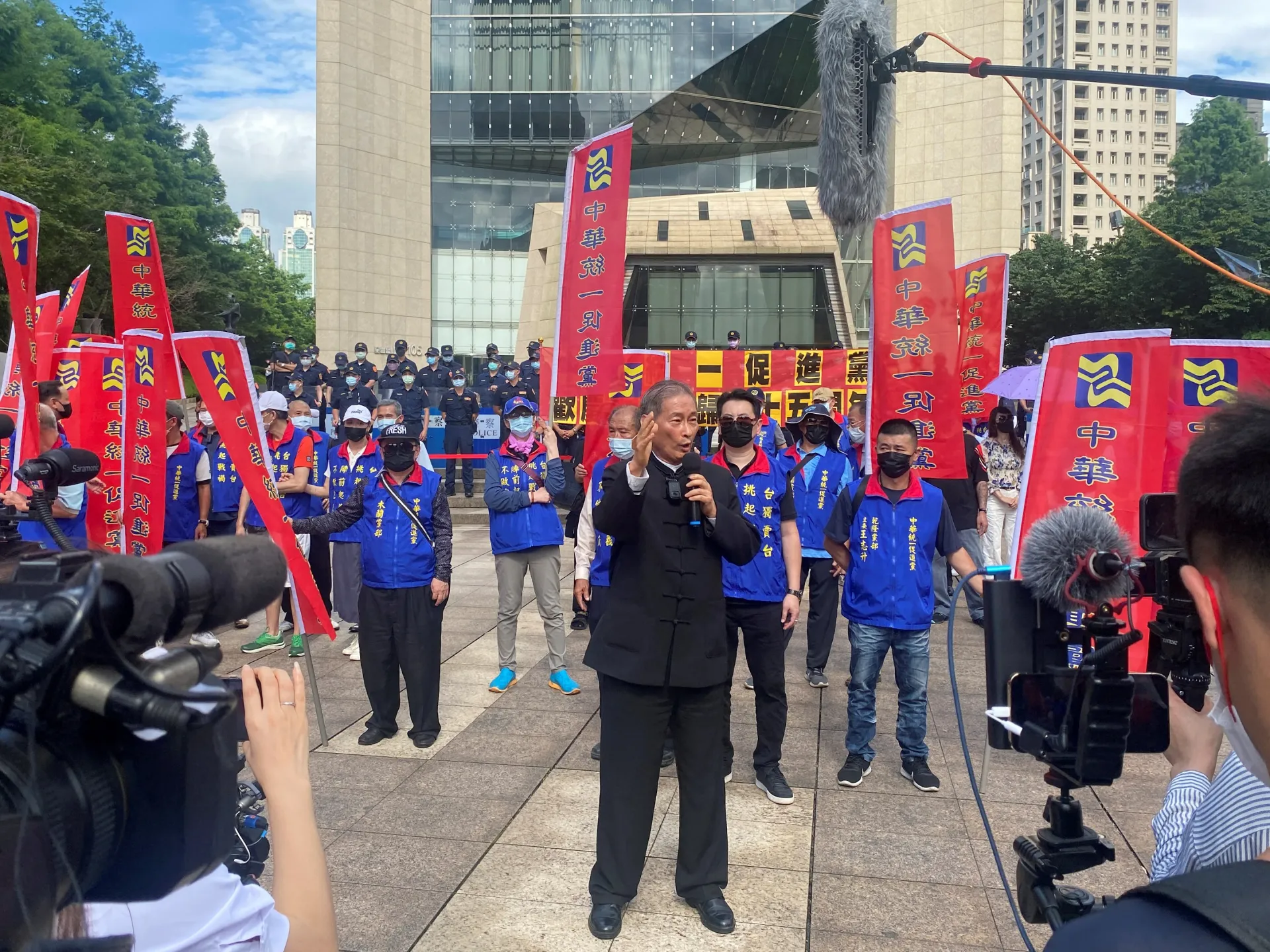
Taiwan is moving to dissolve the Chinese Unification Promotion Party, led by the controversial figure Chang An-lo, amid allegations of espionage and foreign interference.
Chang An-lo, popularly known as the “White Wolf,” has long been a lightning rod for controversy in Taiwan. As the founder of the Chinese Unification Promotion Party (CUPP), Chang has dedicated his political life to advocating for the reunification of Taiwan with mainland China. This stance puts him at odds with the vast majority of the Taiwanese population, who overwhelmingly favor maintaining the island’s status as a de facto independent state. While Chang frames his efforts as a mission for peace, his detractors view his activities as a direct threat to the democratic sovereignty of the island.
Chang’s background is as complex as his political platform. Having been born in China and later rising to prominence within the Bamboo Union—one of Taiwan’s most notorious criminal syndicates—Chang has spent decades in the public eye. His history includes a lengthy prison sentence in the United States for drug trafficking in the 1980s and 1990s. Since returning to Taiwan in 2013, he has rebranded himself as a staunch Chinese nationalist, though his past associations with organized crime continue to shadow his political ambitions and the operations of his party.
The Taiwanese government has recently escalated its efforts to curtail the influence of the CUPP. The Ministry of the Interior has formally petitioned the Taiwan Constitutional Court to dissolve the party entirely. The government’s case centers on allegations that the CUPP has served as a vehicle for Chinese influence operations, including the recruitment of current and former military personnel to act as spies and the illicit use of foreign funding to sway local elections. Officials argue that such activities undermine the Republic of China’s constitutional order and its commitment to a free, democratic society.
The scope of the legal trouble surrounding the party is significant. Data from the Ministry of the Interior indicates that over the past two decades, at least 11 members of the CUPP have faced investigations or prosecutions related to national security, anti-infiltration laws, or election interference. Furthermore, dozens of members have been implicated in various non-security related crimes, including violations of the Organised Crime Prevention Act. Despite these figures, Chang maintains that the party holds its members to high standards and that any individuals engaging in criminal conduct are promptly expelled.
While the CUPP lacks representation in the national legislature, Chang has carved out a unique role for himself aiwanese citizens in distress, such as those who have been trafficked to scam centers in Southeast Asia or individuals struggling with predatory loan sharks. t that transcends traditional party politics, even as he faces intense scrutiny from law enforcement and human rights advocates.
Critics argue that these activities are merely a veneer for a broader agenda aligned with Beijing. Chang has been vocal in his support for the Chinese United Front Work Department, an organization tasked with managing political influence operations. His rhetoric, particularly his suggestion that Taiwanese soldiers should refrain from defending the island against a potential Chinese invasion, has been condemned are not just anti-war, but an explicit rejection of loyalty to Taiwan’s democratically elected government.
The potential dissolution of the CUPP highlights the ongoing struggle between Taiwan’s democratic institutions and external influence campaigns. Experts suggest that while banning the party would be a symbolic victory for the government, it may not effectively end the operations of pro-Beijing groups. Political scientists note that the networks, funding, and individuals behind these influence campaigns are often fluid, capable of migrating into other civic groups or associations even if their primary political vehicle is dismantled.
As the legal battle continues, the Chinese government has criticized the move, labeling it an attempt to suppress political dissent. Meanwhile, Chang remains steadfast in his belief that reunification is inevitable and desirable. He continues to advocate for dialogue between the two sides of the Taiwan Strait, citing historical frameworks that might allow for a peaceful transition. Whether the judicial system will successfully shutter his political organization remains to be seen, but the debate over the limits of political expression and national security in Taiwan is likely to persist for years to come.