

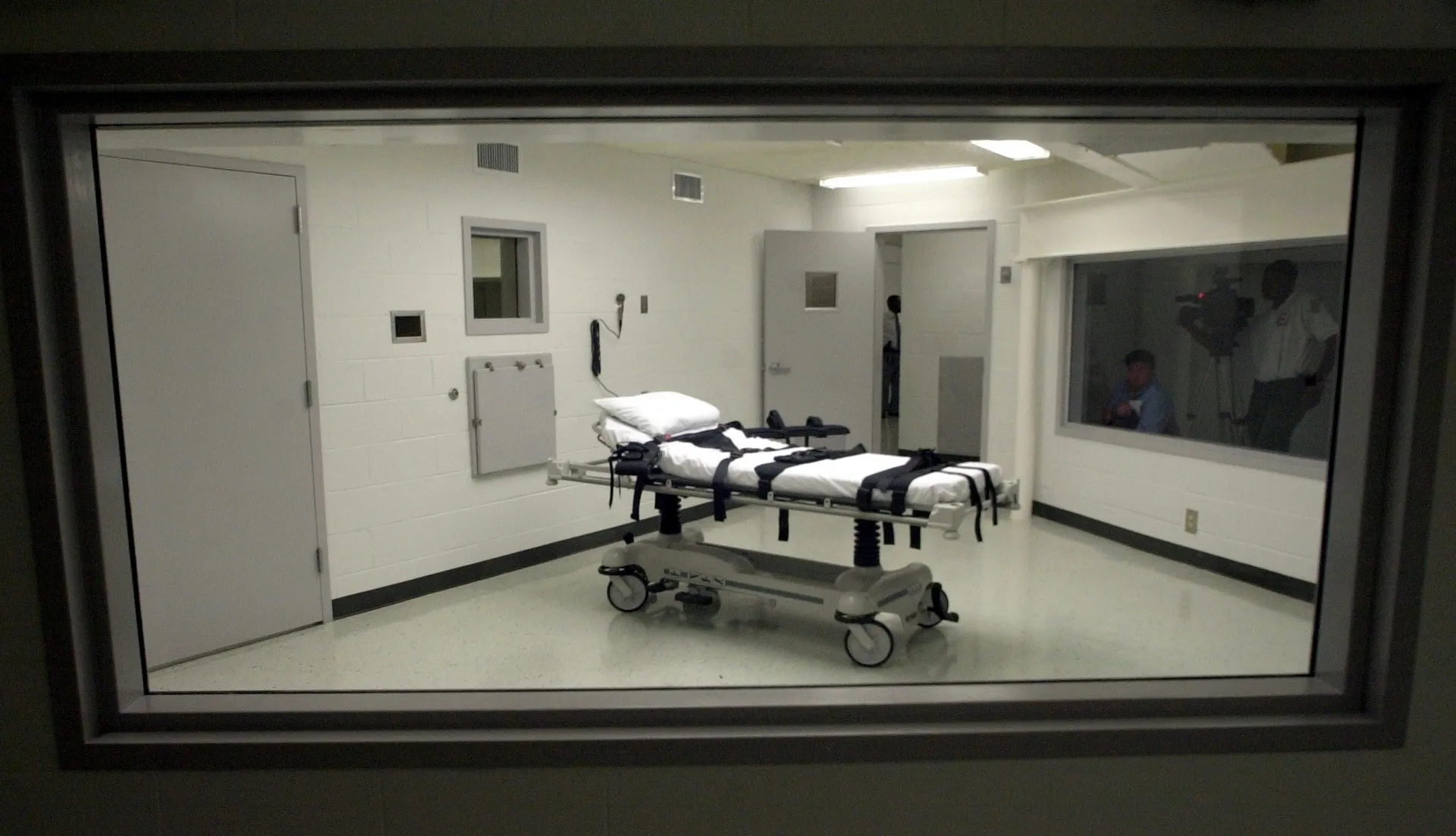
Tennessee, Alabama, and Oklahoma are set to perform executions on the same day, marking the first triple-execution event in the United States since 2010.
For the first time since 2010, the United States is poised to carry out three separate executions on a single day. Tennessee, Alabama, and Oklahoma have all scheduled lethal injections for the same Thursday, marking a significant moment in the American capital punishment landscape. This rare synchronization of state-sanctioned deaths has not occurred in the country for sixteen years, when Louisiana, Ohio, and Texas simultaneously conducted capital sentences.
While the death penalty remains a legal form of punishment in various jurisdictions, the logistical coordination of carrying out multiple executions across different states on one day is highly unusual. The upcoming events involve three distinct cases, each with its own history and legal progression. As officials prepare for these procedures, the focus remains on the individual crimes that led to these final sentences and the legal processes that have concluded in the current outcome.
In Tennessee, the state is scheduled to execute Anthony Darrell Hines. Hines was convicted for the 1985 killing of Catherine Jean Jenkins, a 54-year-old motel employee in Kingston Springs. Although Hines successfully secured a new sentencing hearing following his initial conviction, he was once again handed the death penalty in 1989. His case represents a long-standing legal battle that has finally reached its terminal point after four decades of litigation.
Alabama has prepared for the execution of 42-year-old Jeremy Williams, who was sentenced for the 2021 abduction, sexual assault, and murder of five-year-old Kamarie Holland. The case garnered national attention due to the brutality of the crime, in which Williams reportedly offered the child's mother money before committing the act. Williams chose not to pursue an appeal and requested that his death sentence be carried out, a decision that allowed the state to move forward with the lethal injection procedure without further delay.
Oklahoma’s planned execution involves 70-year-old Carlos Cuesta-Rodriguez, who was convicted for the 2003 shooting death of his girlfriend, Olimpia Fisher. Should this execution proceed as planned, it will mark the third person put to death in Oklahoma this year and the 20th under the administration of Governor Kevin Stitt. These three cases underscore the diverse nature of capital crimes that currently result in the death penalty across the United States.
The upcoming executions occur within the context of a shifting national landscape regarding the death penalty. While some states remain active in pursuing capital punishment, the overall frequency of executions has seen fluctuations. In 2025, a total of eleven states carried out capital sentences. With the addition of Tennessee and Alabama to the list of states executing inmates in 2026, the total number of states utilizing the death penalty this year will reach six.
Public sentiment regarding the death penalty has also shown a marked shift over the past several decades. Recent polling data indicates that approximately 52 percent of Americans view the death penalty as morally acceptable. This figure represents the lowest level of public support for capital punishment recorded since the 1970s. As the debate continues, these simultaneous executions serve as a stark reminder of the ongoing tension between state-level judicial practices and changing societal values.
The rarity of a triple-execution day highlights the complexity of the legal and logistical systems governing the death penalty. Each state operates under its own protocols, and the alignment of these dates is largely a matter of scheduling rather than a coordinated national policy. However, the event is likely to reignite national discourse on the ethics, morality, and necessity of lethal injection as a form of punishment.
As the legal system moves toward these scheduled dates, observers and activists are likely to monitor the proceedings closely. Whether this event signals a return to more frequent use of the death penalty or remains an outlier in a larger trend of decline remains to be seen. For now, the focus rests on the impending actions in Tennessee, Alabama, and Oklahoma, marking a historic day in the American justice system.