

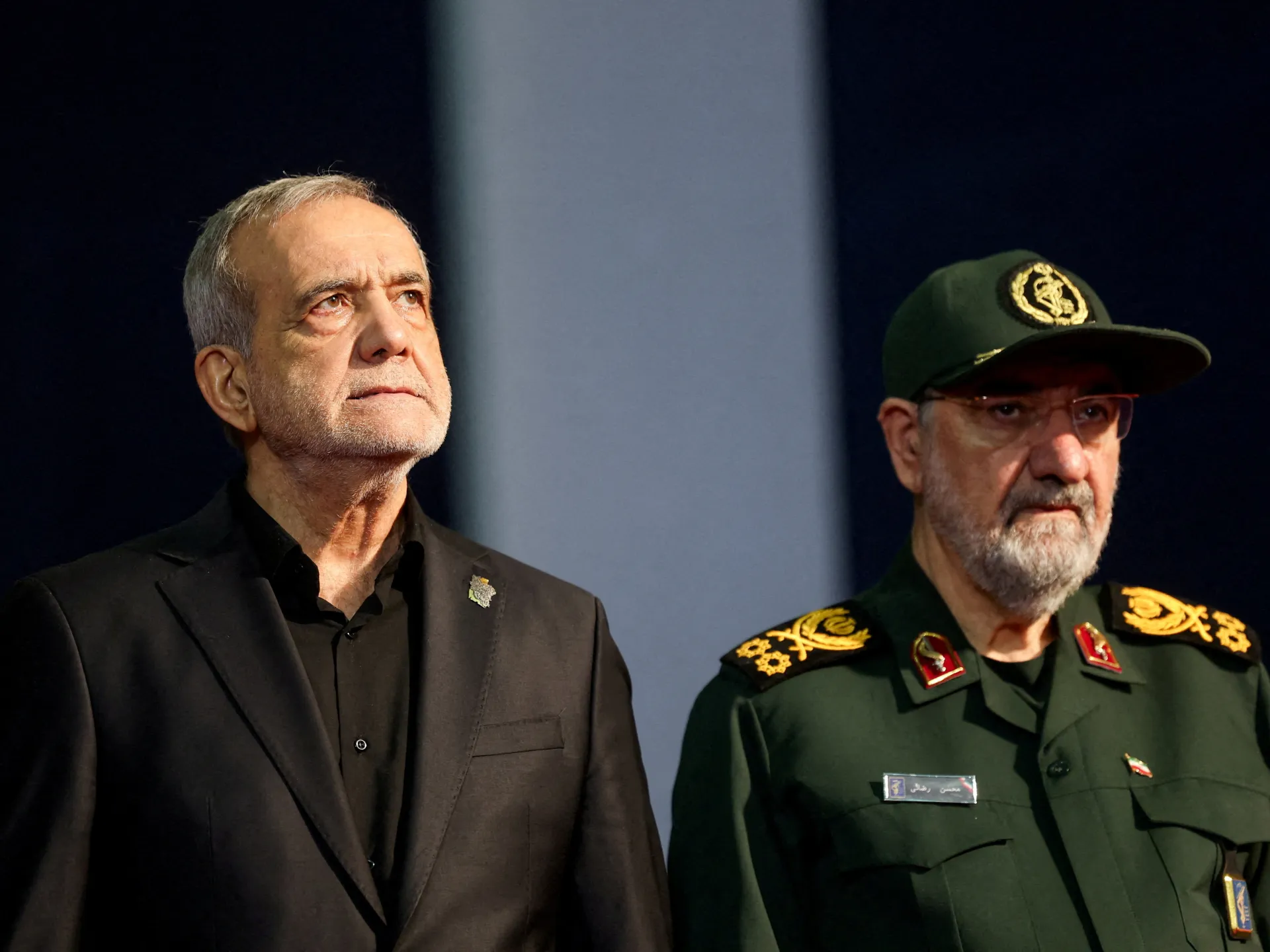
President Masoud Pezeshkian has called for an end to the conflict with the US, citing a position of strength, even as the US prepares to escalate sanctions.
Iranian President Masoud Pezeshkian has publicly signaled a desire to conclude the ongoing hostilities between Tehran and Washington. During a meeting with medical professionals, the president emphasized that Iran currently occupies a position of strength and dignity, making this an opportune moment to seek a cessation of the months-long conflict. Pezeshkian asserted that the international community recognizes Iran's resilience, while simultaneously condemning the United States for targeting essential civilian infrastructure, including schools and hospitals, which he characterized as a gross violation of international norms.
Despite this call for de-escalation, Pezeshkian’s administration faces significant scrutiny from hardline factions within the Iranian parliament. Critics have accused the government of compromising national sovereignty through a memorandum of understanding signed with the United States in June. Defending the document, the president insisted that the agreement contains no clauses that could be interpreted as capitulation, maintaining that all commitments outlined within the text are obligations placed upon the American side rather than concessions from Tehran.
While the diplomatic rhetoric suggests a potential opening for negotiation, the Iranian military remains in a state of high alert. Major-General Ali Abdollahi, the chief of staff of the Iranian armed forces, issued a stern warning that the country is prepared to deliver a devastating response to any further aggression. The military leadership underscored that their operational readiness spans across all domains, including naval, aerial, and cyber warfare, signaling that a shift in diplomacy does not equate to a abandonment of defensive capabilities.
The strategic importance of the Strait of Hormuz remains a central point of friction. Tehran has maintained a partial closure of the waterway, while the United States continues to enforce a naval counterblockade. Reports indicate that the US Navy has been orchestrating clandestine oil tanker convoys through the southern sector of the strait, facilitating the export of millions of barrels of oil daily. This ongoing tug-of-war over the region’s vital shipping lanes underscores the complexity of the conflict and the difficulty of achieving a stable ceasefire.
In Washington, President Donald Trump has expressed doubt regarding Iran’s genuine intent to reach a meaningful settlement. When questioned about the limitations of US military options, Trump suggested that the situation remains fluid, asserting that the United States maintains total control over the region, including the Strait of Hormuz and surrounding land areas. He dismissed the prospect of an immediate breakthrough, noting that while Tehran may desire a deal, they are not yet prepared to agree to terms that the current US administration deems acceptable.
Economic pressure remains a primary tool in the US strategy to influence Tehran. Treasury Secretary Scott Bessent has indicated that Washington intends to escalate its sanctions campaign, with the explicit goal of destabilizing the Iranian government. This approach has drawn sharp condemnation from the Iranian Ministry of Foreign Affairs, which labeled the policy as a form of economic terrorism. Meanwhile, international observers, including representatives from China, have cautioned that continued reliance on sanctions and economic pressure is unlikely to provide a sustainable solution to the regional crisis.
Efforts to restart formal negotiations are currently being mediated through regional channels. Recent communications between Omani and Iranian officials have focused on identifying the necessary conditions to resume a diplomatic dialogue. Oman, frequently serving as a conduit for communication between Tehran and Western powers, continues to play a pivotal role in these delicate discussions. The focus remains on de-escalation and addressing the navigation concerns within the Strait of Hormuz, which have international economic implications.