

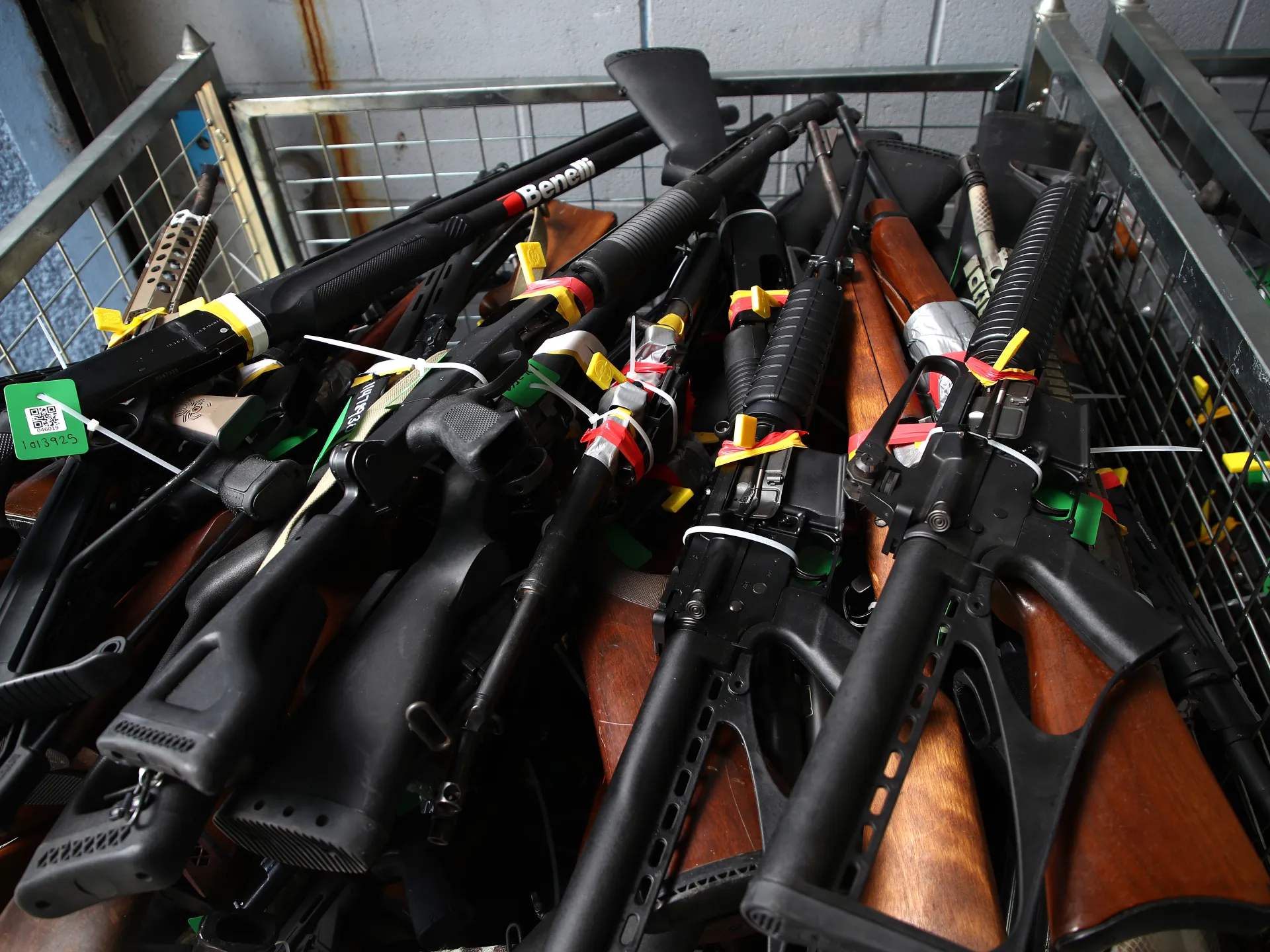
New South Wales will begin a state-wide gun buyback program in November, offering financial incentives to owners following the 2025 Bondi Beach massacre.
The Australian federal government, in coordination with officials in New South Wales, has announced the implementation of a state-wide gun buyback program scheduled to commence this November. This legislative and policy shift serves as a direct response to the horrific violence that unfolded during a public gathering at Bondi Beach late last year. total number of weapons circulating within the community, citing concerns that current ownership levels have reached unprecedented heights.
Official government data indicates that Australians possessed a record-breaking 4.1 million firearms throughout the previous year. Within New South Wales, the nation’s most populous state, there are approximately 1.1 million registered weapons. Prime Minister Anthony Albanese emphasized that the current volume of firearms in private hands exceeds the levels seen during the mid-1990s, a period historically defined es that reducing this inventory is a vital step in maintaining public safety and preventing future mass-casualty events.
The impetus for these new measures stems from a devastating incident on December 14, 2025, when a gunman opened fire at a Hanukkah celebration held at Bondi Beach. The attack resulted in the deaths of 15 individuals, marking one of the darkest days in recent Australian history. Investigations revealed that the perpetrator utilized powerful firearms that had been acquired through legal channels, prompting an immediate outcry for stricter oversight regarding how such weapons are accessed and managed
Authorities have identified the primary suspect in the Bondi Beach attack as 24-year-old Naveed Akram. While legal proceedings are ongoing and the defendant has yet to enter formal pleas for the 15 counts of murder he faces, the investigation into his motivations has linked the tragedy to extremist ideologies. This connection has intensified the debate regarding domestic security and the necessity of proactive measures to limit the availability of high-powered weaponry to individuals who may pose a threat to public order.
Starting November 2, the New South Wales government will initiate a buyback scheme designed to facilitate the voluntary surrender of handguns and rifles. Participating owners are eligible to receive up to 1,000 Australian dollars per weapon turned over to authorities. This financial incentive is intended to encourage compliance among gun owners who may no longer require their firearms or who are concerned about the tightening regulatory environment surrounding personal ownership.
In addition to the buyback, the state government has already enacted specific restrictions aimed at curbing the concentration of firearms. Under current local laws, individuals are now limited to owning a maximum of four guns. This cap represents a significant departure from previous standards and reflects a broader effort to modernize gun safety protocols. These restrictions are designed to work in tandem with the buyback to systematically lower the presence of lethal hardware across the state.
Australia’s approach to gun control is frequently viewed through the lens of the 1996 Port Arthur massacre, where a lone gunman claimed 35 lives. That event served as a turning point for the nation, leading to a comprehensive overhaul of firearm laws, including a massive buyback and the banning of automatic and semi-automatic weapons. Modern policymakers are now drawing parallels between that historical moment and the current climate, noting that complacency regarding weapon saturation could undermine the progress made over the last three decades.
As the November start date approaches, the success of the buyback program will be closely monitored s not merely about collection but about fostering a safer society where the risk of firearm-related violence is significantly mitigated. positioning itself to address the complex challenges posed