

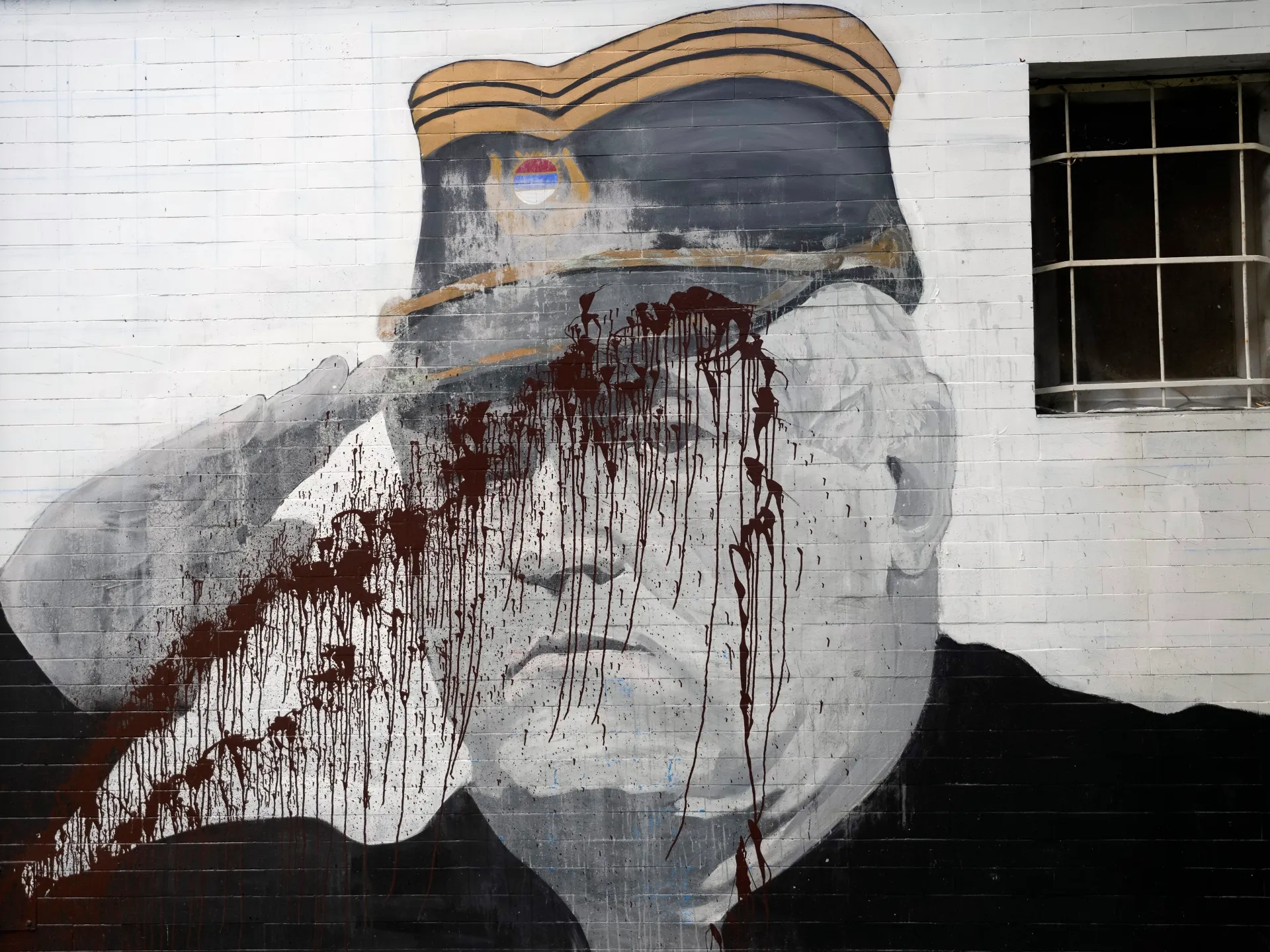
Ratko Mladić, the military commander responsible for the Srebrenica genocide, has died in a Hague prison at the age of 84 while serving a life sentence.
Born in March 1942 in the village of Božanovići, located in what is now Bosnia and Herzegovina, Ratko Mladić emerged from the turmoil of the Second World War. His father, a partisan fighter who resisted Axis powers, helped shape the environment in which Mladić grew up. ng in the Yugoslav National Army (JNA). This decision marked the beginning of a long and influential career that would eventually lead him to the highest echelons of military command.
Throughout the 1970s and 1980s, Mladić steadily rose through the ranks of the JNA, serving in various regions across the fracturing Yugoslav state. ted to lieutenant-colonel general. His command over the Second Military Area in Sarajevo placed him at the epicenter of the ethnic conflicts that would soon tear the region apart, defining the trajectory of his life and the suffering of thousands of civilians.
Mladić’s name became synonymous with the brutal tactics employed during the Bosnian War. As the commander of the Bosnian Serb army, he oversaw the siege of Sarajevo, a harrowing conflict that lasted 1,460 days. This operation is remembered as the longest military siege of a capital city in modern history, resulting in the deaths of over 11,500 people. During this period, the city was subjected to a constant barrage of artillery fire, with estimates suggesting that between 480,000 and 500,000 missiles were launched into the urban center.
The most infamous chapter of Mladić’s military career occurred in July 1995, when his forces seized the town of Srebrenica. Despite the United Nations declaring the municipality a "safe area," Mladić’s troops overran the enclave. In the days that followed, more than 8,000 Bosniak men and boys were systematically executed. This atrocity, which also involved the forced expulsion of up to 30,000 civilians, was later classified as a genocide—the first to take place on European soil since the Second World War.
Following the Srebrenica massacre, the International Criminal Tribunal for the former Yugoslavia (ICTY) moved quickly to hold Mladić accountable. ar crimes, including genocide and the mass expulsion of civilians. An international arrest warrant was issued in 1996, marking the beginning of a long period of evasion for the former general. For fourteen years, Mladić lived in hiding, moving between various locations in Serbia and Bosnia and Herzegovina, evading capture despite intense international pressure.
The search for Mladić finally concluded on May 26, 2011, when he was discovered at a cousin’s home in Lazarevo, Serbia. Following his arrest, he was transferred to The Hague to face trial. Throughout his lengthy legal proceedings, which concluded with a life sentence in 2017, Mladić maintained a defiant stance, refusing to accept plea deals. His conviction for genocide, war crimes, and crimes against humanity finalized his role in history as a central figure in the Balkan conflicts.
In his final years, Mladić suffered from declining health, which led to repeated hospitalizations. Despite his family’s repeated requests for early release for medical treatment, the international court consistently denied these appeals. In June 2025, a final request for humanitarian release was rejected h in August 2026 at the age of 84.
The death of Mladić has reignited discussions regarding the importance of judicial accountability for mass atrocities. United Nations Secretary-General Antonio Guterres emphasized the necessity of acknowledging the gravity of the crimes for which Mladić was found guilty, standing in solidarity with the survivors and victims' families. While some political figures in Serbia have criticized the court’s handling of his medical detention, the international community continues to stress the importance of rejecting any denial of adjudicated war crimes.