

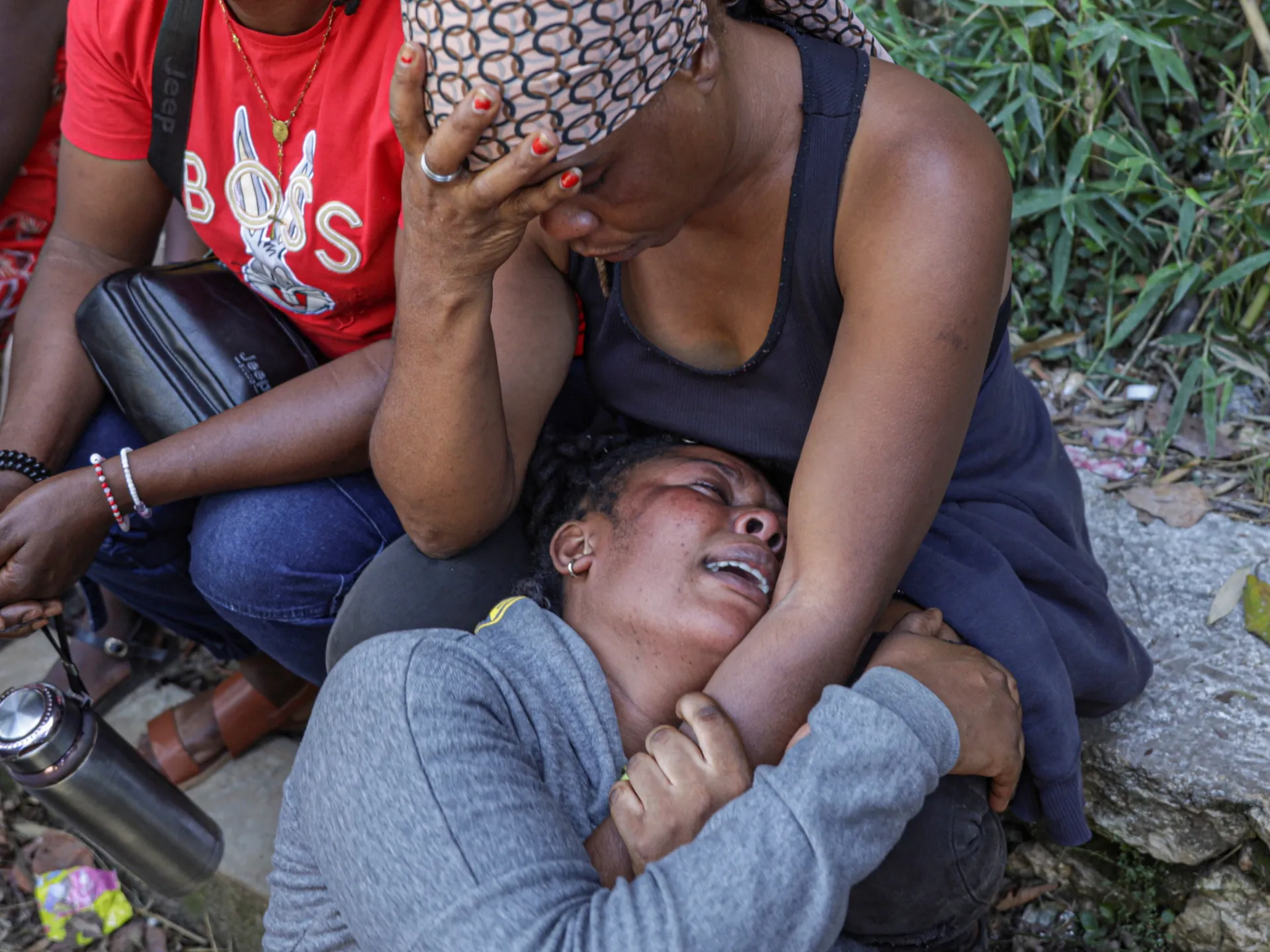
Thirteen captives, including six children, have been released following a massive gang assault in Kenscoff that resulted in significant loss of life.
Thirteen individuals, comprised of six children and seven women, have been released ty of Kenscoff, Haiti. The abduction, which occurred late last week, had initially fueled fears for the safety of dozens of civilians caught in the surge of organized criminal activity. The United Nations Children’s Fund (UNICEF) confirmed the release, characterizing the event as a rare instance of hope within a nation currently struggling with intense levels of insecurity.
Despite the release of these thirteen captives, international observers and humanitarian organizations remain deeply concerned about the broader trajectory of violence in the region. UNICEF representatives have emphasized that the Kenscoff incident is not an isolated occurrence but rather a reflection of the persistent and growing threat posed to children across the country. The organization continues to advocate for the safety of youth populations who have been disproportionately affected
The abduction was part of a larger, coordinated assault on the Kenscoff community on August 23. Estimates suggest that approximately 150 armed gang members descended upon the hillside area, which overlooks the capital city of Port-au-Prince and the suburb of Petionville. The attackers reportedly targeted residents in the street before pursuing individuals into a local Protestant church, where many had sought refuge. The subsequent violence in the church courtyard resulted in a significant loss of life, with dozens reported killed.
Official estimates indicate that at least 47 people lost their lives during the assault, and more than 50 individuals were initially abducted. The impact of the violence extended beyond the loss of life, causing the displacement of over 2,600 residents who were forced to flee their homes to neighboring communities. Many of these displaced families returned to find their properties destroyed, as the attackers utilized fire to force residents out of the area.
The current security crisis in Haiti is deeply intertwined with a long-standing vacuum of political legitimacy. Since the assassination of President Jovenel Moise in 2021, the nation has struggled to maintain a functional government. Subsequent leadership, including the tenure of former Prime Minister Ariel Henry and the dissolution of the Transitional Presidential Council, has failed to organize successful elections, leaving the country without elected representation since the expiration of senatorial terms in 2023.
This prolonged political instability has provided an environment in which armed groups have been able to consolidate power. At the height of their influence, these gangs controlled as much as 90 percent of Port-au-Prince. The resulting humanitarian catastrophe has seen over 1.4 million people displaced, with thousands killed or injured in the first half of this year alone. Reports of systematic sexual violence and the use of terror tactics have further complicated the efforts of local and international authorities to restore order.
In response to the deteriorating conditions, a UN-backed Gang Suppression Force (GSF) was deployed to Haiti earlier this year to support local police efforts. However, the mission has faced significant challenges, as gangs have actively defied state authority and even utilized social media to threaten the lives of hostages in retaliation for security operations. The Haitian government has responded e Kenscoff region.