

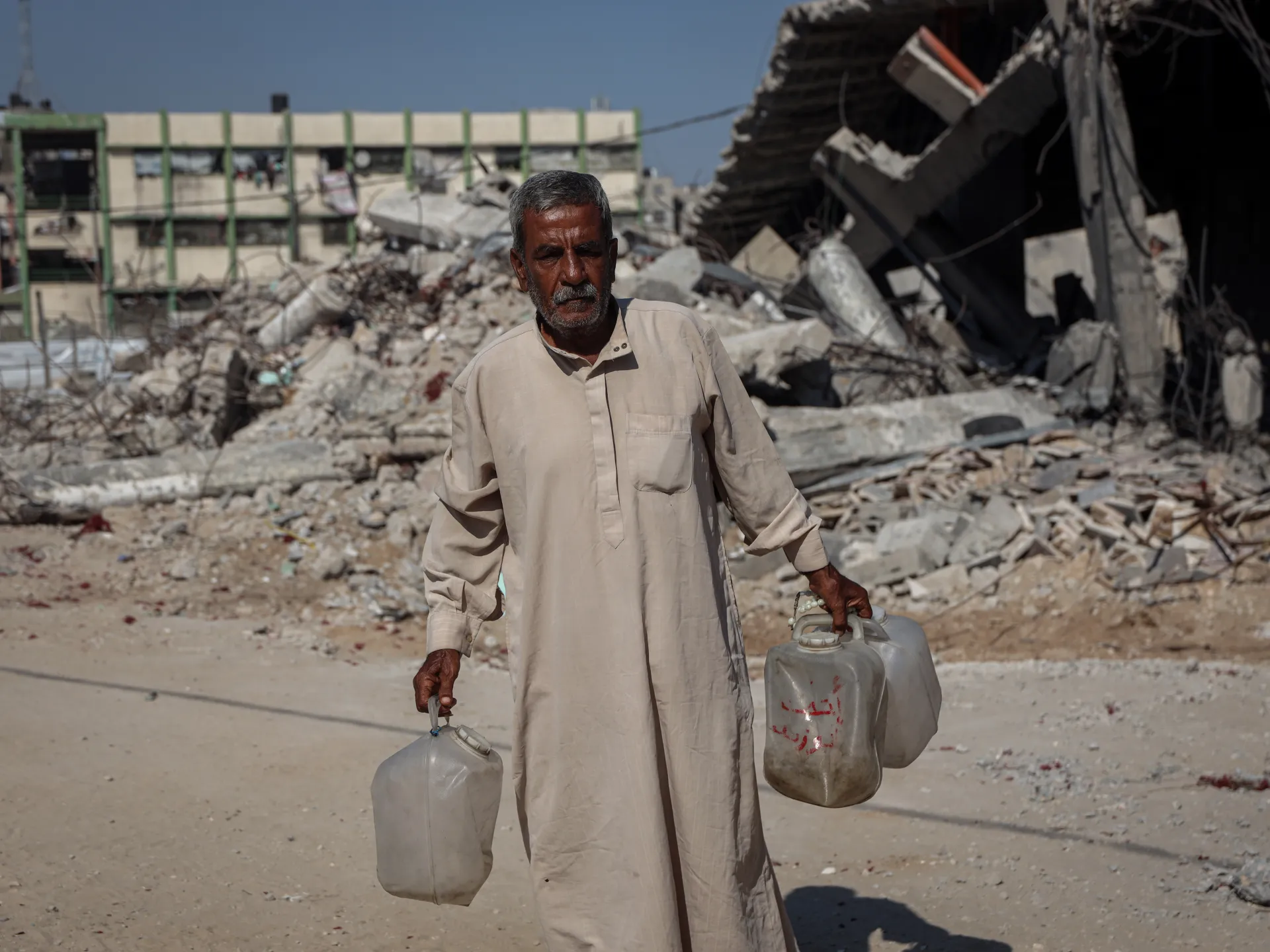
The destruction of a critical desalination plant in Gaza City has left thousands of displaced families without access to clean water, intensifying an already dire humanitarian crisis.
For the residents of Gaza City’s Sheikh Radwan neighbourhood, the recent destruction of a local desalination plant has turned a manageable daily routine into a desperate struggle for survival. The facility, which had been operational for only two months, served as a crucial lifeline for thousands of displaced families living in tents after their homes were destroyed. For a brief period, the presence of the plant allowed residents to access clean, desalinated water around the clock, significantly reducing the burden of traveling long distances to secure basic necessities.
The facility was leveled during an August strike, which also caused extensive damage to nearby residential structures and temporary shelters. For elderly residents like 74-year-old Zuhair al-Nasr, the loss represents more than just a piece of infrastructure; it marks the return to a precarious existence where clean water is no longer guaranteed. Without the plant, families are once again forced to rely on irregular groundwater wells or wait for intermittent water truck deliveries, neither of which can adequately meet the needs of the densely populated area.
The owner of the destroyed facility, Mohammed Mahmoud, estimates the financial losses to be at least $500,000, with specialized machinery accounting for half of that total. Beyond the economic blow, the humanitarian cost is profound. Before its destruction, the plant provided free water to 17 shelters and collective centers, filling a critical gap in a region where municipal water infrastructure has been largely incapacitated. The equipment used to build the plant was notoriously difficult to source and transport into the territory, making the prospect of rebuilding effectively impossible under current conditions.
This loss arrives at a time when the broader drinking water crisis in Gaza is reaching a breaking point. Recent data indicates that a vast majority of the population in Gaza City lacks consistent access to safe water for cooking, drinking, and hygiene. With UNICEF reporting that a large percentage of residents are struggling to meet even the bare minimum requirement of six liters per person per day, the removal of a localized production source places an unsustainable strain on humanitarian aid distribution networks that were already operating at their limit.
For families residing in areas like the Mukhabrat district, the water shortage has created a cycle of illness and physical exhaustion. Families are frequently forced to wait days for water trucks, leading to reliance on potentially contaminated sources when supplies run dry. Reports of water-borne illnesses, including stomach ailments requiring hospitalization, have become increasingly common as households are forced to use the same limited supply for both consumption and sanitation.
The physical toll on the elderly and those responsible for water collection is equally severe. Many residents, including those suffering from chronic health conditions, must carry heavy containers several times a day to maintain their household supplies. This strenuous labor has led to a rise in musculoskeletal injuries and other health complications among those tasked with securing water. As the infrastructure remains in ruins, the daily search for water continues to define the existence of thousands, underscoring a deepening crisis that threatens the health and dignity of the displaced population.