

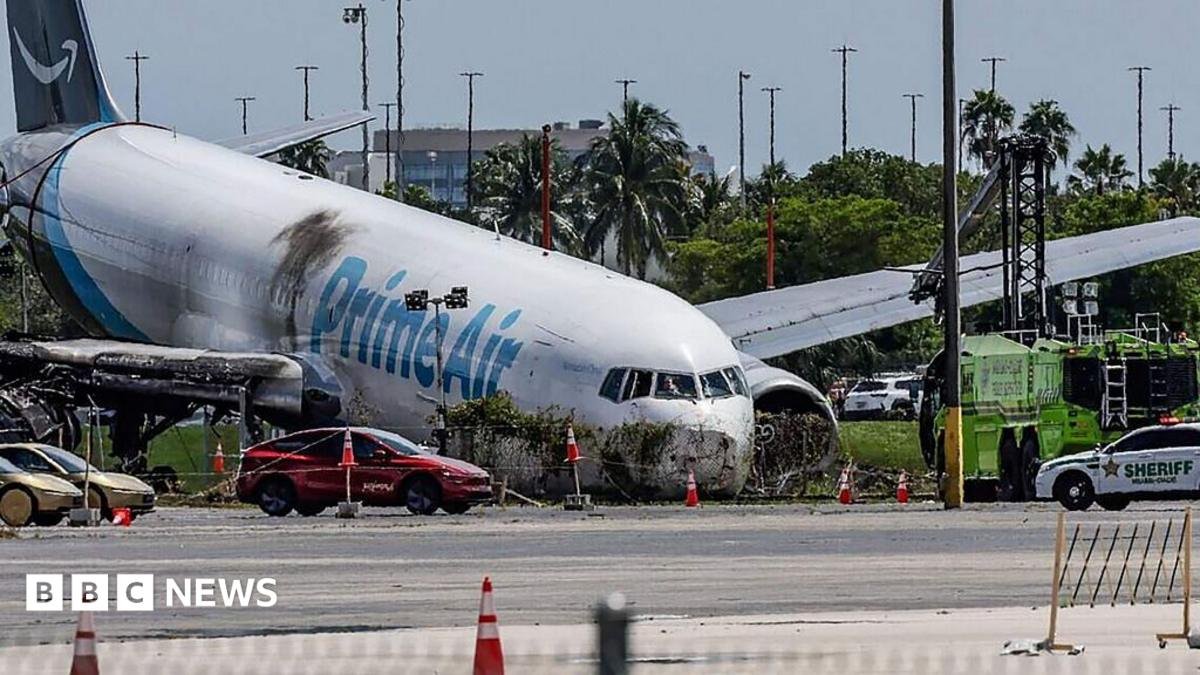
New flight data from the NTSB reveals that an Amazon cargo plane crew received multiple warnings about excessive speed before crashing into vehicles in Miami.
Recent data released nts of the Amazon Prime Air Flight 7598, which ended in a tragic accident in Miami, Florida. The investigation indicates that the Boeing 767-300 was traveling at an excessive speed during its descent, a factor that appeared to be a central concern for the crew members operating the aircraft. As the plane approached the runway, flight recorders captured multiple instances where one pilot explicitly cautioned the other regarding the high velocity of the aircraft.
Despite these repeated verbal warnings, the flight data suggests a lack of consistent communication between the cockpit crew. The recordings indicate that while the speed concerns were voiced throughout the latter portion of the flight, the responses were not uniform or sufficiently corrective. This breakdown in coordination occurred as the aircraft maintained a landing speed of 158 knots, a figure that aviation experts have identified as being on the higher end of the spectrum for this type of landing maneuver.
As the situation in the cockpit became increasingly dire, the aircraft’s onboard safety systems began issuing automated alerts to warn the pilots of their precarious position. Flight recorders captured an electronic "sink rate" callout, which serves as a warning when an aircraft is descending too rapidly. This was quickly followed e to the ground while failing to meet the necessary configuration requirements for a safe touchdown.
Beyond the speed issues, investigators are closely examining the deployment of the aircraft’s flaps. Flaps are essential aerodynamic components located on the trailing edge of the wings, designed to generate lift at lower speeds and assist in slowing the plane down for landing. Reports suggest that the flaps were deployed significantly later than standard procedures would dictate. It is currently being analyzed whether this delay was an attempt o stabilize the aircraft before the runway threshold.
The tragedy resulted in a catastrophic collision after the aircraft failed to stop on the runway. Upon overshooting the landing strip, the Boeing 767-300 continued through a perimeter fence, striking various pieces of ground equipment and two vehicles in its path. The impact with a white Ford van and a Toyota Corolla proved fatal for those on the ground. The five individuals who lost their lives were members of a plane-cleaning crew working near the landing area at the time of the incident.
In the aftermath of the crash, authorities in Miami have confirmed the identities of the deceased, highlighting the human toll of the disaster. Beyond the five fatalities, five other individuals sustained injuries during the event. The aircraft eventually came to a rest approximately 1,300 feet past the end of the runway, having suffered extensive damage and fire. The NTSB continues to lead the investigation to determine the definitive chain of events that led to the failure of the approach and the subsequent loss of life.
The role of human factors and cockpit resource management remains a primary focus for investigators. Legal and aviation experts have noted that the "inconsistent verbal response" mentioned in the NTSB update is a critical piece of the puzzle. Understanding why the warnings regarding excessive speed did not result in a unified corrective action is essential for preventing future occurrences of similar "doomed approaches."
As the investigation proceeds, the NTSB will continue to synthesize the flight data with the verbal records to construct a comprehensive timeline of the cockpit environment. The interplay between the automated alerts, the delay in flap deployment, and the communication breakdown between the two pilots serves as a grim reminder of the complexities involved in commercial aviation safety. The final report is expected to provide deeper insights into whether training protocols or technical procedures need to be adjusted to ensure higher levels of safety during landing sequences.