

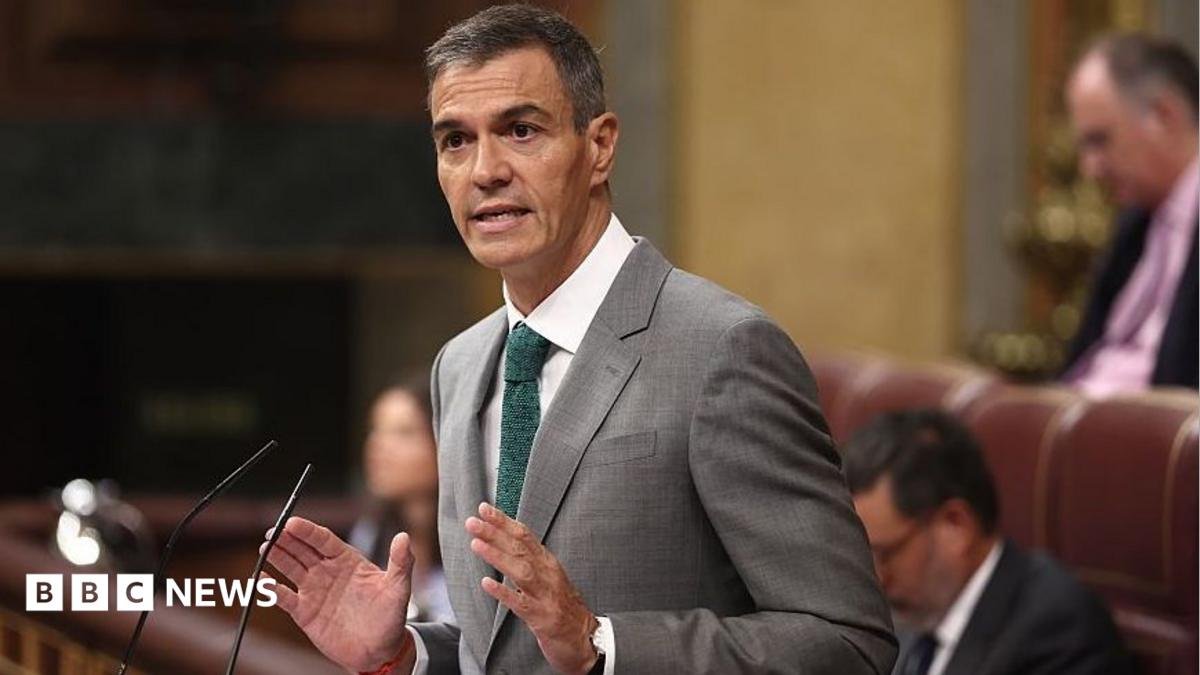
Prime Minister Pedro Sánchez denies prior knowledge of the mass migration surge in Ceuta, facing intense criticism from opposition leaders and public protesters.
Prime Minister Pedro Sánchez has firmly rejected allegations that his administration possessed prior knowledge of the mass migration influx in the North African exclave of Ceuta. Addressing the Spanish parliament during a heated session, the Prime Minister described the suggestion that the government remained passive despite receiving warnings as entirely unfounded. The crisis, which saw a surge of 72,000 individuals attempting to cross into Spanish territory, has become a significant focal point for domestic political friction.
Sánchez maintained that his administration operated without any advance intelligence regarding the scale of the crossing. He emphasized that the government continues to rely on verified information rather than speculation. Despite the emergence of a police report suggesting that Moroccan security forces demonstrated a high degree of permissiveness during the incident, senior Spanish officials have avoided officially attributing the event to the Moroccan government. Sánchez underscored that there is currently no concrete evidence to suggest that the neighboring state orchestrated the movement of people.
The handling of the situation at the border has provided a platform for the opposition to challenge the current administration's credibility. Alberto Núñez Feijóo, leader of the People's Party, has been particularly vocal, accusing the government of engaging in a cover-up and demanding the Prime Minister’s resignation. The opposition asserts that the government was adequately warned about the potential for such an influx, particularly following a court ruling that was widely misinterpreted
This political pressure is mirrored major cities. While these protests were officially organized to show solidarity with the residents of Ceuta, they quickly evolved into platforms for broader anti-government sentiment. The surge of migrants has transformed from a localized humanitarian and logistical challenge into a defining political crisis for the Socialist government, exposing deep divisions regarding the management of Spain's only land borders in North Africa.
The crisis has highlighted the delicate nature of Spain's diplomatic relationship with Morocco. Sánchez has attempted to balance the necessity of maintaining a cooperative partnership with Rabat while simultaneously addressing concerns regarding Morocco’s sovereignty claims over the exclaves of Ceuta and Melilla. The Prime Minister has characterized Ceuta as an integral part of Spain, asserting that it serves as a critical European frontier rather than merely a Spanish border town.
Internal government reports, while noting the behavior of security forces on the ground, have not officially linked the events to a state-led strategy. However, many political observers across the spectrum argue that Morocco has historically utilized border pressures as a form of diplomatic leverage. Sánchez has countered these narratives border within a 72-hour window, citing this as evidence of effective bilateral coordination between Spanish and Moroccan authorities.
In his address to Congress, the Prime Minister also sought to contextualize the surge to the proliferation of hoaxes and rumors circulating on social media, which may have encouraged the mass movement of people. Sánchez explicitly mentioned that accounts linked to various international entities, including those associated with far-right movements, had contributed to the spread of misinformation regarding border policies.
While the immediate crisis has subsided, the administrative challenge remains significant. Approximately 5,000 individuals, including a substantial number of unaccompanied minors, remain in Ceuta. The government continues to grapple with the humanitarian requirements of those still present while navigating the complex geopolitical implications of the event. Sánchez reiterated his commitment to prioritizing the protection of human life, noting that the police response at the border was fundamentally focused on humanitarian safety during the height of the influx.