

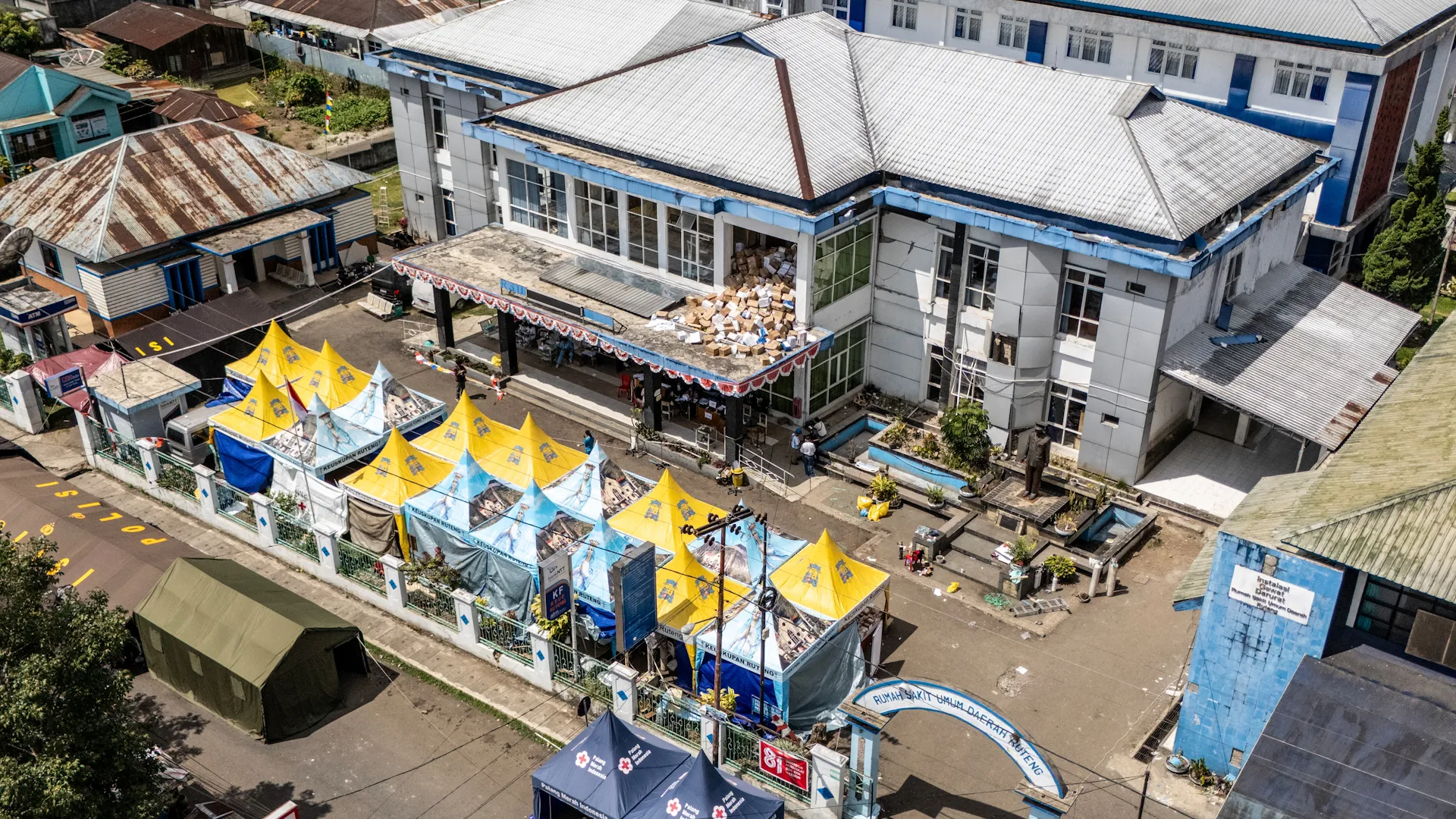
Medical staff at Ruteng General Hospital are providing care in temporary outdoor tents after a massive 7.7-magnitude earthquake caused significant structural damage to the facility.
In the aftermath of a powerful 7.7-magnitude earthquake that struck Indonesia, medical personnel at the Ruteng General Hospital have been forced to relocate their operations to makeshift outdoor facilities. The structural integrity of the hospital building was compromised during the intense seismic event, rendering the interior spaces unsafe for patient care. Healthcare workers have responded e in need of urgent assistance continue to receive life-saving interventions.
The shift to tent-based care highlights the immense logistical challenges facing local medical teams as they attempt to balance patient safety with the necessity of ongoing care. While the outdoor environment presents limitations regarding sterile conditions and specialized equipment, it remains the only viable option for treating the influx of injured individuals. Coordination efforts are currently underway to bolster these temporary stations with essential medical supplies and additional staff to manage the high volume of patients arriving from the surrounding region.
The earthquake has left a profound mark on the local community, resulting in a significant loss of life and widespread destruction. Official reports indicate that more than 50 people have been confirmed dead, while the total number of injuries continues to rise as search and rescue teams navigate the debris. Thousands of residents have been displaced from their homes, creating a secondary crisis as the local infrastructure struggles to accommodate the sudden spike in individuals requiring shelter and basic humanitarian aid.
Displaced families are currently seeking refuge in temporary camps, often lacking access to clean water, sanitation, and sufficient food supplies. The environmental impact of the earthquake has also exacerbated the situation, with damaged roads and communication lines hindering the delivery of relief materials to the most affected areas. Local authorities and international relief agencies are working in tandem to establish supply chains that can bypass the damaged transit routes, ensuring that the most vulnerable populations receive support during this critical phase of recovery.
The damage sustained infrastructure in the region when faced with high-magnitude seismic events. Hospitals are designed to withstand significant stress, yet the sheer force of this earthquake exposed weaknesses in the facility's construction. Experts suggest that the incident will likely trigger a comprehensive review of building codes and disaster preparedness protocols for public health facilities throughout the archipelago to prevent similar operational failures in the future.
Rehabilitating the medical facility will be a long-term process, requiring structural assessments, debris removal, and extensive repairs before the building can be safely reoccupied. In the interim, the reliance on field hospitals and tent wards will remain a fixture of the healthcare landscape. The resilience of the medical staff, who continue to provide care under these strenuous circumstances, remains a central component of the community's response to the disaster. Their ongoing commitment is vital to mitigating the long-term public health consequences of this tragedy.
As the immediate search and rescue phase transitions into a recovery effort, the focus is shifting toward long-term stabilization. The Indonesian government is currently assessing the total economic and social cost of the disaster, with plans for reconstruction already being discussed. This period of rebuilding is seen as an opportunity to implement more resilient infrastructure designs that can better withstand the unique geological threats facing the region.
Community members are also beginning the difficult process of returning to their neighborhoods to assess the damage to their properties. The road to recovery remains steep, but coordinated efforts between local, regional, and national bodies are aimed at restoring normalcy as quickly as possible. For now, the priority remains the well-being of the injured and the provision of adequate medical support to those still being treated in the temporary facilities outside the damaged hospital.