

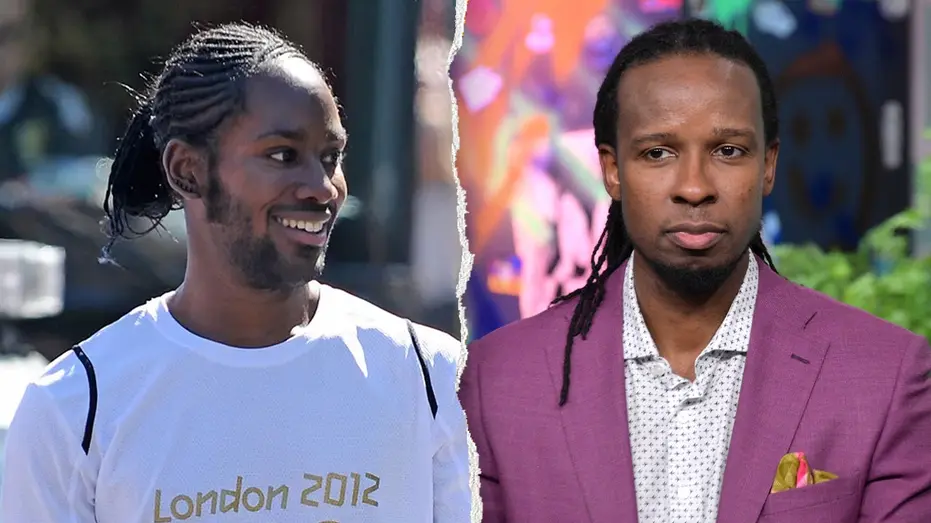
Following the death of academic Jason Arday, activist Ibram X. Kendi faced intense criticism for blaming 'White-owned' media for the scholar's passing.
The passing of British academic Jason Arday has triggered a significant controversy following remarks made ined international attention, was discovered unresponsive at a residence in south London. While local authorities have stated the death is being treated as unexpected and currently not suspicious, the public conversation surrounding his life and final days has become intensely polarized.
In the wake of the news, Kendi utilized his platform to characterize the media coverage surrounding Arday as a form of fatal persecution. Writing for the publication The Emancipator, Kendi argued that mainstream media outlets, which he described as "White-owned," played a direct role in Arday's death. He claimed that the professor had been subjected to relentless "waves of attacks" regarding accusations of plagiarism and scrutiny over his personal biographical claims.
Before his death, Jason Arday had been the subject of significant public and academic inquiry. Much of the scrutiny focused on specific biographical narratives he had shared, including assertions that he was non-verbal until age 11, functionally illiterate until age 18, and had successfully completed 30 marathons in 35 days for charity. These claims, coupled with subsequent allegations of plagiarism in his academic work, led to an investigation and his eventual resignation from his position at Cambridge University.
Kendi’s assertion that this scrutiny amounted to a "lynching" igures. Critics argue that Kendi’s framing ignores the factual nature of the investigations into Arday’s credentials and academic integrity. Instead of acknowledging the validity of the questions raised regarding Arday’s claims, detractors suggest that Kendi is leveraging the tragedy to perpetuate a specific racial narrative that avoids the complexities of the situation.
The response to Kendi’s commentary has been swift and widespread across social media platforms. Figures from across the political spectrum have accused the activist of "race grifting" and exploiting a tragic death to serve his own ideological agenda. Notable critics, including political commentators and authors, emphasized that the investigations into Arday were grounded in accountability rather than racial bias. Some commentators even suggested that Kendi’s rhetoric undermines the broader cause of anti-racism
This is not the first time Kendi has faced professional or public criticism. In recent years, he was the subject of significant scrutiny regarding his leadership at Boston University’s Center for Antiracist Research. Following reports from former staff members regarding administrative mismanagement, financial concerns, and a lack of tangible research output despite substantial funding, the center underwent an internal investigation. While that investigation cleared him of financial misconduct, the center was eventually closed in 2025.
The intensity of the debate surrounding Arday’s death highlights the deep divisions in how public figures and the media are held accountable. For supporters of Kendi’s perspective, the incident serves as a grim reminder of the disproportionate pressure often placed on Black scholars in high-profile positions. They argue that the speed and severity of the media's "cancellation" process can have devastating effects on an individual's mental health.
Conversely, those who oppose this view insist that the pursuit of truth regarding academic credentials and ethical conduct is a necessary component of institutional integrity. They argue that shielding individuals from such scrutiny based on their identity does not serve the interests of academia or the public. As the discussion continues, the case remains a stark example of how personal tragedies are increasingly filtered through the lens of modern culture wars, with little consensus on the underlying facts or the appropriate way to address them.