

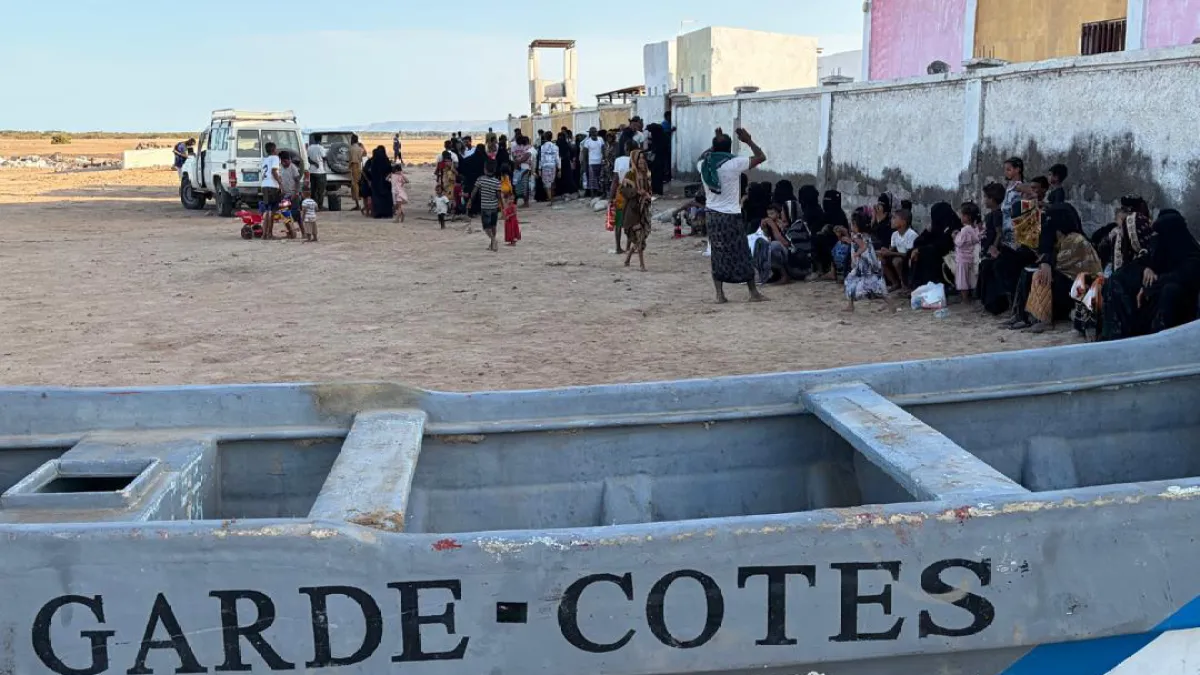
Over 3,400 people have fled to Djibouti following a surge in Houthi military activity in Yemen, placing significant strain on local humanitarian resources.
The coastal town of Obock in Djibouti has become the focal point of a burgeoning humanitarian crisis as thousands of people flee renewed military hostilities in Yemen. In a rapid escalation, over 3,400 individuals have crossed the Bab al-Mandeb strait in the span of just a few days, seeking safety from intensifying combat. Local authorities report that the influx began over a single weekend, with refugees arriving on a diverse array of watercraft, ranging from small wooden dhows to larger, overcrowded vessels. The sudden volume of arrivals has placed an immediate and severe strain on the local infrastructure of a nation with a population of fewer than 1.2 million people.
International organizations, including the International Organization for Migration (IOM), have been working alongside Djiboutian forces to manage the reception of these displaced people. According to officials, the surge is directly linked to a recent offensive d pushed further along the Yemeni coastline. This military maneuver has created a climate of fear and displacement, forcing residents from entire districts, such as Maqbanah and Jabal Habashi, to abandon their homes in search of refuge across the water.
Djibouti, which has long served as a stable anchor in a volatile region, is now grappling with the logistical challenges of hosting a growing number of displaced populations. With existing resources already stretched thin, the government has deployed its navy, coastguard, and health services to provide emergency aid, including food, water, and medical care, to those reaching the shores of Obock and the coastal post of Khor Angar. Despite these efforts, officials have expressed deep concern regarding their ability to sustain such a rapid response, noting that they are currently preparing to accommodate up to 10,000 arrivals should the current rate of displacement continue.
The situation is further complicated ificant reductions in aid from major donors such as the United States and the United Kingdom, organizations like the UNHCR and the World Food Programme are struggling to provide for the refugees with the necessary dignity and consistency. Djiboutian officials have issued urgent pleas to the international community for increased support, warning that existing facilities, such as the Markazi camp, are being pushed to their absolute limits as they attempt to organize shelter and essential support for the incoming families.
The conflict in Yemen carries significant weight beyond the immediate humanitarian impact due to the location of the crisis. The Bab al-Mandeb strait is one of the world's most critical maritime corridors, facilitating the passage of approximately one-eighth of all global seaborne trade. The proximity of the fighting to this narrow waterway has raised alarms among global powers. Djibouti, which hosts military bases for the United States, China, France, Japan, and Italy, is acutely aware of the risks that regional instability poses to maritime security and the delicate balance of international commerce.
Experts at local research institutions suggest that if the conflict continues to disrupt the safety of these sea lanes, the economic consequences will be profound. For a nation that relies heavily on international trade and the security of its maritime borders, the deepening uncertainty in the Red Sea is a major point of concern. Furthermore, regional authorities in neighboring Somalia—specifically in the regions of Puntland and Somaliland—are already bracing for potential spillover, as they anticipate that further escalation could force displaced people to seek alternate routes toward ports like Bosaso and Berbera.
Despite the current pressure, Djibouti has a long-standing history of hosting refugees from across the Horn of Africa and the Arabian Peninsula. The country is already home to more than 36,000 registered refugees, primarily from Somalia, Ethiopia, and Yemen. Many Yemeni families have lived in Djibouti for generations, creating deep-rooted cultural and social ties that facilitate a sense of community. However, the sheer speed and scale of this recent exodus, compounded d fuel shortages on the Yemeni coast—present a unique challenge that tests the resilience of the host nation and its international partners.
As the humanitarian situation evolves, the focus remains on stabilizing the response for those who have already made the dangerous journey across the Gulf of Aden. With many of the new arrivals expected to remain in Djibouti for the foreseeable future, the government and aid agencies are forced to shift from emergency relief to long-term management. The future of this crisis remains tied to the broader political developments within Yemen; however, until a sustainable political solution is reached, the coastal towns of Djibouti will likely remain the primary destination for those fleeing the devastation of the ongoing conflict.