

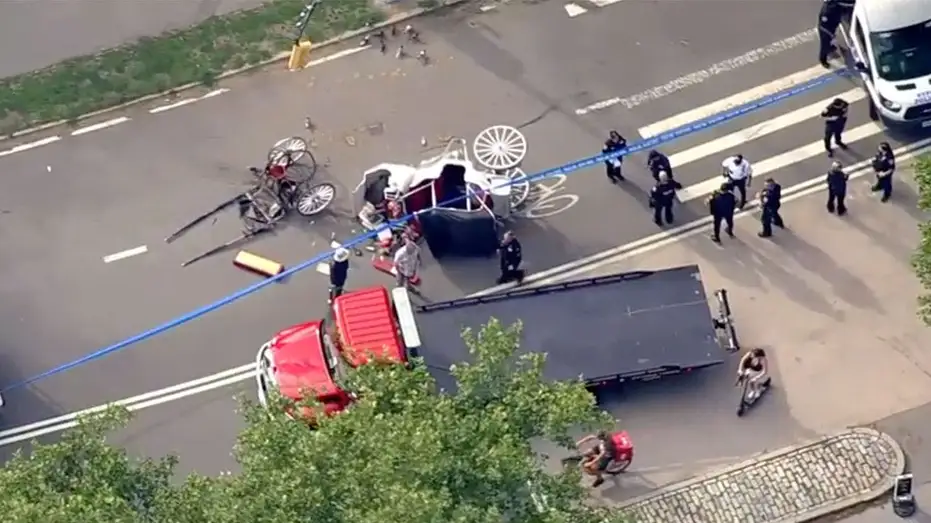
The family of an 18-year-old tourist who died in a Central Park carriage accident is seeking $105 million, citing potential electrical hazards and calling for a total industry ban.
The family of Romanch Mahajan, an 18-year-old visitor from India, has initiated legal action against New York City, seeking $105 million in damages following a fatal accident involving a horse-drawn carriage. The incident occurred on June 17, when the teenager and his family were touring Central Park. According to reports, the family was posing for a photograph near Cherry Hill when the carriage horse, named Sampson, unexpectedly bolted. The sudden movement caused the carriage to accelerate rapidly through the park, leading to a series of events that resulted in the teenager’s death.
During the chaos, Romanch’s mother, Priya Mahajan, was thrown from the moving vehicle. In a desperate attempt to rescue his mother, Romanch jumped from the carriage. He suffered severe head trauma upon hitting the pavement and was later pronounced dead at NewYork-Presbyterian/Weill Cornell Medical Center. Other family members sustained minor injuries during the incident. The legal filings, which serve as a precursor to a formal lawsuit, name the City of New York, Con Edison, and several municipal departments as responsible parties.
A central component of the family's legal argument involves the potential presence of stray or contact voltage in the vicinity of the accident. The notices of claim allege that such electrical conditions may have shocked or agitated the horse, acting as a catalyst for the animal to panic and bolt. The family’s legal representatives are calling for a thorough investigation to determine if the city or utility providers were aware of dangerous electrical conditions in the area prior to the tragedy.
In support of these claims, the family pointed to data suggesting that low levels of stray voltage were detected eeks after the fatal event, the family argues that the presence of such conditions warrants a comprehensive inquiry into whether the infrastructure surrounding popular tourist routes is properly maintained. The legal team emphasizes that the family is seeking both accountability for the specific circumstances of the accident and a broader investigation into the safety of the park’s environment.
The death of Romanch Mahajan has reignited a heated political debate regarding the future of horse-drawn carriages in New York City. Just days before the accident, a new legislative effort was introduced al, which has gained significant traction following the tragedy, aims to transition the city away from horse-drawn tourism entirely. Lawmakers supporting the measure argue that the industry poses inherent risks to both the public and the animals involved.
The legislative push has received high-level support, including from Council Speaker Julie Menin, who has advocated for the bill to be renamed "Romanch’s Law." Proponents of the legislation argue that the accident was entirely preventable and that the city has failed to implement necessary safeguards despite years of warnings and previous incidents. For the Mahajan family, the focus remains on ensuring that their son’s death leads to meaningful policy changes, as they contend that a full ban on horse-drawn cabs is the only measure sufficient to prevent future fatalities of this nature.
The legal filings against the city and various municipal agencies—including the Department of Parks and Recreation, the Department of Transportation, and the Department of Consumer and Worker Protection—highlight a perceived failure in oversight. The family’s counsel, Sagar Chadha, has publicly stated that the incident was an avoidable tragedy that reflects a long-standing pattern of neglect regarding basic safety protocols. The family is demanding a transparent process to understand how an occupied carriage could be left unsecured and whether the city fulfilled its duty to maintain safe conditions for tourists.
As the legal process unfolds, the Mahajan family continues to express their grief and their desire for justice. In a recorded video statement presented to the New York City Council, Romanch’s father, Deepak Mahajan, urged officials to prioritize public safety over the continuation of a controversial industry. The family maintains that while no amount of financial compensation can replace their son, the pursuit of this claim is a necessary step in seeking answers and ensuring that the risks associated with horse-drawn carriages are addressed