

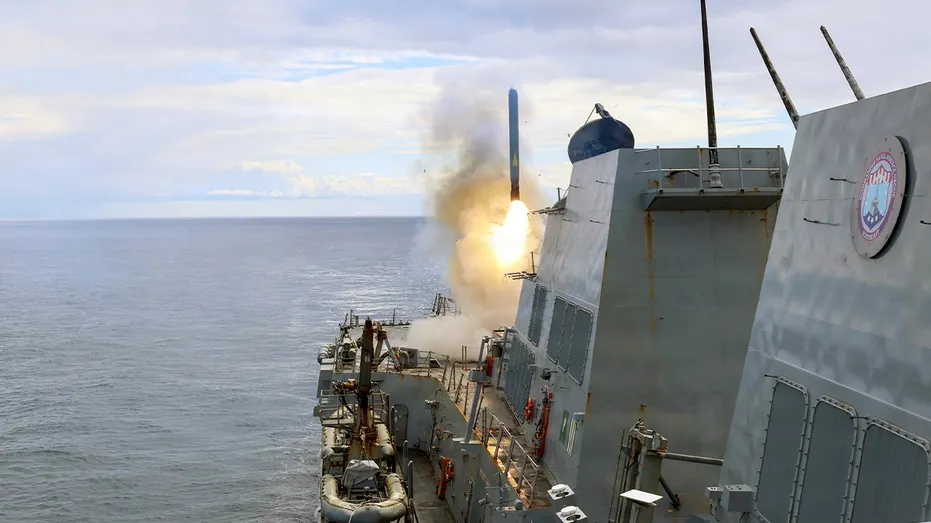
The U.S. Navy has finalized a $22.9 billion contract with Raytheon to ramp up the production of Tomahawk missiles, aiming to replenish critical long-range strike inventories.
The United States Department of War has officially confirmed a significant investment in the nation’s defense infrastructure, awarding RTX subsidiary Raytheon a massive $22.9 billion contract. This multi-billion dollar agreement is specifically designed to accelerate the manufacturing and delivery of Tomahawk cruise missiles. As global security dynamics continue to shift, the Pentagon is prioritizing the replenishment of its long-range strike inventories to ensure that naval forces remain fully equipped for potential engagements.
This initiative represents a strategic move to bolster the American defense industrial base. urer to scale its workforce, optimize supply chain logistics, and enhance overall production output. Officials have emphasized that this investment is essential for maintaining a technological and tactical edge, ensuring that the U.S. military is prepared to deter aggression across various theaters of operation.
The announcement follows recent public discourse regarding the state of American weapons reserves amidst ongoing international tensions, particularly in the Middle East. While some observers have raised questions about the potential strain placed on existing inventories, high-level administration officials have expressed confidence in the current readiness of the armed forces. The administration has characterized the volume of munitions utilized in recent operations as relatively minor in comparison to the nation’s total strategic capacity.
Pentagon leadership remains focused on the long-term goal of modernizing the military’s arsenal. nt of War aims to eliminate gaps in supply that could arise during extended periods of conflict. The objective is to shorten the lead times between procurement orders and the physical delivery of weapons, ensuring that the Joint Force maintains a consistent and reliable supply of precision-strike assets.
The Tomahawk missile remains a cornerstone of the U.S. Navy’s offensive capabilities. Capable of being launched from both surface ships and submarines, these cruise missiles offer the ability to strike targets from hundreds of miles away with extreme precision. This versatility makes them an indispensable asset for power projection and the protection of national interests in contested maritime environments.
Under Secretary of War for Acquisition and Sustainment Michael Duffey highlighted that the contract serves as a direct response to the urgent need for expanded munitions production. The goal is to ensure that service members are supported ough the Department’s Acquisition Transformation Strategy, the Navy expects to see a significant reduction in the time required to field new hardware, directly benefiting warfighters in the field.
The scale of this contract reflects a broader shift toward greater cooperation between the Department of War and the domestic defense industry. As the Pentagon works to coordinate complex weapons programs with private manufacturing partners, the focus has shifted toward building a more resilient and responsive industrial base. This collaborative effort is intended to prevent production bottlenecks and ensure that the nation can sustain high-tempo operations without compromising its strategic posture.
Looking ahead, the Navy’s Portfolio Acquisition Executive Munitions will continue to oversee the integration of these new missiles into the fleet. This oversight ensures that the investment aligns with broader naval objectives, such as deterring regional adversaries and maintaining global maritime security. g a commitment to maintaining its military superiority while simultaneously modernizing the way it procures essential defense hardware.