

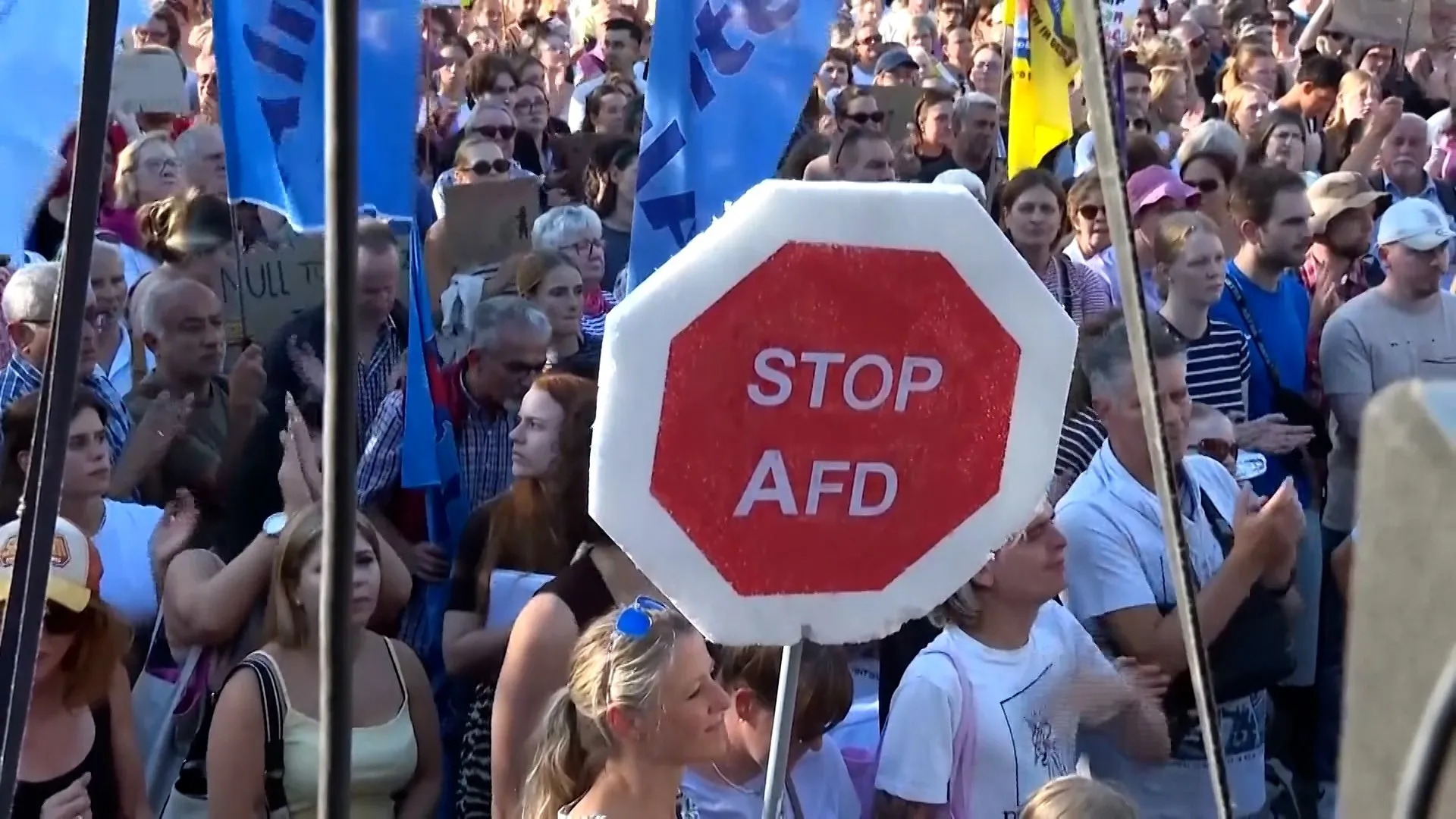
Thousands of demonstrators converged in Cologne to protest the recent electoral success of the Alternative for Germany party in Saxony-Anhalt.
Thousands of demonstrators gathered in the streets of Cologne to voice their strong opposition to the Alternative for Germany (AfD) party. The massive rally was organized in direct response to the political group’s significant performance in the recent state election held in Saxony-Anhalt. Participants expressed deep concern over the trajectory of national politics, as the far-right party managed to secure a substantial portion of the popular vote, fueling anxiety among those who view the movement as a threat to democratic values and social cohesion.
The atmosphere during the protest was characterized ns emphasizing inclusivity, human rights, and the rejection of extremist ideologies. The scale of the mobilization in Cologne highlights the growing polarization within the country, as citizens grapple with the shifting electoral landscape and the mainstreaming of political rhetoric that was previously relegated to the fringes.
The catalyst for the civil unrest in Cologne is the surprising electoral success of the AfD in Saxony-Anhalt, where the party captured nearly 44% of the total vote. This performance has sent shockwaves through the German political establishment, signaling a major realignment in voter sentiment within the region. Analysts suggest that the results reflect a deep-seated dissatisfaction with incumbent parties and a desire for radical change among a significant segment of the electorate.
a dominant political force in the state. This outcome has forced other political factions to reconsider their communication strategies and policy platforms. The electoral success is viewed tics see it as a dangerous shift toward nationalism that could undermine the country's institutional stability.
The rise of the AfD represents a complex challenge for Germany's traditional center-right and center-left parties. As the political landscape becomes increasingly fragmented, the ability to form stable governing coalitions is becoming more difficult. The recent electoral success in Saxony-Anhalt serves as a harbinger of potential volatility in future state and federal elections, forcing parties to address the underlying socioeconomic grievances that drive voters toward the far-right.
Beyond the immediate political consequences, the demonstrations in Cologne serve as a barometer for public sentiment regarding the country's social fabric. Many protesters argued that the normalization of far-right discourse poses an existential threat to the pluralistic nature of German society. As the debate continues, the tension between those advocating for conservative nationalist policies and those pushing for progressive, multicultural governance remains the defining conflict of the current political era.
As the political dust settles in Saxony-Anhalt, the focus shifts to how the major parties will respond to the demands of the electorate while addressing the concerns voiced he AfD to participate in the political process with the necessity of upholding the constitutional principles that define the modern state. Moving forward, observers expect more public activism as the nation navigates this period of uncertainty.
The events in Cologne are unlikely to be an isolated incident. With upcoming electoral cycles, the intensity of civil discourse is expected to heighten. Both the political leaders and the general public are currently engaged in a high-stakes dialogue about the identity and future direction of the nation, with the streets of major cities serving as the primary venue for these critical national debates.