

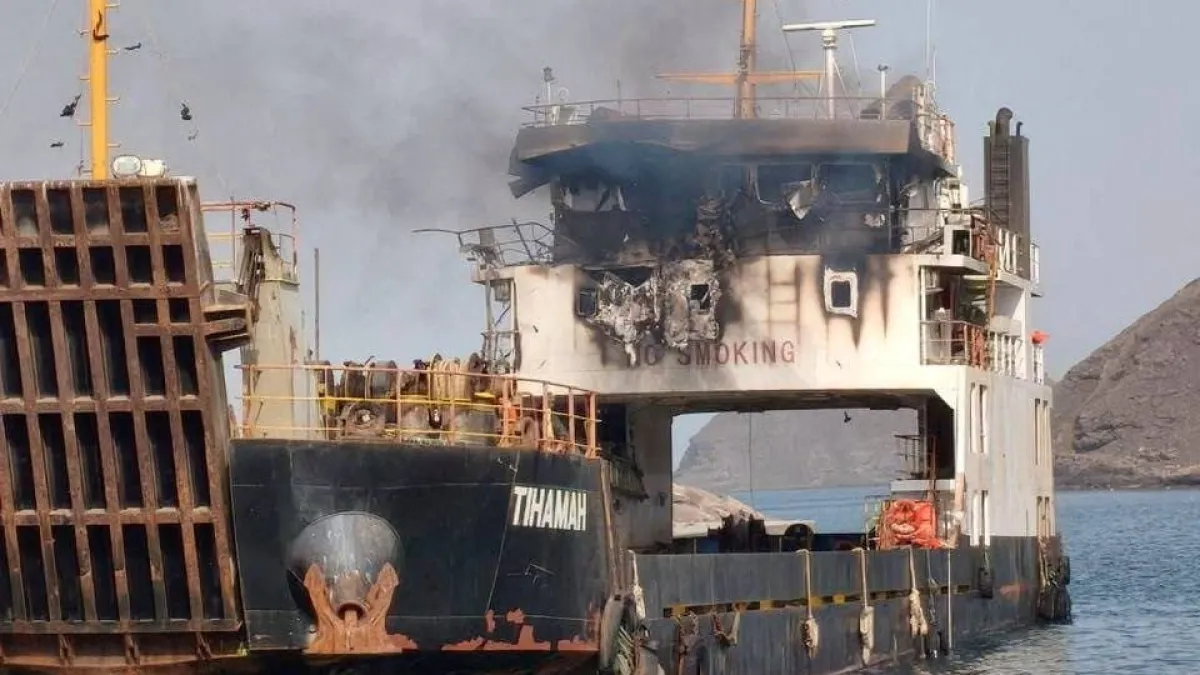
United States military forces have disabled a Panama-flagged cargo vessel that was attempting to breach a blockade near an Iranian port.
The geopolitical climate in the Middle East has reached a critical juncture following a direct military intervention can assets disabled a Panama-flagged cargo ship that was reportedly attempting to navigate toward an Iranian port. This incident underscores the intensifying friction between Washington and Tehran, as the U.S. continues to enforce strict maritime blockades designed to limit the flow of goods and potential military supplies into Iranian territory.
Maritime security in the region has become increasingly volatile, with international shipping lanes serving as a primary theater for these geopolitical disputes. The interception of this specific vessel marks a significant escalation, as military action against a commercial ship—regardless of its flag state—carries profound implications for international trade law and regional stability. Observers are closely monitoring how this development will influence the broader strategy of containment currently employed
The decision to fire upon a cargo ship highlights the aggressive enforcement measures being utilized to maintain the blockade against Iran. ny maritime traffic that is perceived to be in violation of established sanctions or security protocols. Such actions are intended to signal to global shipping entities that the risks associated with transporting goods into Iranian ports have risen substantially.
This blockade strategy serves as a cornerstone of the current U.S. regional policy, aiming to exert economic and logistical pressure on the Iranian government. However, the use of kinetic force against a civilian-flagged vessel introduces new complexities. Panama, as the flag state, may be drawn into diplomatic deliberations regarding the incident, as the seizure or disabling of ships registered under its flag frequently necessitates formal inquiries into the legality of the engagement under international maritime statutes.
The broader implications for global trade cannot be overstated, as the Persian Gulf and surrounding waterways are vital arteries for the world's energy supply. When military forces actively target cargo ships, the immediate result is an increase in insurance premiums and a general climate of uncertainty for shipping companies operating in the vicinity. The disruption caused longer, more expensive routes to avoid conflict zones.
Furthermore, the incident raises questions about the future of freedom of navigation in the region. While the United States maintains that its actions are necessary for regional security, other nations may view the blockade as an infringement upon the rights of neutral vessels. As the situation continues to unfold, the international community is bracing for potential retaliatory measures or further confrontations, as both sides appear locked in a high-stakes standoff that shows little sign of de-escalating in the near term.
Diplomatic channels are currently working to manage the fallout from this naval engagement. The tension between military necessity and international law remains a point of contention for regional powers and global allies alike. As the U.S. seeks to solidify its maritime control, the Iranian government is likely to interpret this act as a further provocation, potentially leading to increased military posturing within its own territorial waters and beyond.
Moving forward, the focus will likely shift toward how the international community responds to this specific military engagement. If this pattern of interdiction continues, the maritime environment will become increasingly hazardous, necessitating a reevaluation of security protocols for all commercial vessels traversing the area. The stability of the region remains precarious, with the recent incident serving as a stark reminder of how quickly maritime tensions can evolve into active military conflict.