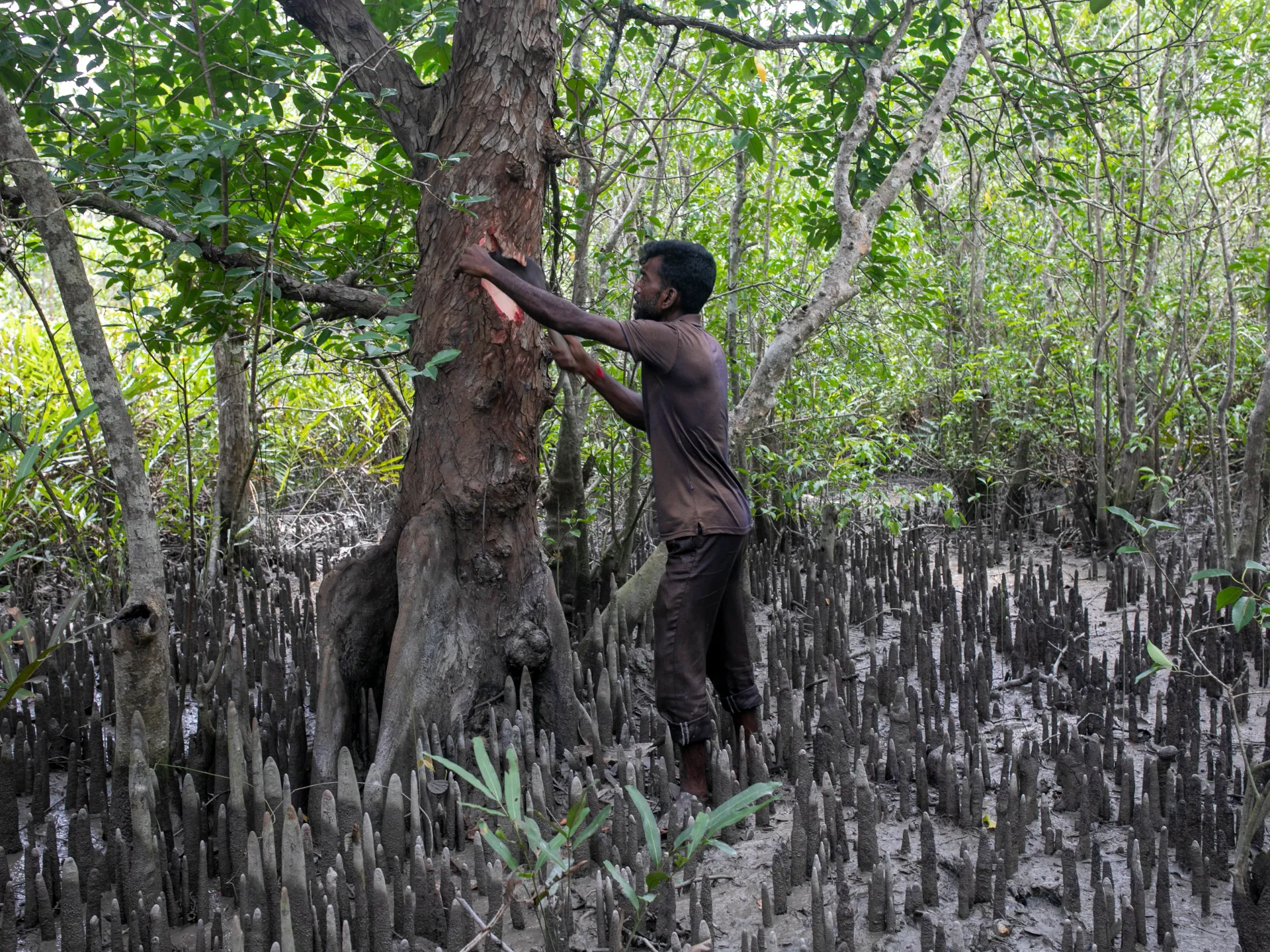
Rising sea levels and increasing salinity in the Sundarbans are destroying essential medicinal plants, leaving traditional healers unable to support their communities.
In the coastal region of Koyra, Bangladesh, the Sundarbans—the world’s largest tidal mangrove forest—has long served as a vital, natural pharmacy for local residents. For generations, traditional healers known as kabiraj have ventured into the dense, mud-laden thickets to harvest leaves, roots, and bark to treat common ailments. These healers rely on an oral tradition of knowledge passed down through families, utilizing the forest’s rich biodiversity to provide low-cost healthcare to communities that often lack access to formal medical facilities.
However, the environmental landscape of the Sundarbans is undergoing a dramatic and concerning transformation. Traditional healers report that the forest is thinning and that many essential medicinal plants are becoming increasingly difficult to locate. This decline is not merely a matter of convenience; it represents the loss of a centuries-old healthcare system that remains a lifeline for the impoverished population living on the fringes of the mangrove ecosystem.
The primary driver behind the vanishing medicinal flora is the increasing salinity of the region’s water and soil. Rising sea levels and the frequency of intense cyclones have pushed saltwater further inland, altering the delicate chemical balance of the forest floor. Experts note that while mangroves are salt-tolerant, their capacity to thrive is not infinite. As salinity levels rise, the botanical composition of the forest is shifting, with hardy, salt-loving species displacing the more delicate medicinal plants that healers have traditionally harvested.
The impact is visible to those who spend their lives navigating the forest. Healers have observed that certain trees, such as the bain, are failing to bloom, which has broader consequences for the ecosystem, including a collapse in honey production. Furthermore, the increased inundation of the forest floor during high tides means that areas that were once dry and accessible are now submerged, causing the death of trees and plants that were once staples of the local medicine cabinet. The destruction of home-based medicinal gardens e natural remedies.
The role of the kabiraj is also being reshaped ntroduction of community clinics and the widespread availability of retail pharmacies have provided villagers with alternative options for treating illnesses. For younger generations, these modern facilities often take precedence over traditional methods. Yet, for many, particularly the elderly and those living in extreme poverty, the cost of transport and professional medical fees remains a significant barrier.
Despite the availability of clinics in larger towns, residents often face long wait times and the high cost of pharmaceuticals. As a result, many families continue to view the kabiraj as their primary hope when illness strikes. The healers themselves often operate on a donation-based model, never charging fixed fees, which makes their services indispensable to those who would otherwise go without care. However, as the source of their remedies dwindles, these healers find themselves unable to meet the needs of their community, creating a widening gap in accessible healthcare.
The decline of traditional healing is compounded -based knowledge required to practice. Many veteran healers, some of whom have dedicated over three decades to their craft, fear they may be the last of their line. The knowledge of how to identify, harvest, and prepare these plants is not written down, making the potential loss of these practitioners an irreversible blow to the cultural and medicinal heritage of the region.
As the forest continues to change, the relationship between the people of Koyra and the Sundarbans is being forced to adapt. The loss of medicinal plants is a symptom of a broader environmental crisis, where the very landscape that sustained these communities for centuries is becoming less hospitable. While modern medicine provides necessary alternatives, the disappearance of the traditional pharmacy underscores the urgent need to address the ecological health of the mangroves to ensure that the most vulnerable populations are not left without options in times of sickness.