

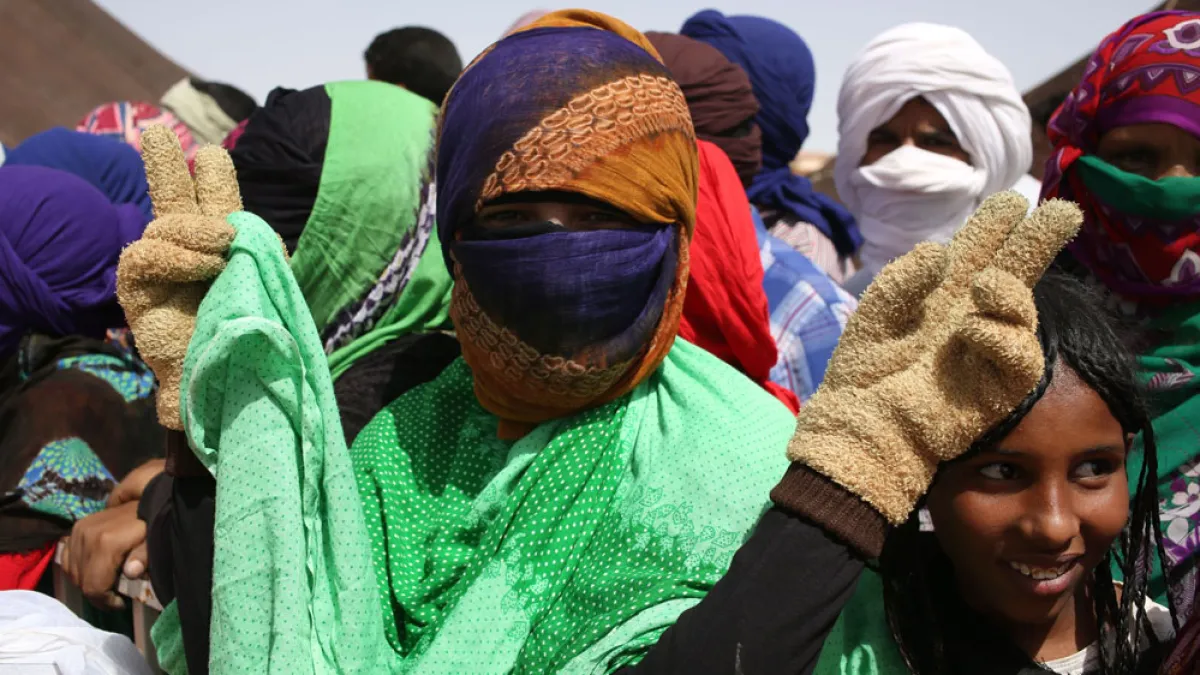
Spain’s proposed law offering citizenship to residents of its former colony, Western Sahara, has sparked diplomatic concerns in Morocco.
The Spanish Congress has moved forward with a significant legislative proposal that would establish a specialized pathway to Spanish citizenship for individuals born in the Western Sahara during the era of Spanish administration. Under the current provisions of the bill, those born in the territory prior to September 29, 1977, would be eligible to apply for nationality through a streamlined process, bypassing standard, more rigorous residency requirements. Furthermore, the legislation extends these benefits to first-degree descendants, potentially broadening the pool of eligible applicants significantly.
Beyond the primary eligibility criteria, the bill also proposes a substantial reduction in the mandatory residency duration for Sahrawis already residing legally within Spain. While foreign nationals typically face a ten-year waiting period to qualify for naturalization, this measure would shorten that requirement to just two years for those covered fy a historical injustice that left many Sahrawis in a precarious legal limbo following Spain's withdrawal from the territory in 1976.
While the bill does not officially alter the territorial status of Western Sahara or provide recognition to an independent Sahrawi state, it has attracted intense scrutiny from Rabat. Morocco views the territory as an integral part of its sovereign domain, a position that stands in direct opposition to the independence goals of the Polisario Front. The concern in Morocco is not necessarily legal sovereignty, but rather the creation of a new, large-scale demographic bridge between the Sahrawi population and the European Union.
Current estimates suggest that between 70,000 and 110,000 individuals could eventually qualify for this status. Should these individuals obtain Spanish nationality, they would simultaneously gain the rights and protections afforded to European Union citizens. This creates a complex dynamic, as it would effectively grant a significant number of people with direct, personal, or ancestral ties to the disputed Western Sahara the status of European nationals, potentially complicating the diplomatic landscape for the Spanish government as it balances its colonial legacy with its current strategic partnership with Morocco.
The legislative process has surfaced deep divisions within the Spanish political establishment. While the governing Socialist Party and its allies in the Sumar coalition have championed the bill as a necessary step for historical justice, the conservative People’s Party chose to abstain, and the Vox party voted against the measure entirely. This internal friction highlights how the issue of Western Sahara has transcended simple foreign policy and become deeply embedded in Spain’s domestic discourse regarding its own colonial past.
Spain has previously utilized historical narratives to shape nationality policy, most notably in 2015 when it opened a pathway for Sephardic Jews to claim Spanish citizenship based on ancestral connections dating back to the late 15th century. ent is merely applying a consistent framework. However, this reliance on historical ties has inadvertently provided Morocco with a rhetorical counter-argument, as the Moroccan government may question why Spain acknowledges historical connections to justify citizenship for some groups while dismissing historical and geographic ties when it comes to Spain’s continued administration of the North African cities of Ceuta and Melilla.
Despite the potential for friction, the bill does not formally rescind Spain’s 2022 policy shift, which saw the government of Prime Minister Pedro Sanchez formally endorse Morocco’s autonomy plan for Western Sahara. That policy change was instrumental in thawing relations between Madrid and Rabat after a period of intense diplomatic crisis. The current citizenship proposal is being presented as a separate issue, distinct from the political solution for the territory's status.
Ultimately, the impact of this law remains to be seen. Its primary significance may lie in how it forces Spain to reconcile its colonial heritage with modern geopolitical realities. As the bill progresses, it serves as a reminder of the enduring, multi-layered nature of the Western Sahara dispute and the difficulty of separating historical accountability from contemporary international relations.