

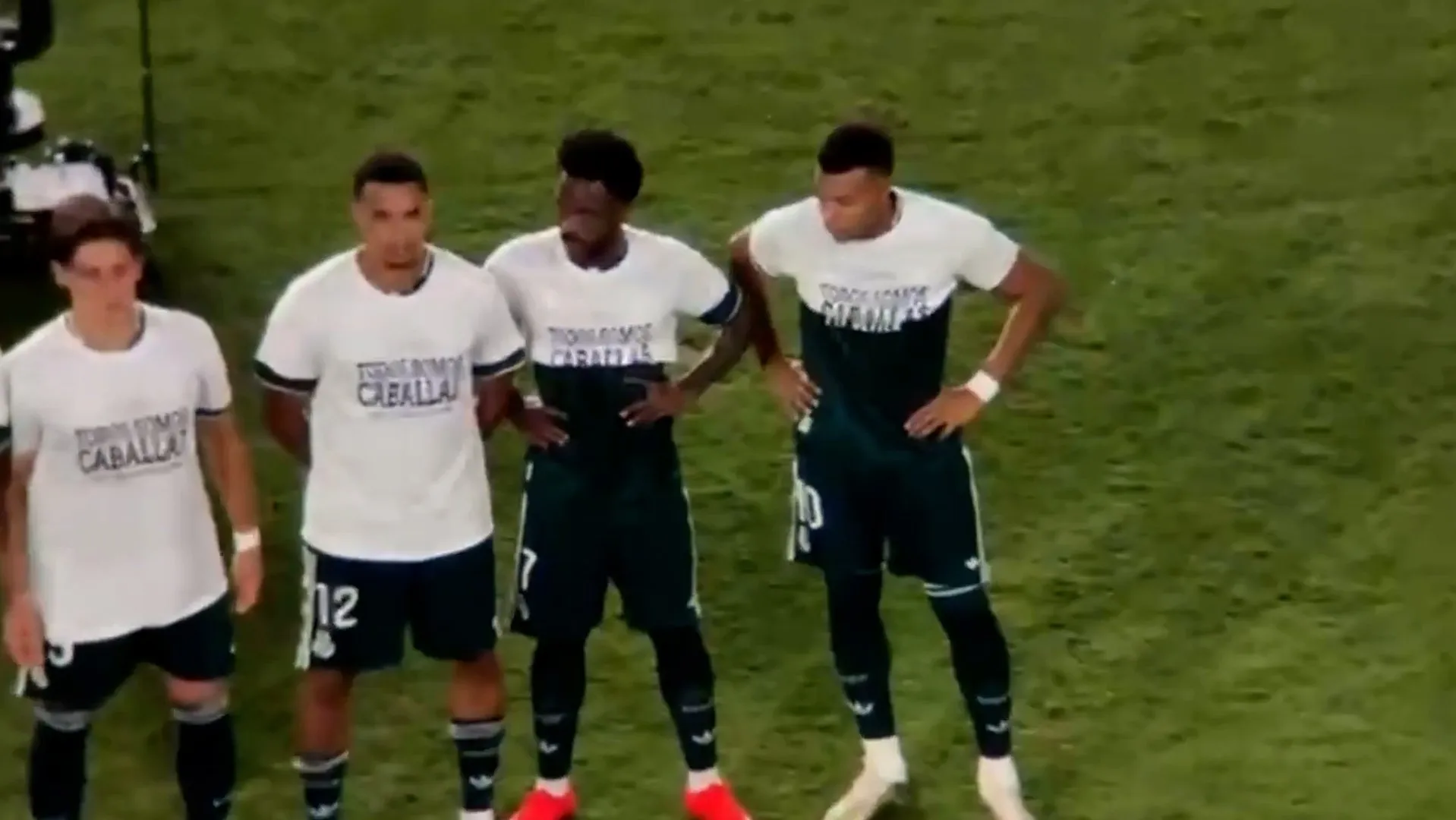
Key Real Madrid players have faced public backlash after appearing to intentionally cover a solidarity slogan supporting the Spanish enclave of Ceuta.
A recent incident involving prominent Real Madrid players has ignited a firestorm of debate regarding the intersection of sports, social activism, and public perception. During a high-profile appearance, several key members of the squad were seen wearing shirts intended to convey a message of solidarity with the Spanish enclave of Ceuta. The shirts featured the phrase "We are all Caballas," a term used to describe the residents of the North African city that has recently become a focal point for increased migration flows from neighboring Morocco.
However, the gesture quickly drew intense criticism after observers noted that three of the team's star players appeared to deliberately obscure the text on their shirts. As the images circulated across social media platforms, questions arose regarding whether the players were making a conscious choice to distance themselves from the message or if the positioning of the shirts was merely a result of poor coordination. The ambiguity of the situation has left fans and critics alike questioning the club's unified stance on the sensitive geopolitical issues surrounding the enclave.
To understand the gravity of the situation, one must look at the unique position of Ceuta. As a Spanish autonomous city located on the northern coast of Africa, it serves as a critical point of entry into the European Union. In recent years, the territory has faced significant pressure due to surges in migration, leading to heightened tensions between Spain and Morocco. The phrase "We are all Caballas" was intended to show support for the local population navigating these complex challenges.
nce. However, the optics of star athletes seemingly hiding this message have complicated the narrative. For many, the incident reflects the difficulty of navigating political waters in modern professional football, where athletes are often expected to act as symbols of unity while simultaneously being subject to the intense scrutiny of a global audience.
The digital reaction to the incident was swift and polarized. Supporters of the players argue that professional athletes should not be pressured to endorse specific political or social messages, suggesting that the players may have simply been uncomfortable with the explicit nature of the campaign. Others, however, view the act of covering the text as a form of silent protest or a failure of solidarity that undermines the club’s official public relations efforts.
This event highlights the ongoing debate regarding the responsibility of high-profile sports figures. Unlike corporate entities, individual players have distinct personal beliefs that may not always align with the messaging campaigns organized ended impact of a social initiative, transforming a gesture of support into a source of division and public embarrassment for the organization involved.
The fallout from this incident serves as a significant case study for sports organizations looking to engage in social advocacy. When teams attempt to align themselves with political or humanitarian causes, the consistency of the messaging is paramount. A lack of alignment among team members can lead to misinterpretations that overshadow the intended humanitarian goal, potentially alienating both the local population in Ceuta and the global fanbase of the club.