

A preliminary NTSB report identifies metal fatigue as the primary cause for an engine blade fracture that led to a mid-air emergency on a Ryanair flight.
United States aviation safety investigators have released a preliminary report concerning a mid-air engine failure that resulted in the partial ejection of a passenger from a Ryanair Boeing 737-800. The National Transportation Safety Board (NTSB) has confirmed that the catastrophic failure was initiated evealed that approximately 37 percent of the fracture surface exhibited clear signs of metal fatigue, a condition where structural weakness develops over time due to repeated stress.
The NTSB investigation traced the origin of the damage to the root of the affected blade. Experts noted high-amplitude fatigue patterns, suggesting that the structural integrity of the engine component had been compromised prior to the flight. This finding has raised significant questions regarding the effectiveness of existing inspection protocols, particularly as the aircraft had undergone routine maintenance checks in the months preceding the July 10 incident.
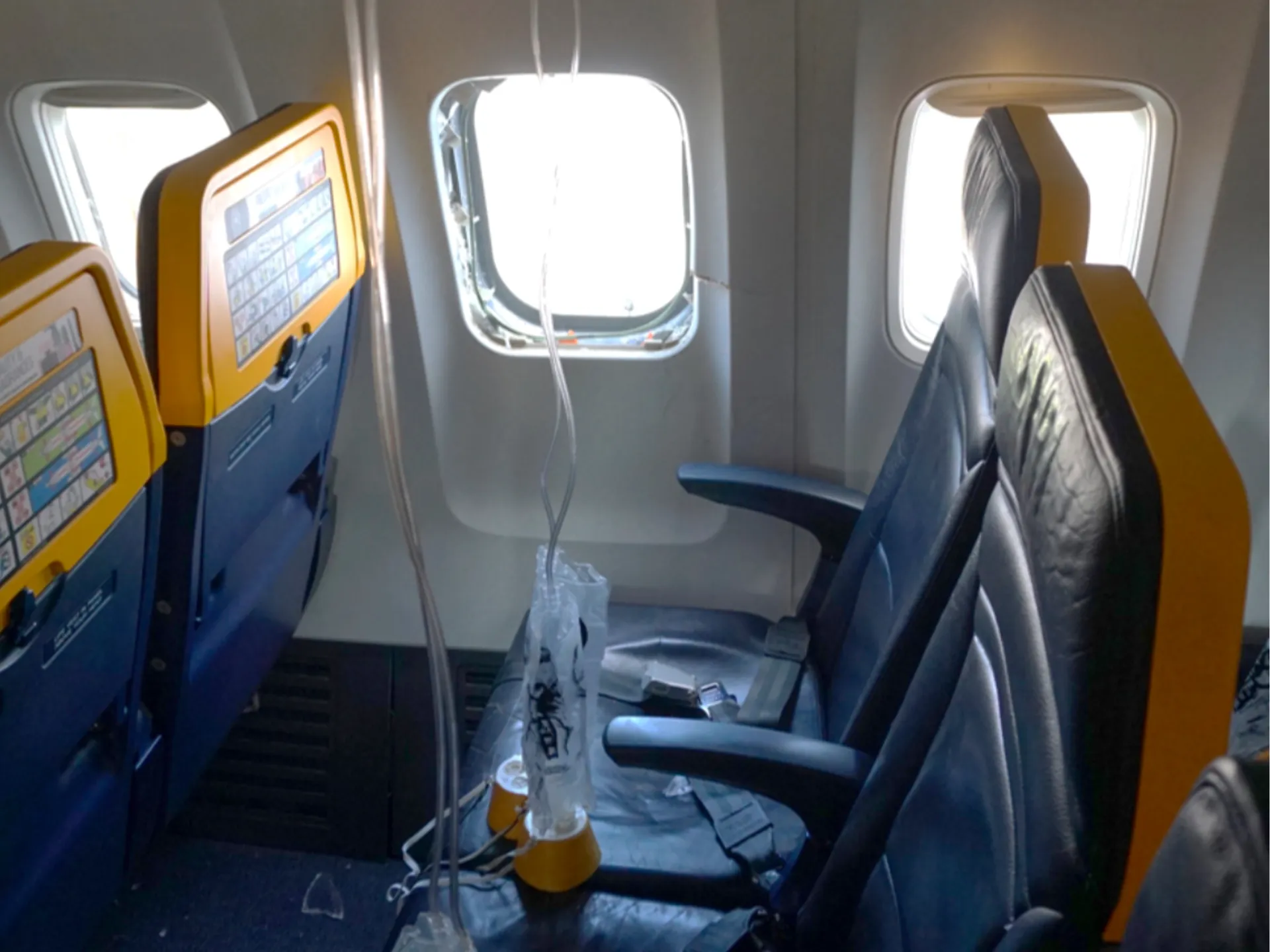
The incident occurred while the aircraft was ascending through 16,000 feet. The flight crew reported receiving a high-vibration alert originating from the right engine, which intensified rapidly. Shortly thereafter, the crew heard a loud, percussive sound, which was immediately followed ris piercing the fuselage and shattering the window at row 11.
In the ensuing chaos, a 61-year-old passenger seated in 11F was partially pulled through the breach created working together to pull the individual back into the safety of the cabin. A flight attendant also rushed to the scene to assist. The passenger sustained neck and shoulder injuries, as well as friction burns, but was attended to r an emergency landing.
While the NTSB has focused on metal fatigue, the investigation has also accounted for the engine's history regarding environmental hazards. Investigators recovered bird remains and feathers from various sections of the engine assembly. However, the agency has yet to definitively conclude that a bird strike was the primary catalyst for the blade fracture. The uncertainty remains because the engine had a documented history of four suspected bird strikes over the preceding twelve-month period, with two instances confirmed
The maintenance history of the aircraft indicates that the fan blades were subjected to ultrasonic inspections in both November 2025 and May 2026. According to official reports, these inspections did not identify any damage, which complicates the understanding of how the fatigue reached a critical failure point so soon after these checks. As the investigation continues, the NTSB is expected to further analyze the correlation between previous bird strikes and the accelerated development of fatigue cracks in the fan blade assembly.
This incident serves as a stark reminder of the inherent risks associated with high-cycle engine components and the necessity for rigorous, evolving maintenance standards. The fact that an engine can suffer a catastrophic structural failure despite recent ultrasonic testing highlights potential gaps in detecting subsurface metal fatigue. Aviation authorities globally are likely to review the findings of this report to determine if inspection frequencies or methodologies for Boeing 737-800 engines need to be adjusted to prevent similar occurrences.
As the NTSB continues its comprehensive review, the airline industry remains focused on the passenger's recovery and the broader implications for the 737 fleet. The focus will likely shift toward refining non-destructive testing techniques to better identify fatigue before it reaches the point of fracture. For now, the report stands as a critical document for understanding how a combination of mechanical wear and external environmental factors can converge to create a life-threatening emergency at cruising altitude.