

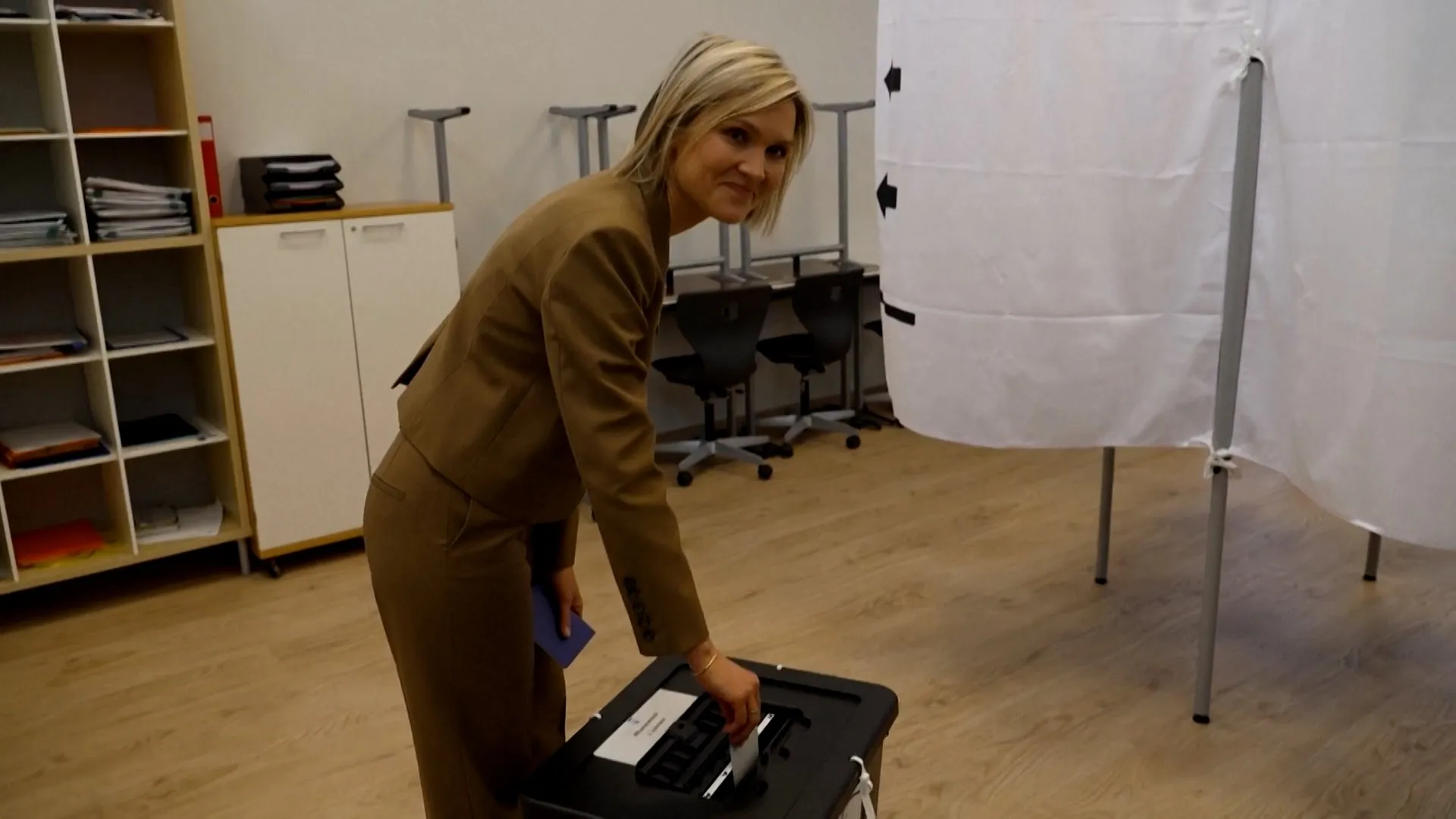
Icelandic voters have cast their ballots in a crucial referendum to determine whether the government should resume negotiations for European Union membership.
Citizens of Iceland headed to the polls this Saturday to cast their ballots in a highly anticipated national referendum regarding the future of the country's relationship with the European Union. The vote represents a significant turning point for the North Atlantic nation, which has navigated a complex and often debated path concerning its potential integration into the European bloc. Prime Minister Kristrún Frostadóttir was among the early voters, signaling the government's commitment to democratic participation in this critical decision-making process.
This electoral event marks the first time in over a decade that the Icelandic public has been asked to formally weigh in on the prospect of resuming accession negotiations. The debate surrounding EU membership has long been a fixture of the local political landscape, characterized tural resources, particularly within the fishing industry. With the ballot boxes now closed, the nation awaits a result that could fundamentally alter its diplomatic and economic trajectory for years to come.
The current referendum serves as a continuation of a dialogue that was effectively frozen thirteen years ago. In the wake of the global financial crisis, Iceland initially sought membership as a means of securing economic stability and adopting a more robust currency framework. However, the enthusiasm for the process waned as the economy recovered and concerns grew over the potential impact of EU regulations on the country's independent maritime policies and agricultural sectors.
Since that time, the relationship between Reykjavik and Brussels has remained in a state of suspended animation. While Iceland has maintained close ties with the EU through its membership in the European Economic Area (EEA)—which provides access to the single market without full political integration—the question of whether to pursue full membership has never truly vanished. The decision to revisit this topic in 2026 highlights a shifting political climate and a renewed interest in exploring whether the current arrangement is still sufficient for the country's long-term prosperity.
Central to the arguments presented onomy. Proponents of resuming talks argue that formal membership would provide the nation with a seat at the table in Brussels, allowing Iceland to influence the regulations that currently affect its industries without the benefit of a vote. Furthermore, supporters suggest that the adoption of a more stable monetary framework could protect the economy from the volatility often associated with the Icelandic króna.
Conversely, opponents of the move express deep-seated concerns regarding the loss of national sovereignty. Many critics emphasize that the EU's common fisheries policy could prove detrimental to Iceland's vital fishing sector, which serves as the backbone of the national economy. There is also a significant cultural component to the resistance, with many citizens wary of surrendering control over national policies to a supranational entity. These competing visions of Iceland's future have created a tight race, making the outcome of the referendum difficult to predict even as ballots were being counted.
Regardless of the final tally, the referendum underscores the complexities of modern governance in a globalized world. Iceland’s unique geographic position and reliance on specific natural resources necessitate a careful balancing act between international cooperation and the preservation of domestic interests. The government will now be tasked with interpreting the public mandate and determining how to proceed in its dealings with European partners.
The results of this vote will likely dominate the political discourse in the coming weeks and months. If the public chooses to move forward with negotiations, the government will face the daunting task of navigating years of intricate talks. Should the electorate opt to maintain the status quo, policymakers will need to find alternative strategies to strengthen the economy and address the challenges that led to the demand for this referendum in the first place. The eyes of the international community remain fixed on Reykjavik as the nation defines its path forward.