

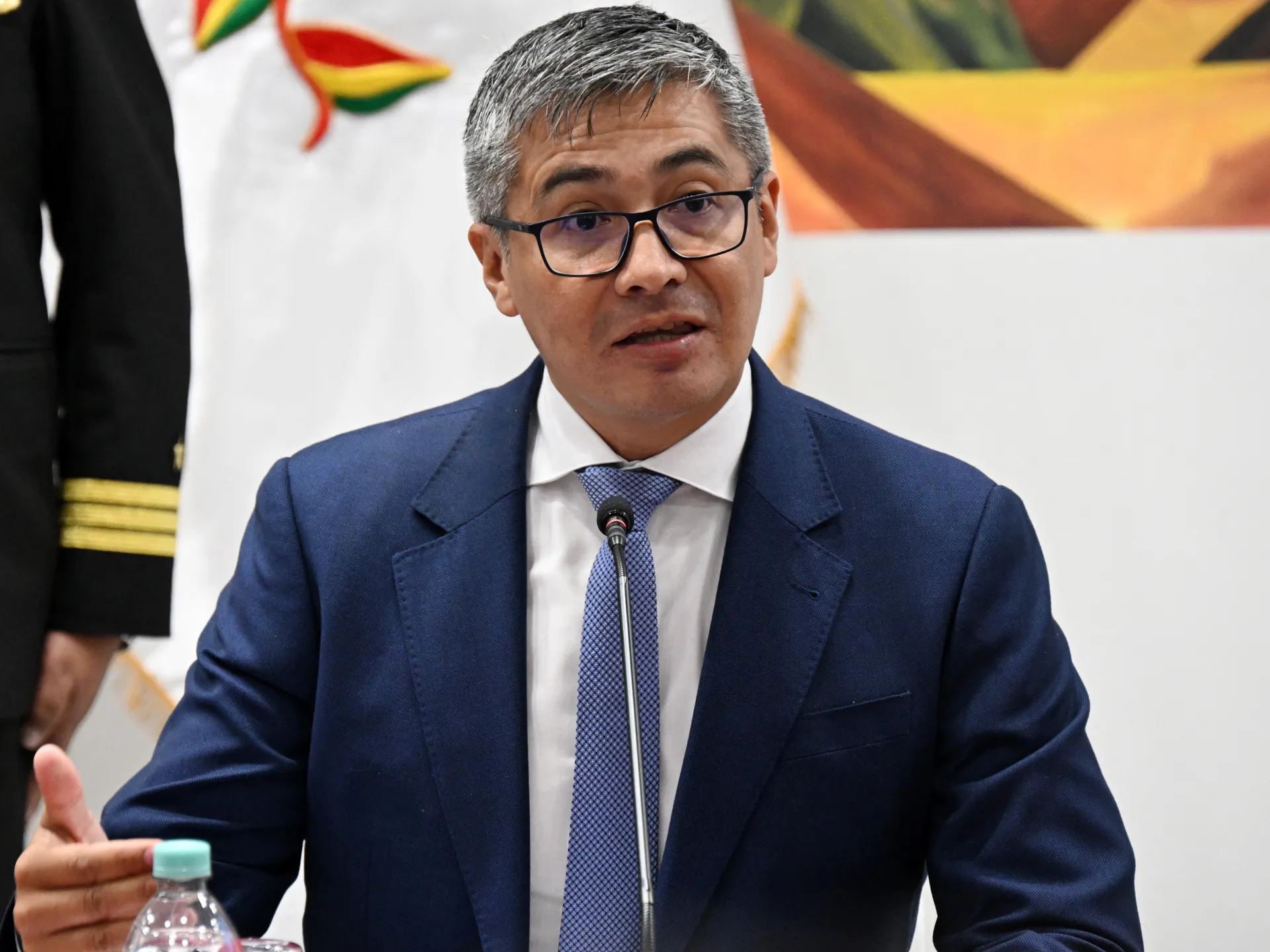
President Rodrigo Paz has replaced his economy minister following a congressional censure, marking a significant concession amid ongoing national protests.
Bolivian President Rodrigo Paz has officially removed Economic Minister Jose Gabriel Espinoza from his cabinet, a move that follows intense pressure from the national legislature and growing public dissatisfaction. The government confirmed the change through an official decree, naming Oscar Mario Justiniano Pinto as the interim head of the ministry. While the decree clarifies that Pinto will manage the portfolio temporarily, it provides no concrete timeline for the appointment of a permanent replacement, signaling a period of transition within the administration's economic team.
The dismissal represents a significant strategic pivot for the Paz administration. Initially, the government had signaled its intent to challenge a congressional censure against Espinoza, arguing that the legislative process was legally contested. However, sident Paz appears to be attempting to de-escalate tensions with the opposition-controlled Congress. This decision is widely viewed nctional cooperation between the executive and legislative branches during a volatile time for the nation.
The firing of Espinoza is deeply rooted in the severe economic challenges currently facing Bolivia. The nation has grappled with a multi-year decline in natural gas production, which historically served as the backbone of the state's revenue. Factors including the depletion of known reserves, a lack of new exploration initiatives, and persistent administrative mismanagement have severely hampered the country’s financial health. This reduction in export revenue has triggered a sharp decline in foreign currency reserves, further destabilizing the domestic economy and limiting the government's fiscal flexibility.
The human cost of these macroeconomic failures has been profound, with recent data indicating that over 37 percent of the population lives below the national poverty line as of 2024. President Paz, who rose to power last October on a platform of stability, has struggled to implement reforms that do not alienate a public already weary of austerity. Efforts to eliminate long-standing fuel subsidies and controversial land reform policies have acted as flashpoints for nationwide protests, forcing the administration into a cycle of implementing policies and subsequently retracting them under intense public pressure.
As President Paz seeks to secure a necessary financing program from the International Monetary Fund (IMF), the departure of his top economic official is being interpreted as a gesture of political compromise. Opposition lawmakers have lauded the move as a sign of constitutional compliance and humility, suggesting that the administration may finally be willing to collaborate on a path forward for economic recovery. However, the path to reform remains fraught with obstacles, as the government continues to face fierce resistance from supporters of former President Evo Morales.
The ongoing rivalry between the current administration and the Morales faction continues to polarize the country. With arrest warrants issued for the former leader regarding allegations of inciting an armed uprising and other criminal charges, the political atmosphere remains highly charged. Morales has utilized his platform to criticize the current government’s reliance on austerity, framing the economic crisis as a failure of the current administration to protect the interests of the citizenry. As the country looks toward the future, the stability of the Paz government will likely depend on its ability to bridge these deep-seated political divides while managing an increasingly fragile economic landscape.