

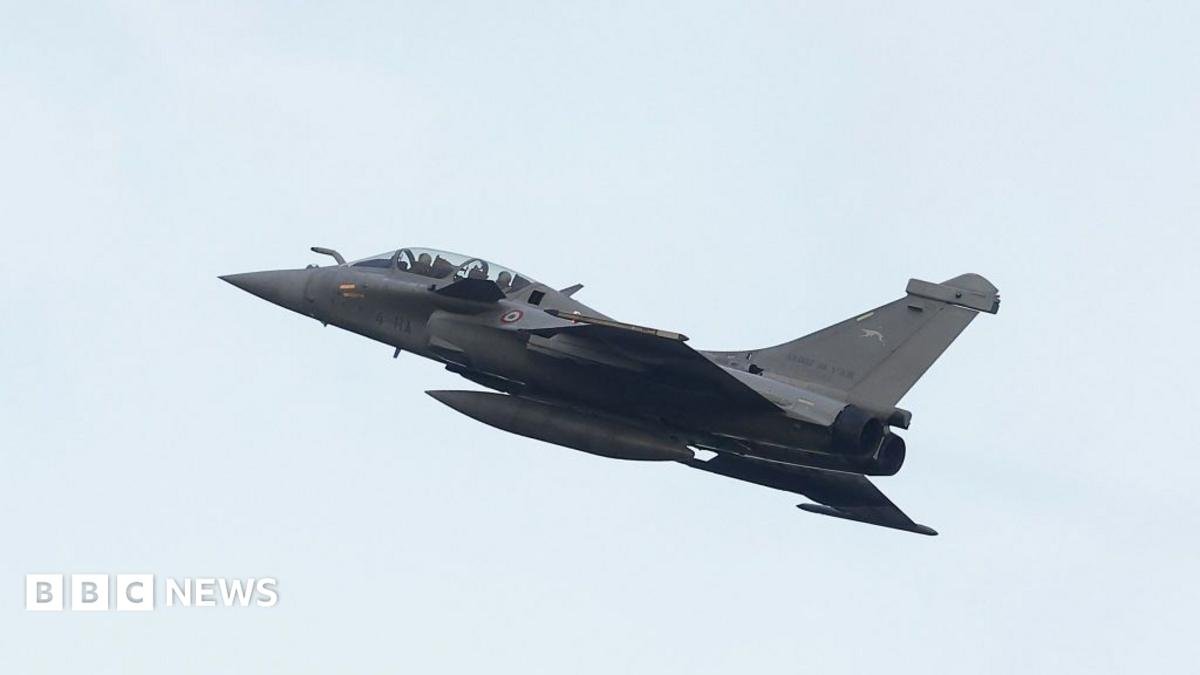
NATO fighter jets intercepted and destroyed an unidentified drone over Lithuania, marking a significant security response amid rising regional tensions.
In a significant security development, NATO fighter jets successfully intercepted and destroyed an unidentified drone that breached Lithuanian airspace during the early hours of Tuesday. The incident, which occurred shortly after midnight, marks a notable escalation in the monitoring of regional borders. Lithuanian authorities confirmed that the aerial vehicle entered the country's southern territory, specifically near the city of Kaunas, having originated from the direction of neighboring Belarus.
The operation involved a coordinated effort between the Lithuanian armed forces and Italian pilots currently participating in the NATO Air Defence Mission. This partnership underscores the integrated nature of the alliance's eastern flank defenses. Following the successful neutralization of the target, officials emphasized the professionalism of the response, highlighting that the incident was handled with the urgency required to maintain the integrity of sovereign airspace.
The incursion triggered widespread emergency protocols, including public alerts sent directly to mobile devices throughout the Vilnius region. Residents were urged to seek shelter immediately and remain in secure locations until authorities issued an all-clear. This level of public mobilization reflects the heightened state of alert that has become a reality for Baltic nations as the conflict in Ukraine continues to exert pressure on neighboring states.
While this marks a rare instance of a NATO jet actively downing an unauthorized drone within Lithuanian borders, it follows a period of increasing concern regarding unmanned aerial vehicle activity. Previous sightings, including an incident on September 13th where an object reportedly traversed Lithuanian territory before exiting into Russian airspace, have kept domestic security agencies on high alert. The frequency of these events has led to a more robust and responsive air defense posture across the Baltic region.
Currently, the origins of the downed drone remain unconfirmed. Recovery teams have been deployed to collect debris scattered across the affected area to facilitate a comprehensive forensic investigation. Officials are tasked with determining whether the device was armed, its technical origins, and whether its presence in Lithuanian airspace was the result of a deliberate provocation or an accidental navigation error. The analysis of the recovered fragments will be critical in shaping future diplomatic and security responses.
The lack of commentary from Moscow regarding the event leaves several questions unanswered. However, regional leaders remain steadfast in their commitment to collective security. As Lithuania is a key supporter of Ukraine and shares a long border with Belarus—a staunch ally of Russia—the incident is viewed through the lens of ongoing regional instability. The alliance maintains that it will continue to defend its territory, reinforcing the principle that every inch of NATO land remains protected under the collective security framework.
The incident in Lithuania is not an isolated event but rather part of a broader pattern of drone activity observed across Europe. Since the inception of the full-scale conflict in Ukraine, NATO member states, including Poland, have frequently scrambled aircraft to monitor or intercept unidentified vehicles. These actions are often described as preventive, designed to secure airspace adjacent to active conflict zones and mitigate risks to civilian infrastructure.
Electronic warfare has been cited as a primary factor in the proliferation of stray drones. Technology used to jam or redirect unmanned vehicles has, in several documented instances, caused devices to lose their original flight paths and drift into the airspace of neighboring countries. As NATO continues to monitor these developments, the integration of advanced detection and interception capabilities remains a priority for the Baltic states of Lithuania, Estonia, and Latvia, all of which remain committed to the alliance's core mission of mutual defense.