

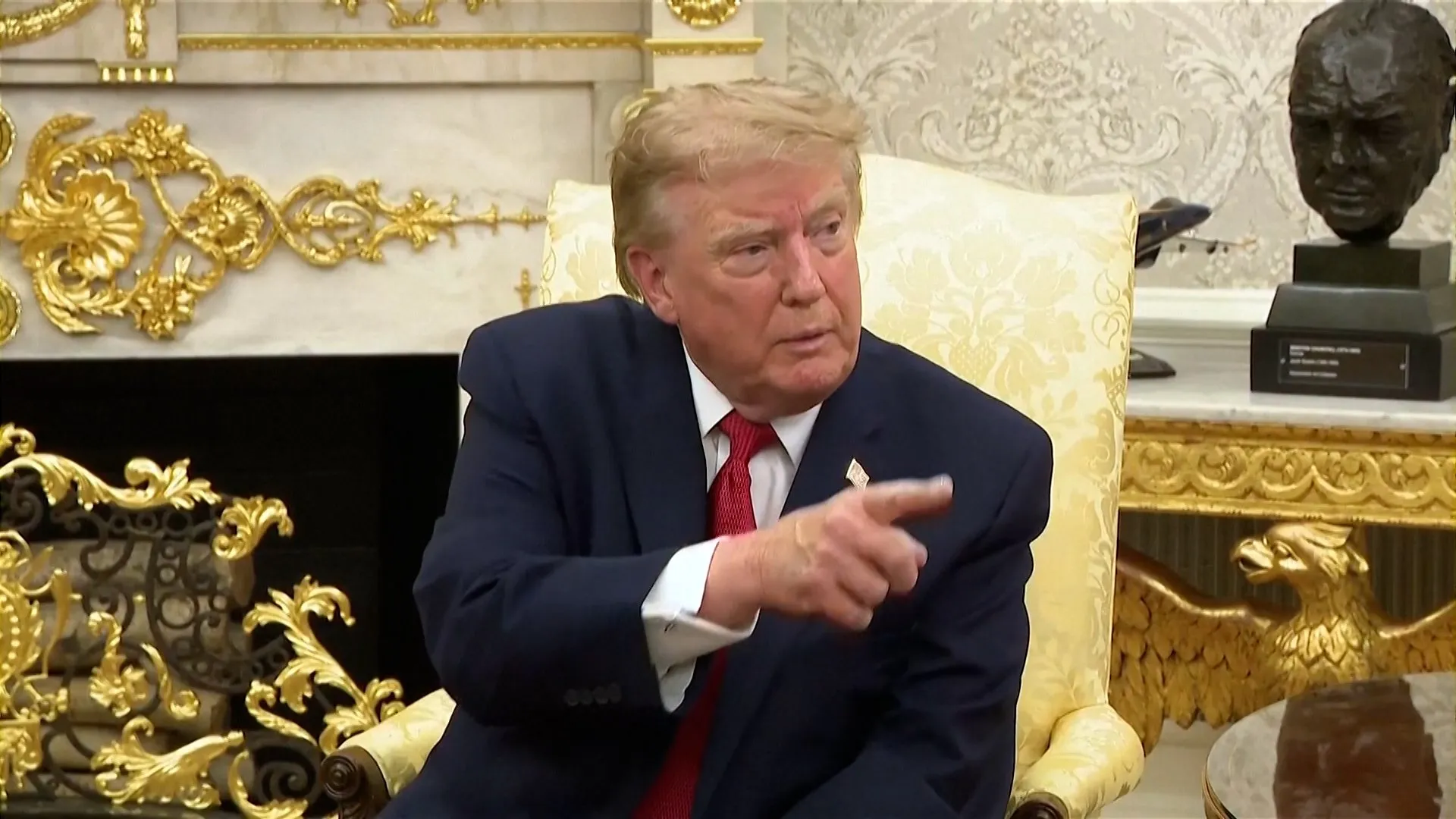
President Donald Trump has expressed doubt that Iran will agree to the stringent terms required to prevent the country from developing nuclear weapons.
President Donald Trump recently articulated a pessimistic outlook regarding the possibility of securing a comprehensive agreement with the Iranian government. During a public address, he emphasized that the current trajectory of diplomatic relations is unlikely to yield the specific type of accord he deems essential for regional stability and global security. The primary concern remains Iran’s potential to develop a nuclear weapon, a prospect that the administration continues to categorize as an unacceptable outcome for international peace.
The President highlighted that his criteria for a successful deal are stringent, requiring verifiable and permanent changes to Iran's nuclear infrastructure. Because of these demanding standards, he suggested that the likelihood of reaching a consensus remains low. This declaration underscores a deepening divide between Washington’s expectations and Tehran’s current policy framework, complicating efforts to find a diplomatic resolution that satisfies all parties involved.
Addressing the technical aspects of the situation, the President asserted that Iran currently lacks the immediate capability to produce a nuclear weapon. He pointed to historical military actions and strategic strikes as having significantly degraded Iran’s nuclear program, creating a substantial barrier to rapid advancement. These past interventions, according to his assessment, have effectively reset the timeline for potential nuclear development, granting the international community a buffer period.
Furthermore, the President argued that any attempt process. nfrastructure, the administration aims to reassure the public that the threat is not imminent. This perspective serves as a cornerstone of his administration's current approach to Middle Eastern security, focusing on containment and the prevention of further proliferation through both diplomatic pressure and the lingering effects of historical strategic actions.
The refusal of the Iranian leadership to align with the specific terms proposed without a deal that addresses every aspect of their nuclear program, the risk of regional instability remains high. signaling that his administration is prepared to maintain its current stance of economic and diplomatic isolation rather than settling for a partial or insufficient arrangement.
Looking ahead, the geopolitical implications of this deadlock are significant. As the administration continues to monitor the situation, the emphasis remains on preventing nuclear acquisition at all costs. The rhetoric surrounding these negotiations suggests that the United States is prioritizing long-term security guarantees over short-term diplomatic wins. Whether this strategy will eventually lead to a shift in Tehran’s policy or continue to result in a prolonged standoff remains a central question for observers of international relations.
The path forward remains fraught with uncertainty as both sides remain entrenched in their respective positions. While the administration is confident in its assessment of Iran's current limitations, the international community continues to watch closely for any signs of a breakthrough. The insistence that Iran cannot be allowed to possess nuclear weapons remains the defining objective of current policy, shaping every interaction and public statement from the White House.
Ultimately, the President's comments reflect a commitment to a specific vision of regional security that leaves little room for compromise on nuclear proliferation. ins on the prevention of nuclear advancement. As the situation evolves, the effectiveness of this hardline approach will be tested against the shifting realities of global diplomacy and the internal priorities of the Iranian leadership.