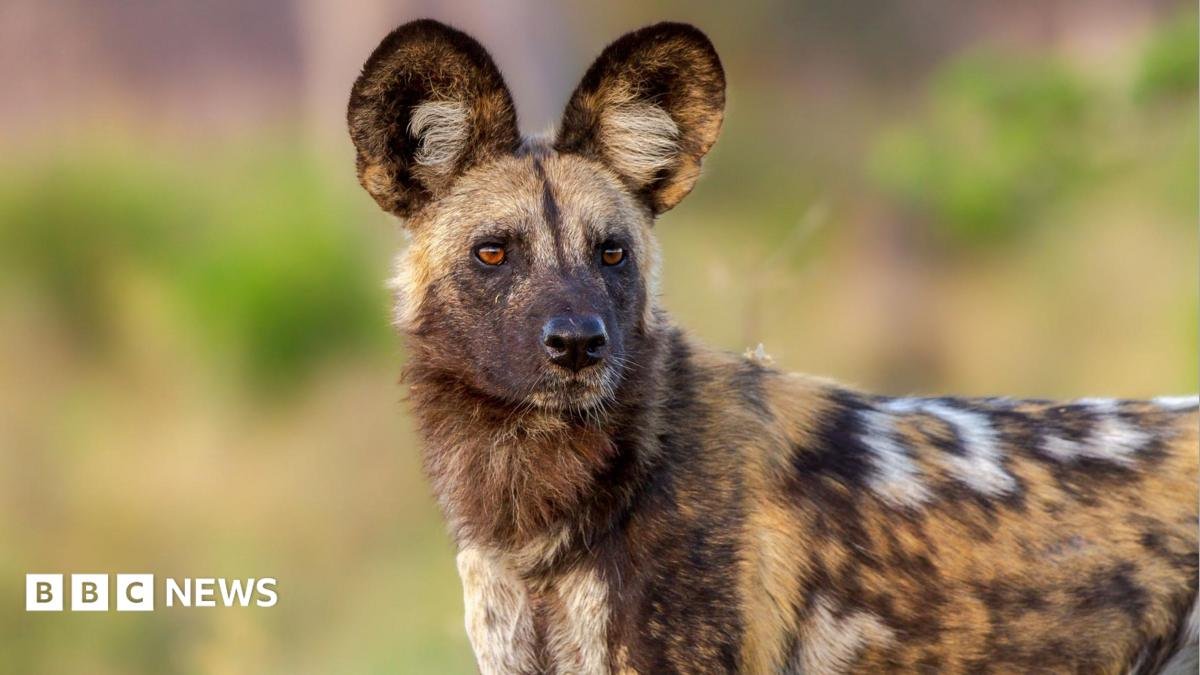
A pack of three African wild dogs has traveled 2,500 miles across Zambia in a record-breaking search for new territory and breeding opportunities.
In an extraordinary feat of endurance, a pack of three male African wild dogs has completed a monumental 2,500-mile journey across the African continent. This trek, which spanned roughly 4,000 kilometers, marks the longest recorded dispersal distance for any terrestrial mammal in Africa. The three brothers navigated a complex and fragmented landscape, zigzagging through Zambia over an eight-month period to find new territory and potential mates.
While the straight-line distance between their starting and ending points was approximately 260 miles, the animals traveled nearly ten times that distance due to the obstacles they encountered. This behavior, known as dispersal, differs significantly from seasonal migration. Unlike species that move back and forth to follow food sources or changing weather patterns, these dogs were driven heir own immediate birth packs.
The study, published in the journal Ecology, highlights the incredible resilience of these predators, which are among the rarest in Africa. With only an estimated 6,000 individuals remaining in the wild, the ability of these dogs to traverse vast, human-influenced territories provides researchers with new insights into how species move and survive in an increasingly developed world.
The route taken infrastructure, including the outskirts of Lusaka and various industrial developments. Their successful navigation of these areas suggests that wildlife populations across eastern and southern Africa may be more interconnected than scientists previously assumed. This connectivity is vital for the long-term genetic health of the species, as it allows for gene flow between otherwise isolated groups.
However, the journey was not without its grim realities. The study tracked several other packs, and not all stories ended in success. The researchers noted that many dogs in the study fell victim to illegal snares, a pervasive threat to wildlife in the region. In a poignant observation, scientists noted that surviving pack members often returned repeatedly to the exact location where a companion had died, a behavior that suggests a strong social bond and a struggle to process the loss of a pack member.
Another group of three sisters, who attempted a similarly ambitious journey, failed to reach their destination. One of the females was trapped in a snare, effectively ending the group's progress. These incidents serve as a stark reminder of the dangers inherent in wildlife movement across unprotected corridors, where human-wildlife conflict and poaching remain constant threats to survival.
The findings from this research underscore the urgent need for conservation strategies that extend beyond the boundaries of established national parks. Experts argue that protected areas cannot function as isolated islands in a sea of human development. Instead, there must be a concerted effort to establish and protect biological corridors—strips of natural land that allow animals to travel safely between larger habitats.
Professor Scott Creel of Montana State University, the lead author of the study, expressed a sense of cautious optimism regarding the results. The data suggests that as long as populations are not contained eastern and southern Africa. This connectivity is essential for the survival of wide-ranging species like wild dogs and elephants, which naturally require massive territories to thrive.
Moving forward, the conservation community is being urged to adopt a broader landscape-level approach. al growth and poaching. Ensuring that these corridors remain open is perhaps the most effective way to protect the future of African wild dogs, allowing them to continue their ancient, necessary roaming behavior without succumbing to the hazards of modern encroachment.