
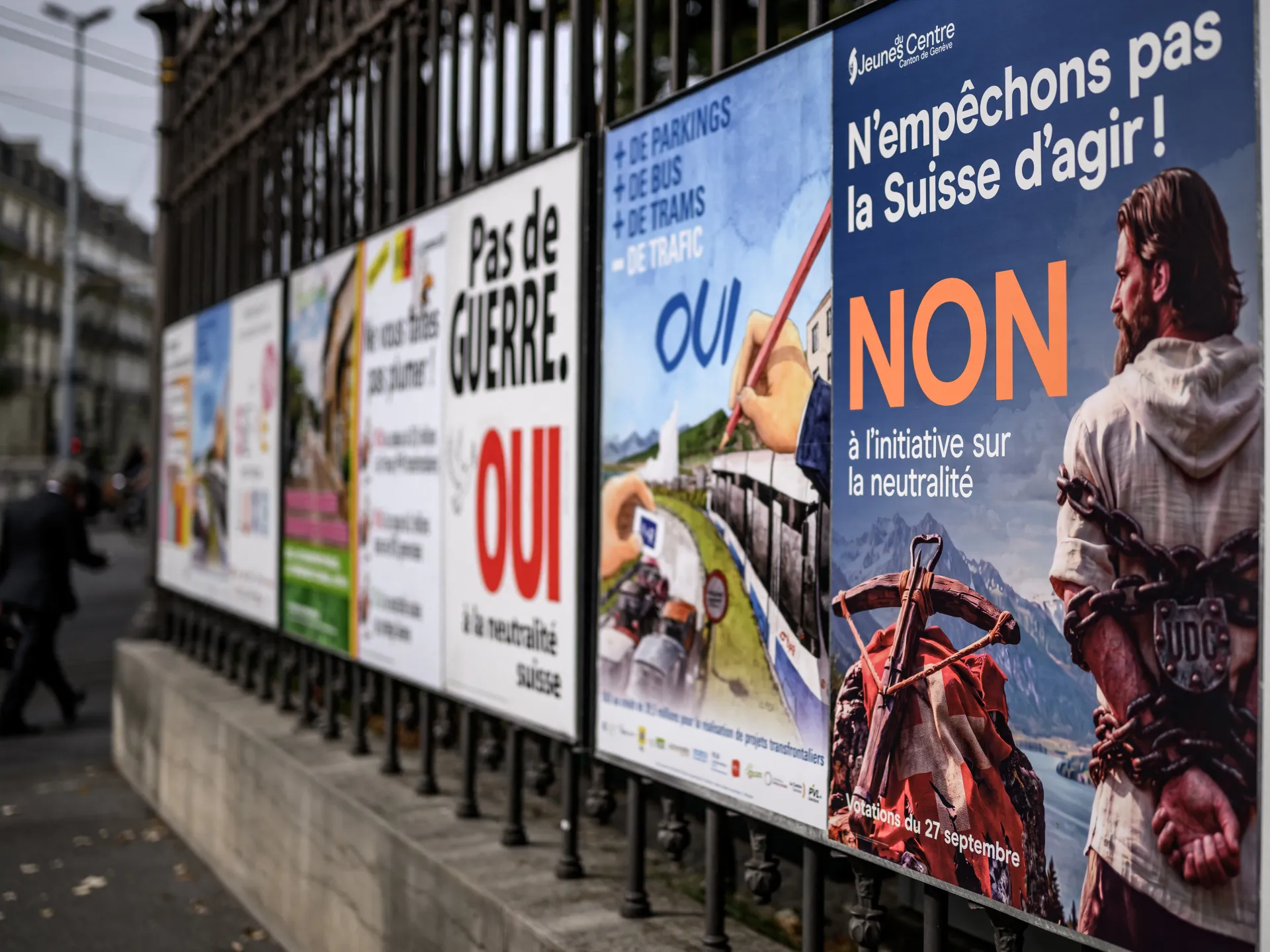
Swiss voters will decide this week whether to enshrine a strict version of neutrality into their constitution, a move that could limit the nation's participation in international sanctions and security alliances.
Swiss voters are heading to the polls this week to decide on a constitutional initiative that seeks to codify a rigid definition of neutrality into the nation's legal framework. The upcoming referendum, scheduled for September 27, forces a reckoning with a policy that has defined the Alpine nation’s global stance since the Congress of Vienna in 1815. Proponents of the measure argue that recent departures from this historical stance, particularly the adoption of European Union sanctions against Russia following the 2022 invasion of Ukraine, have compromised the country's sovereign position.
If the measure passes, it would strictly prohibit Switzerland from participating in non-UN-mandated economic sanctions and limit cooperation with military alliances to instances where the nation itself is under direct attack. The initiative, championed he country from the geopolitical pull of Western blocs. Critics of the initiative, however, contend that such an inflexible framework ignores the realities of modern security, effectively tethering the government’s hands during international crises where economic diplomacy is a primary tool for maintaining regional stability.
The implications of this vote extend far beyond domestic policy, touching on the fundamental security architecture of Europe. Switzerland’s historical neutrality has long served as a diplomatic bridge, allowing it to host international summits and act as a neutral arbiter in global disputes. xible international partner, particularly as European neighbors—all of whom are increasingly aligned through NATO—seek deeper security integration. The debate highlights a growing tension between traditional national identity and the pragmatic necessity of collective security in an era characterized ld signal a pivot toward isolationism that challenges Switzerland's economic reliance on open, globalized markets.
The push for this referendum is deeply rooted in the shift of Swiss policy toward Russia. Historically, Switzerland maintained a delicate balance of trade and diplomatic distance. When the government moved to align with European Union sanctions against Moscow in 2022, it sparked a fierce internal debate about the threshold of neutrality. The current initiative seeks to ensure that such actions can only be taken if explicitly mandated its current discretionary power to impose sanctions in lockstep with Western allies.
Observers note that a "yes" vote would require an immediate re-evaluation of current Swiss economic policy, potentially forcing the government to unwind existing measures against Russia. Conversely, a "no" vote represents an endorsement of the status quo: a flexible, case-by-case approach that allows policymakers to adjust to the specific demands of the international security environment. While polls currently suggest the initiative may fail to pass, the intensity of the debate underscores a deep-seated desire among segments of the Swiss electorate to return to a more classical, isolationist interpretation of their long-standing constitutional obligations.
Regardless of the outcome on September 27, the underlying questions regarding Switzerland’s role in the global order will persist. If the initiative fails, the government will continue its current trajectory of pragmatic, flexible neutrality. However, the political pressure created e realities of European security is far from resolved. The government will likely face continued calls to clarify its defense cooperation policies, especially as the security landscape in Europe continues to deteriorate. The long-term challenge will be to determine whether a policy forged in the 19th century can successfully address the complex, interconnected security dilemmas of the 2020s and beyond.