

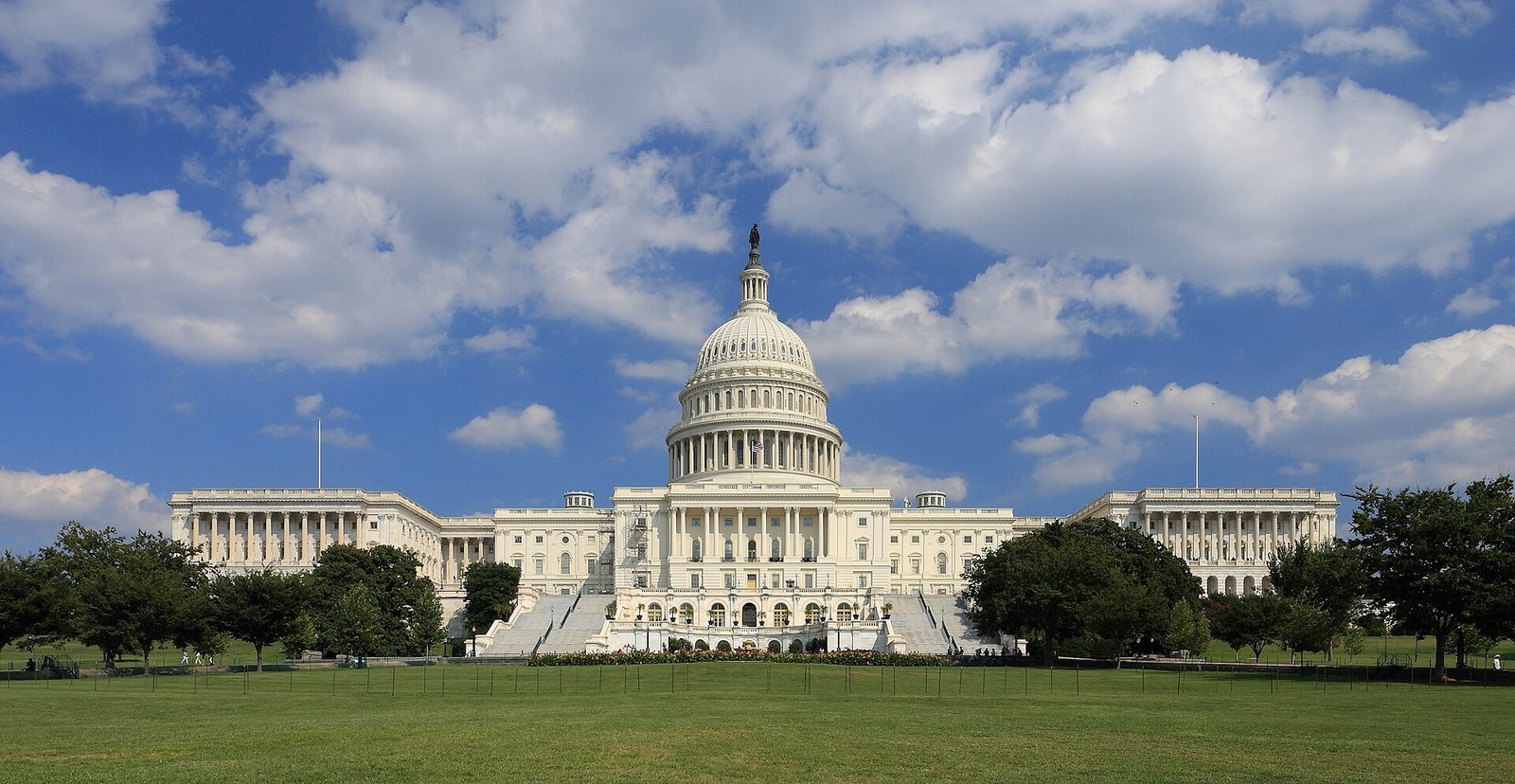
Voters have delivered a sweeping rebuke to Donald Trump’s second presidency, handing Democrats control of both chambers of Congress in a midterm rout that redrew the political map overnight.
Key Points
- Democrats won control of the US Senate and House of Representatives, according to Associated Press projections reported overnight.
- Democrats flipped seven Republican-held Senate seats — in Iowa, Kansas, Maine, North Carolina, Ohio, South Carolina and Texas.
- The AP called the House for Democrats after the party passed 218 seats, with 222 seats called and 41 more leading at the time of the count cited.
- In Texas, Democrat James Talarico won the Senate race and Gina Hinojosa won the governorship — the party’s first statewide wins there since 1994.
A wave, not a ripple
Midterm elections usually punish the party in the White House. This one did so on a scale few forecasters predicted. Democrats flipped Senate seats in states that had looked safely Republican for a generation: Kansas had not elected a Democratic senator since 1932, and South Carolina’s seat had been in Republican hands since Strom Thurmond switched parties in 1964.
The pattern repeated across the map. In Maine, Democrat Troy Jackson defeated five-term Republican Susan Collins. In North Carolina, Roy Cooper won the open Senate seat. In Ohio, Sherrod Brown returned to the Senate, and in Iowa, Josh Turek defeated Republican Ashley Hinson. Each win had its own local story, but together they cleared the 51-seat threshold for a Senate majority — and then kept going.
Texas breaks the dam
The most striking results came in Texas, where Democrats had not won a statewide office since 1994. That drought ended twice in one night: James Talarico defeated Ken Paxton, the Trump-endorsed former state attorney general, in what became the most expensive Senate race in American history, while Gina Hinojosa defeated three-term Governor Greg Abbott.
In Michigan, Abdul El-Sayed won the Senate seat to become the nation’s first Muslim US senator, and Democrats also won the governorships of Georgia — where Keisha Lance Bottoms won — and Nevada, where Aaron Ford defeated incumbent Joe Lombardo. The party also won the governor’s office and a Senate race in each of Iowa, Michigan, Minnesota and Ohio.
Why voters turned
Reporting on the night pointed to the same grievances again and again: discontent over inflation, tariffs, the cost of living, AI data centres and the long-running war with Iran. The president himself responded on social media by saying Republicans would have won had he been on the ballot — an argument that concedes the central point of a midterm, which is that it is a referendum on the sitting president.
The result also changes the arithmetic of the next two years. A Democratic House gains subpoena power and the ability to block the president’s programme; a Democratic Senate gains control of judicial and executive confirmations. The funding fight that runs to 11 December will now be negotiated with a Congress that has just been repudiated at the ballot box — or, depending on the point of view, a Congress that has just been given a mandate to check the president.
What happens next
Votes are still being counted in several races, and Democrats have chances to extend their gains. Congress returns on 9 November, when the new balance of power will start to shape everything from the budget to oversight hearings. The Georgia Senate run-off date of 1 December, circled before the election, now looks unlikely to decide control — but it may still decide the size of the Democratic majority.
Sources
- Associated Press election results — https://apnews.com/projects/elections-2026/
- CNN takeaways — https://www.cnn.com/2026/11/03/politics/midterm-election-night-takeaways