

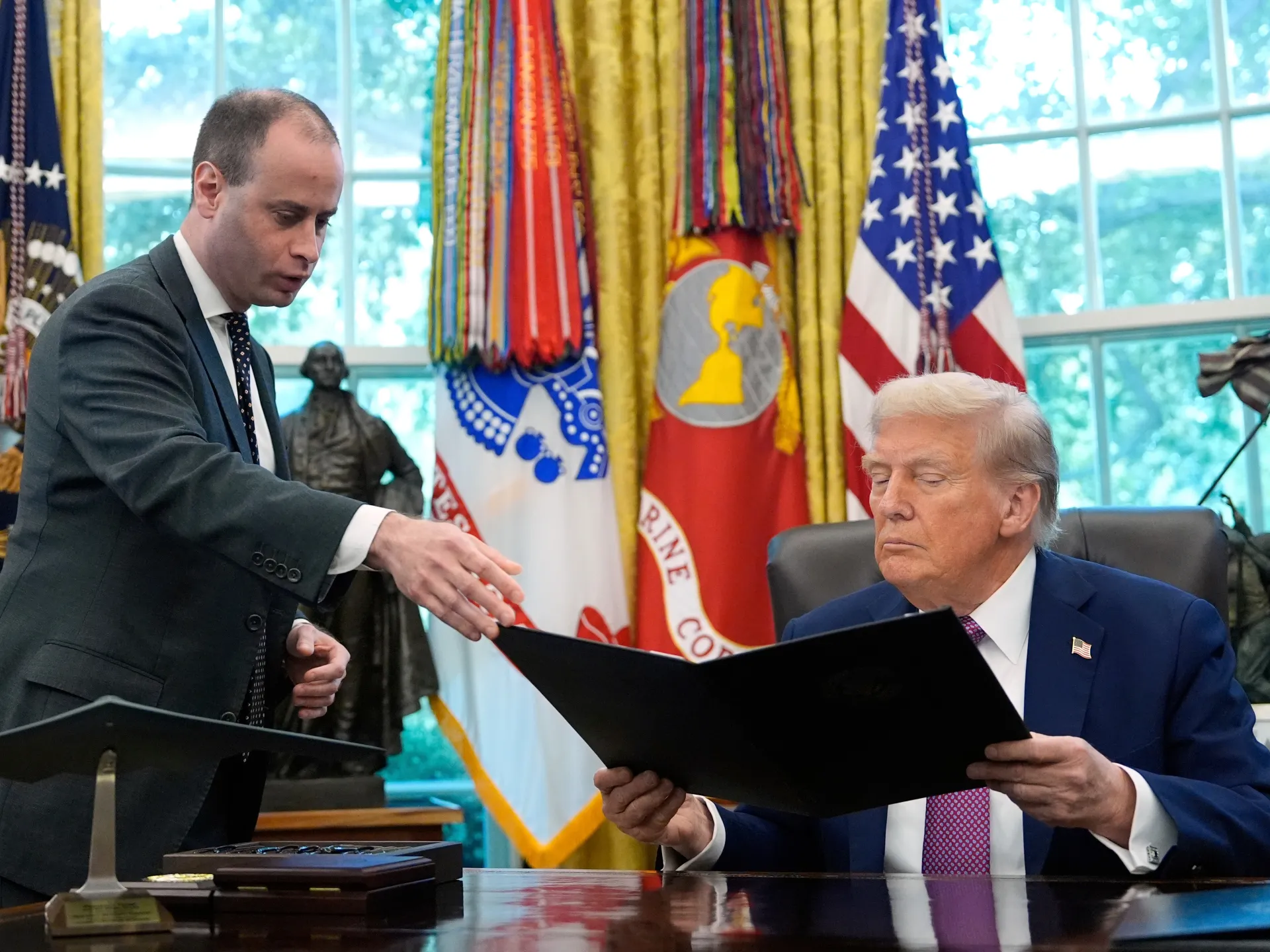
President Donald Trump has elevated White House staff secretary Will Scharf to the position of White House counsel, placing a longtime legal ally in charge of the administration's legal strategy ahead of the midterms.
President Donald Trump has announced the appointment of Will Scharf to the position of White House counsel, a move that places a trusted legal strategist at the helm of the administration’s legal affairs. Scharf, who currently serves as the White House staff secretary, is set to step into his new role on September 1. He will succeed David Warrington, who is transitioning out of the administration to pursue opportunities in the private sector.
The appointment serves as a strategic realignment for the executive branch as the administration prepares for the upcoming midterm elections. tration is placing a familiar and battle-tested lawyer in a position that oversees constitutional interpretation, executive actions, and the administration’s response to various legal challenges. The president has publicly lauded Scharf, describing him as a tough and capable operator with a background that includes experience as a federal prosecutor.
Scharf’s professional trajectory has been deeply intertwined with the president’s legal battles and policy objectives. Joining the presidential legal team in 2023, he played a significant role in the high-stakes federal election interference case. His efforts were instrumental in the legal arguments presented to the Supreme Court, which ultimately established a precedent granting presidents broad immunity from criminal prosecution regarding official acts. This experience is widely viewed as a foundational element of his selection for the counsel position.
Beyond his defense work, Scharf has a long history of navigating the federal judiciary. During the president’s initial term in office, he was heavily involved in the confirmation processes for several key federal judges, including Supreme Court Justices Brett Kavanaugh and Amy Coney Barrett. Since returning to the White House in early 2025, his role as staff secretary has kept him at the center of administrative operations, managing the flow of documents to the Oval Office and participating in the formal processes surrounding executive orders.
One of the most contentious issues Scharf has handled involves his leadership of the National Capital Planning Commission. In his capacity as chairman, he oversaw the approval of a $400 million ballroom project intended for the White House grounds, which necessitated the demolition of the East Wing. This project has since become a focal point for broader debates regarding the extent of presidential authority and the necessity of congressional oversight.
The development has faced significant legal roadblocks, with a federal appeals court issuing an order to halt aboveground construction. The court determined that major alterations to the White House require explicit congressional approval, a stance that conflicts with the administration’s previous assertions. While Scharf has argued that the commission held the necessary authority to oversee the project’s planning and initial phases, the legal battle is expected to reach the Supreme Court, further testing the boundaries of executive power.
The timing of this appointment is critical, as the administration faces a shifting political landscape. With midterm elections approaching, the White House counsel’s office is bracing for potential oversight efforts. Should the opposition party secure control of Congress, they have signaled an intention to launch various investigations into the administration’s actions and policies. Scharf’s primary duty will be to coordinate a robust legal defense and manage the administration’s interactions with legislative inquiries.
This appointment is part of a broader trend within the administration of elevating lawyers who have previously represented the president in private practice. This pattern includes the recent confirmation of Todd Blanche as attorney general and the appointment of D. John Sauer as solicitor general. umen in past litigation, the administration is signaling a proactive and unified approach to navigating the complex legal challenges expected in the coming months.