

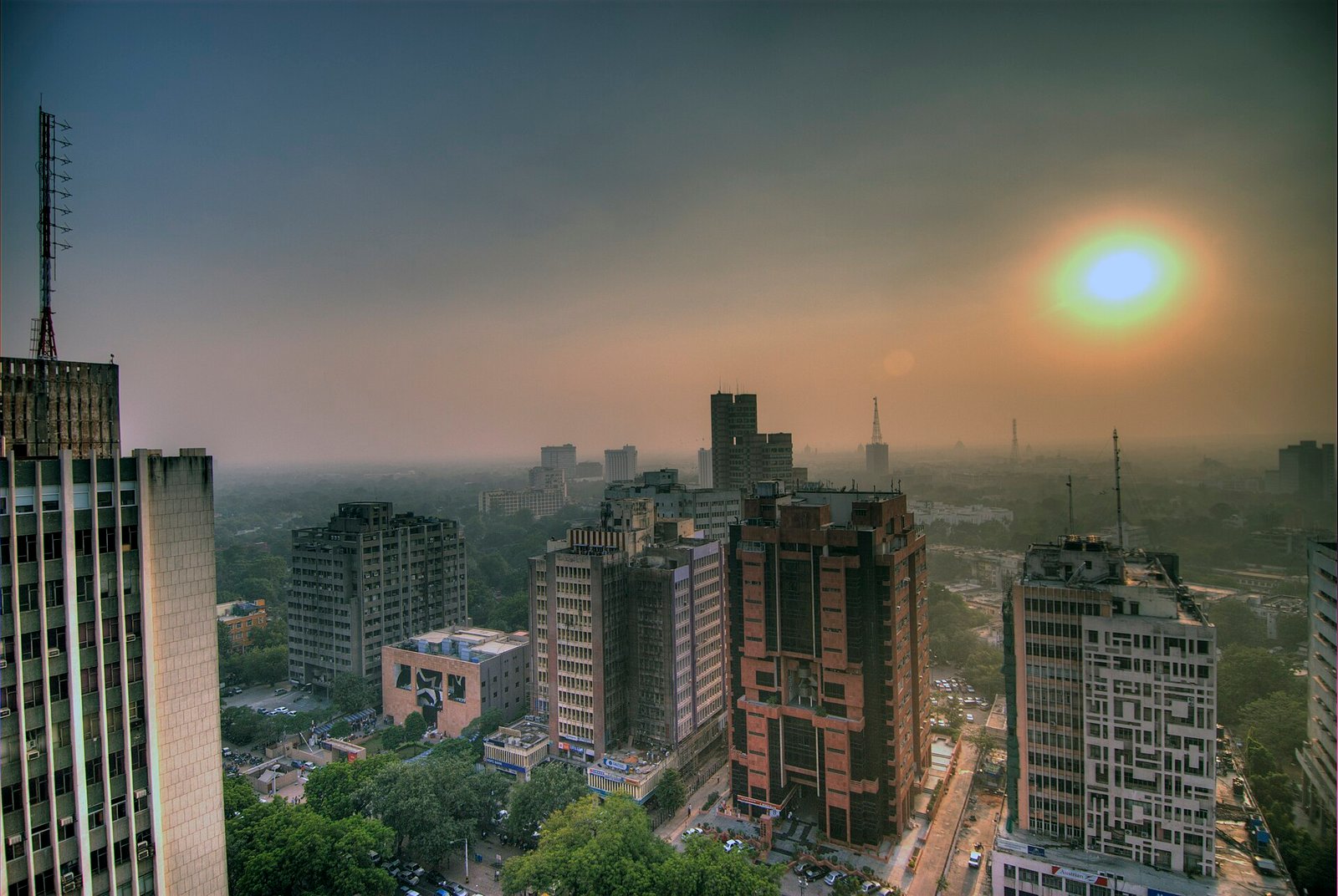
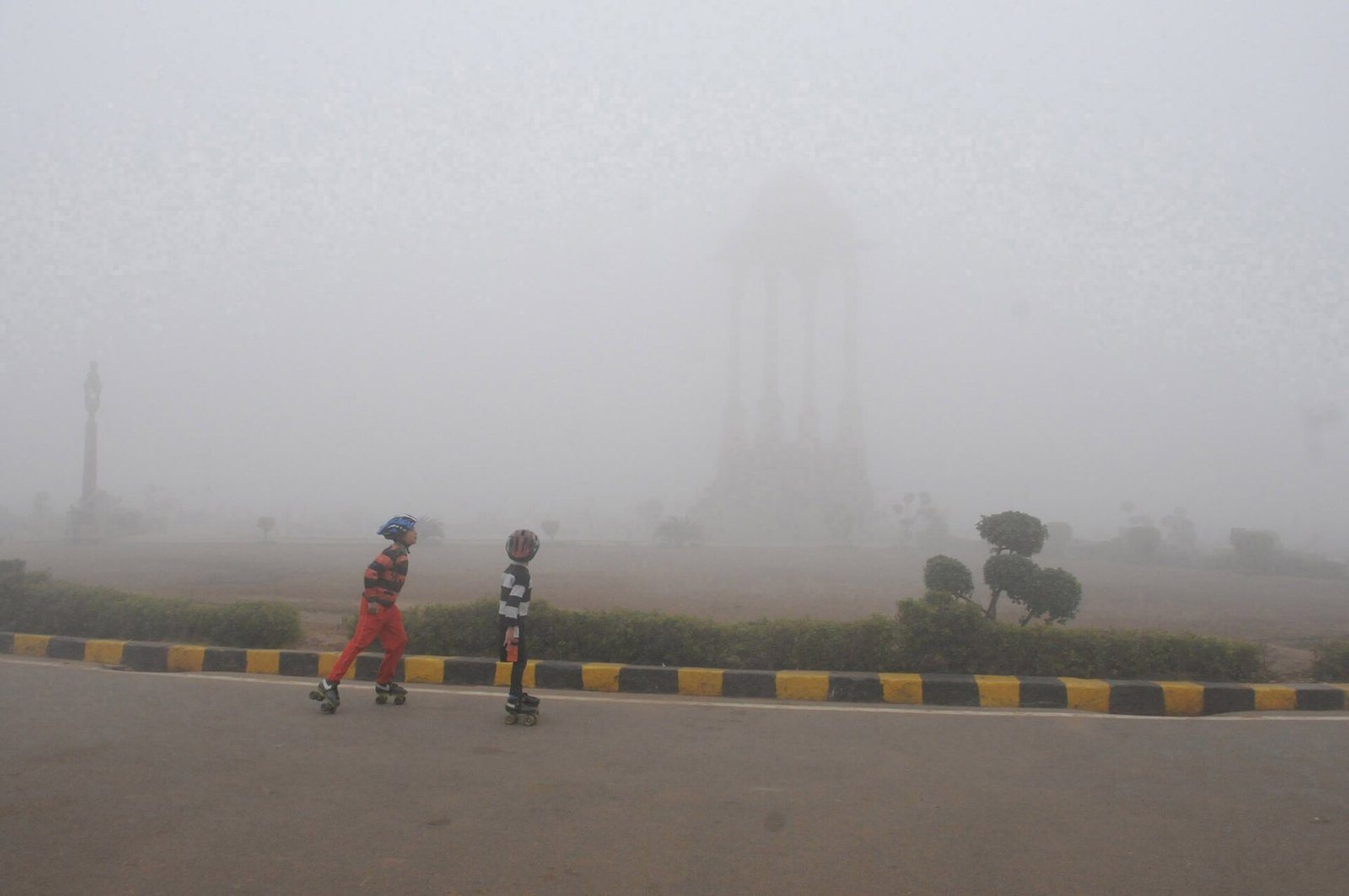
Delhi air quality turned severe on Friday morning, with the city’s overall Air Quality Index at 403 and smog so thick that landmarks vanished into the haze, in the worst spell of pollution since Diwali night.
Key Points
- Delhi air quality severe — the average AQI in the national capital was 403 at about 8 a.m. on Friday, up 82 points in 24 hours.
- The reading at IIT Delhi was the worst in the city at 488, with ITO at 455, Chandni Chowk at 476 and AIIMS at 418.
- Twenty-eight of the city’s 58 active monitoring stations recorded AQI levels above 400, with PM10 and PM2.5 the main pollutants.
- Stage 3 restrictions under the Graded Response Action Plan have been in force since 6 November, and the government is planning fresh cloud-seeding trials.
Delhi woke up to another morning of hazardous air on Friday, 13 November, with pollution levels plunging into the severe category across several parts of the national capital. According to data from the Central Pollution Control Board, the overall AQI stood at 403 at 7:30 a.m., and the city last recorded severe air quality on 19 January, when the AQI reached 410. The overall reading had climbed to 350 on Thursday afternoon, already its worst since Diwali night.
The worst readings came from across the city. ITO recorded an AQI of 455 at 5:55 a.m., IIT Delhi hit 487 to 488, Chandni Chowk recorded 476 to 480, and the area around the All India Institute of Medical Sciences stood at 417 to 418 at 7:20 a.m. Akshardham and Anand Vihar recorded 414 each, and Vasundhara Enclave 429. Dhaula Kuan, by contrast, was relatively better at 128.
The numbers behind the haze
Under the Central Pollution Control Board’s classification, an AQI between 0 and 50 is good, 51 to 100 is satisfactory, 101 to 200 is moderate, 201 to 300 is poor, 301 to 400 is very poor, and 401 to 500 is severe. Readings above 450 fall into the “severe plus” bracket under the revised Graded Response Action Plan framework. On Friday, 28 of the 58 active monitoring stations in the capital recorded levels above 400.
The pollution is not confined to Delhi. Across the National Capital Region, monitoring stations also recorded severe readings, with Noida’s Sector 62 at 474. A thick blanket of smog — a mix of fog and smoke — has significantly reduced visibility in the morning hours, and the India Meteorological Department has forecast that dense fog and smog will persist in the capital from 13 to 18 November, with dry weather expected across Delhi, Haryana and Chandigarh on Saturday.
What the authorities are doing
On 6 November, the Commission for Air Quality Management imposed Stage 3 restrictions under the Graded Response Action Plan in Delhi and the National Capital Region as a precautionary measure, after air quality deteriorated towards the severe category. The Delhi government is now planning fresh cloud-seeding trials with IIT-Kanpur in the coming days to induce artificial rain as the AQI worsens.
For residents, the advice is the familiar one for severe air days: stay indoors where possible, keep windows closed, wear a well-fitted mask outdoors, and take extra care if you have asthma, heart disease or another condition that pollution aggravates. Children, older people and pregnant women are the most vulnerable. With no rain in the forecast and the smog expected to linger for days, the capital’s annual winter pollution crisis has arrived in full.
For background on public health, see our report on the US facing the loss of measles-free status, and on the FDA approving Sunharbo, the first Factor XIa drug. More in our Health section.
Sources: Scroll.in, “Delhi air quality in ‘severe’ category”; News18, “Delhi Air Pollution Gets Worse: AQI Crosses 450 At ITO, Several Areas In ‘Severe’ Zone As Capital Chokes”.