

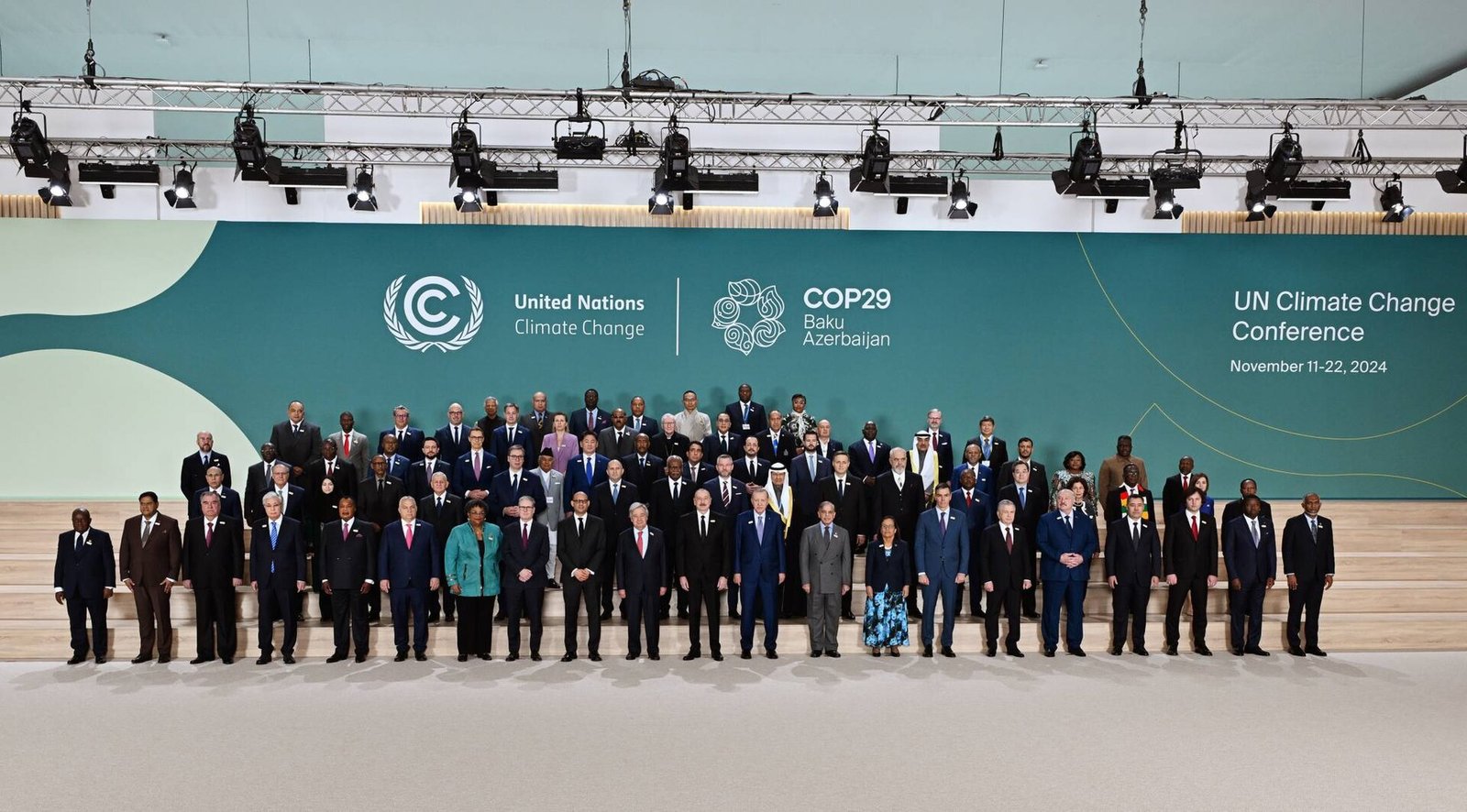
United Nations climate talks collapsed on Sunday after the European Union and others rejected a final deal put forward by the COP31 presidents, saying it was too weak to advance the fight against global warming — bringing the longest climate summit on record to an end with no agreement.
Key Points
- COP31 climate talks collapse — UN climate talks in Antalya, Turkey, ended without a political agreement after the EU and others rejected the final text over its failure to address fossil fuels.
- The summit ran two days into overtime, more than 49 hours past its scheduled finish on Friday, making it the longest COP on record.
- COP31 President Murat Kurum told the closing plenary: “There is nothing to do. We did all that we could,” and said he would not advance any new text.
- The UK, the EU, Panama, Norway and small island states including Tuvalu and the Marshall Islands rejected the draft, which made no mention of coal, oil or gas.
- UN Secretary-General António Guterres said he was “deeply disappointed” that the talks ended without consensus.
More than two weeks of negotiations in Antalya had already spilled two days into overtime when the final hours arrived. The draft cover decision, known as the Antalya Pact, had begun in a much stronger place than it ended: earlier versions called for moving away from coal, oil and gas, but the fourth and final text omitted any reference to phasing out fossil fuels altogether. Ireland’s Darragh O’Brien said the EU could not back a deal with no mention of the fossil fuels driving global warming. The UK’s energy secretary, Miatta Fahnbulleh, called the failure “immensely disappointing” and said the final draft “moves us backwards on the science”.
The collapse reflected a struggle that has shadowed the talks all year: governments trying to muster ambitious climate action while wars, economic pressures and other crises compete for their attention. The draft’s emphasis on carbon capture — a technology championed by the fossil fuel industry — was a second flashpoint. Oil-producing states blocked any mention of phasing out fossil fuels, while disagreements over climate finance for poorer countries also proved impossible to resolve. In the end, Kurum formally declared that the proposed Antalya Pact and its cover decision had not been adopted.
What was — and was not — agreed
The failure to agree a political declaration does not erase the obligations agreed by previous UN conferences, and the collapse of the cover decision does not mean nothing was agreed at all. Delegates did reach agreement on a just transition decision, covering how to make the shift to a low-carbon economy fair for affected workers and communities. But the main prize — a shared political message on how nearly 200 countries will respond to a planet about to breach its main temperature limit — was lost.
Chris Bowen, Australia’s COP31 president of negotiations, called the outcome “very disappointing” and said disagreements over fossil fuels and climate finance had been the obstacles. The failure, he and others argued, leaves governments without a common direction just as heatwaves, wildfires, floods and powerful storms worsen around the world. Climate advocates reacted with indignation at the chaotic finale.
What happens next
The unresolved items are not dead. Under the UN climate body’s rules, they will carry over automatically to COP32, which Ethiopia will host in Addis Ababa in November 2027, with the next formal negotiations taking place at the Bonn climate conference in June 2027. But the collapse raises a harder question for the process itself: after three decades in which the annual summit has led the global fight against climate change, exhausted negotiators left Antalya questioning whether the format can still deliver. The answer will have to come in Bonn — and in Addis Ababa.
For background on climate diplomacy, see our report on Global Nations Reach Nature Agreement Amid Funding Challenges (https://newsoneusa.com/global-nations-reach-nature-agreement-amid-funding-challenges/), and on Converging Crises: Climate Extremes and Diplomatic Strains Shape September 2026 (https://newsoneusa.com/converging-crises-climate-extremes-and-diplomatic-strains/). More in our World News (https://newsoneusa.com/category/world-news/) section.
Sources: Reuters, “Can climate diplomacy build on the collapse of COP31?” (https://www.reuters.com/sustainability/cop/can-climate-diplomacy-build-collapse-cop31-2026-11-22/); Firstpost, “COP31 ends in failure: Why did the UN climate talks collapse in Antalya?” (https://www.firstpost.com/explainers/cop31-ends-in-failure-why-did-un-climate-talks-collapse-in-antalya-14061911.html)