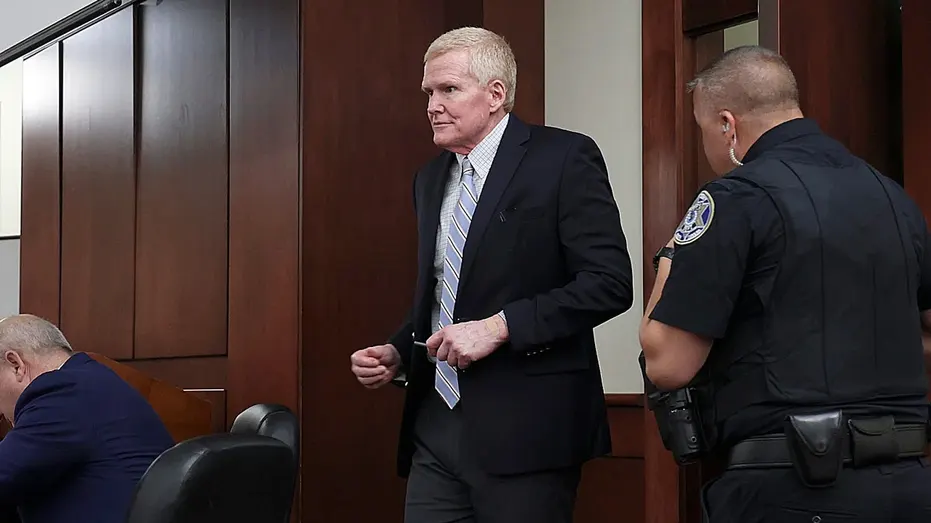
Alex Murdaugh returns to court for a pivotal hearing as his defense team seeks to dismiss murder charges and limit the scope of evidence for his upcoming retrial.
As Alex Murdaugh prepares for his scheduled April 2027 retrial, the legal proceedings have entered a critical phase defined rolina attorney, who was convicted in 2023 for the murders of his wife, Maggie, and son, Paul, is returning to the courtroom to challenge the very foundation of the state’s case. Having had his initial convictions overturned due to allegations of jury tampering t where both sides have a clear understanding of the other’s playbook.
Legal experts suggest that the retrial presents a distinct strategic reality compared to the original proceedings. In the first trial, the element of surprise was a factor, particularly regarding the defendant's testimony. With the defense having already exposed their narrative and the prosecution having completed a rigorous cross-examination of Murdaugh, the state is arguably better prepared to dismantle his defense. While the defense attempts to narrow the scope of admissible evidence, the prosecution remains focused on maintaining the narrative that Murdaugh’s mounting financial crimes served as the primary motive for the violence at the Moselle estate.
One of the most significant developments ahead of the upcoming hearing is the defense’s motion to dismiss the murder and weapons indictments entirely. Murdaugh’s legal team has alleged that law enforcement presented misleading physical evidence to the grand jury responsible for the original charges. Specifically, the motion scrutinizes the testimony provided s as an ambitious attempt to derail the case, noting that such a request is an "explosive" move that would likely require extensive evidentiary hearings and testimony to resolve.
Parallel to the challenge against the indictments, the defense is pushing for advanced forensic testing, specifically requesting new DNA analysis on material recovered from under the victim's fingernails. While the prosecution has expressed caution regarding the preservation and handling of evidence, they have not outright blocked the request for additional testing. The court must now balance the defendant’s right to investigate potential exculpatory evidence with the need to maintain the integrity of the state’s forensic chain of custody.
A major point of contention centers on how much evidence regarding Murdaugh’s history of financial fraud will be presented to the new jury. During the first trial, the prosecution leaned heavily on the theory that Murdaugh killed his family to obscure his financial ruin. While the South Carolina Supreme Court did not rule such evidence universally inadmissible, it did caution that the prosecution was allowed to delve too deeply into the specifics of those crimes. Judge Debra McCaslin now faces the delicate task of determining where the line is drawn for the retrial, with many anticipating a significantly more restricted presentation of financial records.
Furthermore, the defense is actively seeking a change of venue, arguing that the intense media saturation and the controversy surrounding the initial jury tampering make a fair trial in Colleton County impossible. They have proposed Charleston County as an alternative location. Legal analysts suggest this request may be one of the more straightforward decisions for the court, as the widespread publicity surrounding the case creates a compelling argument for moving the trial to ensure impartiality. As these motions are deliberated, the parties are also navigating disputes over phone data, third-party guilt theories, and the potential use of Murdaugh’s prior sworn testimony in the upcoming proceedings.