

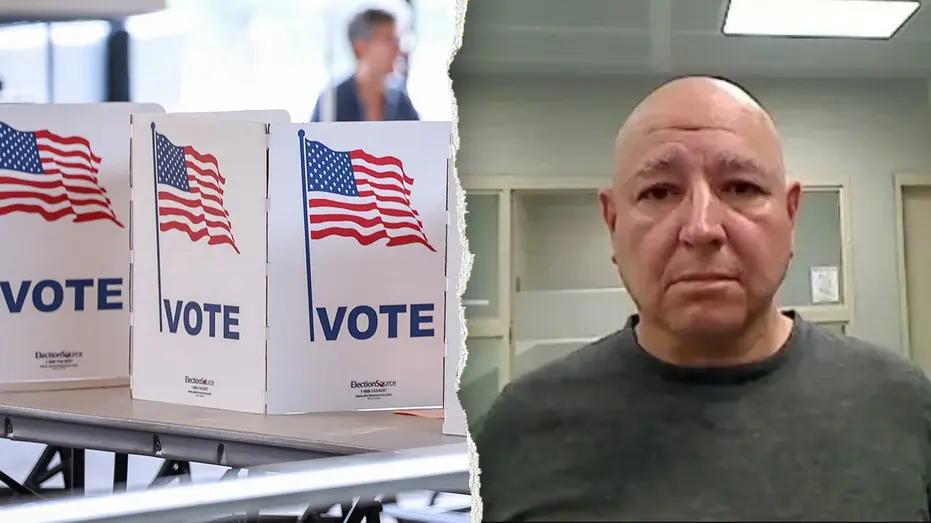
A Colombian national has been sentenced to three years in prison after a years-long scheme involving identity theft to cast illegal votes and secure government benefits.
A Colombian national residing in the United States illegally has been sentenced to three years in federal prison following a long-running scheme involving identity theft and election interference. Carlos Felipe Jaramillo-Grajales was found guilty of assuming the identity of a United States citizen to secure government credentials and cast ballots in American elections for nearly two decades. The sentencing concludes a multi-agency investigation that highlighted how personal information can be weaponized to bypass national security protocols.
According to federal authorities, Jaramillo-Grajales initiated his fraudulent activities in March 2003 ssport. After successfully obtaining this document, he utilized the stolen identity to acquire a Florida driver’s license. These foundational documents allowed him to establish a false history, which he subsequently used to register as a voter and participate in multiple election cycles, including the 2020 national election.
Beyond illegal voting, the defendant leveraged the stolen identity to secure various government benefits and legal statuses. In a notable instance in 2017, Jaramillo-Grajales employed his fabricated identity to petition for lawful permanent residence on behalf of his fiancée. roughly 20 years operating under the guise of an American citizen, causing significant harm to the integrity of the records belonging to the victim whose identity he had misappropriated.
The sentencing of Jaramillo-Grajales serves as a focal point for the Department of Homeland Security’s ongoing efforts to safeguard the U.S. electoral process. Officials have emphasized that the security of national elections is inextricably linked to broader national security interests. The prevailing sentiment among federal agencies is that the privilege of selecting American leadership must be strictly reserved for citizens, and any deviation from this standard undermines public trust in democratic institutions.
This case is part of a wider crackdown itizens who falsify documentation to obtain benefits or voting rights. Other recent cases cited lty to election-related charges after falsely claiming citizenship. These incidents have fueled a heated debate in Washington regarding the necessity of strengthening voter verification laws at the state level to prevent similar occurrences.
Lawmakers have expressed concern over the ease with which some individuals have been able to secure state-issued identification through fraudulent means. Recent inquiries led te in certain jurisdictions may be higher than previously estimated. These findings have prompted calls for more rigorous cross-referencing between federal immigration databases and state voter registration rolls to ensure that only eligible citizens are casting ballots.
The successful prosecution of this case required the coordinated efforts of multiple federal entities, including the Diplomatic Security Service and the Social Security Administration’s Office of the Inspector General. These agencies worked to unravel the complex web of fraud woven investigation ensured that all charges, ranging from identity theft to unlawful voting, were thoroughly documented for the court.
Following the completion of his three-year prison term, the defendant is expected to face deportation proceedings. Federal authorities have reiterated their commitment to removing individuals who engage in criminal activity while residing in the country illegally. This outcome is viewed hose who exploit the American system are held accountable for their actions.
As the conversation surrounding election security continues to evolve, the case of Jaramillo-Grajales stands as a reminder of the vulnerabilities inherent in document verification processes. While authorities continue to pursue those who engage in such fraudulent schemes, the case also underscores the ongoing challenges involved in balancing administrative efficiency with the need for robust security measures at the local, state, and federal levels.