

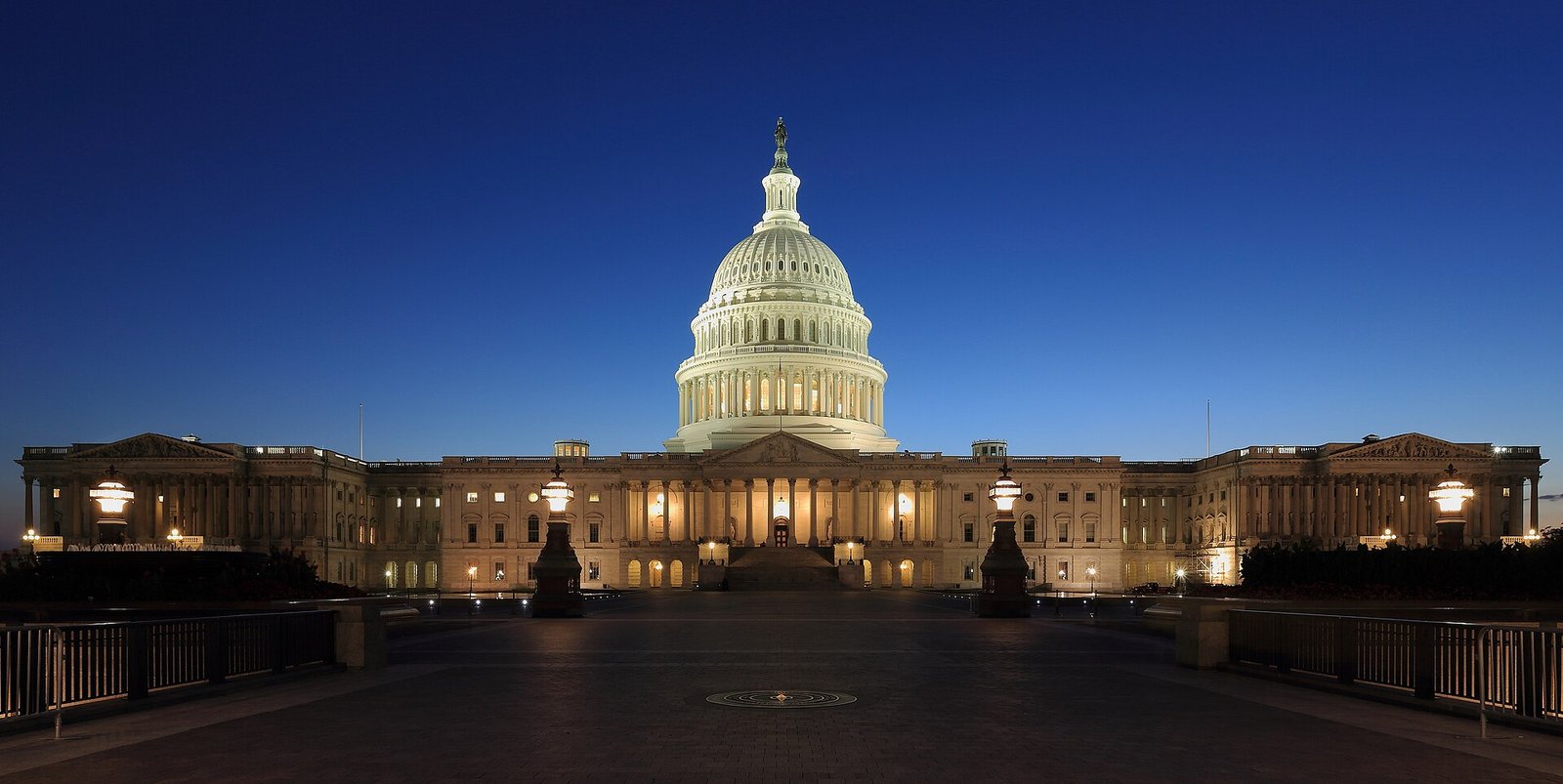
Americans voting today in the midterms are also, indirectly, rehearsing for the stranger election still to come. When the United States chooses a president in November 2028, the winner will not be decided by the national popular vote. It will be decided by 538 electors — real people, chosen state by state, most of whom you have never heard of — and the only number that matters is 270. Here is how the Electoral College actually works, step by step: how many votes each state gets, what the electors do in December, what Congress does in January, and what happens in the scenario the system was built for — when nobody reaches 270 at all.
Key points
- The Electoral College has 538 electors. A candidate needs a majority — 270 electoral votes — to win the presidency.
- Each state’s electors equal its congressional delegation: its House seats plus its two senators. California has 54; seven states and Washington, DC have the minimum of 3.
- When you vote for a presidential candidate, you are legally voting for that candidate’s slate of electors in your state.
- In 48 states, the statewide winner takes all the electors. Maine and Nebraska split theirs by congressional district.
- The electors cast the real votes on December 19, 2028; Congress counts them on January 6, 2029; the winner is sworn in on January 20, 2029.
- If no one reaches 270, the House of Representatives chooses the president, voting by state delegation — it has happened twice.
Why it exists
The Electoral College is a process, not a place — the National Archives’ own description, and the right place to start. The framers of the Constitution built it as a compromise: some wanted Congress to choose the president, others wanted a direct national popular vote, and the College split the difference — the people vote, but through state-appointed electors, weighted roughly by population with a built-in boost for small states (every state gets two electors for its senators regardless of size). Two-plus centuries later, that compromise is still the law: it sits in Article II of the Constitution, reshaped by the 12th Amendment (separate ballots for President and Vice President) and the 23rd (electors for Washington, DC).
Step by step: how it works
1. The parties pick the electors (spring–summer 2028). Long before Election Day, each political party in each state selects a slate of would-be electors — typically party officials, activists and loyalists — equal in number to the state’s electoral votes. Their names rarely appear on your ballot; the candidates’ names stand in for them.
2. You vote for a slate, not directly for a president (November 7, 2028). The general election is held on the Tuesday after the first Monday in November. When you mark a presidential candidate, you are actually voting for that candidate’s electors. Win the state’s popular vote, win its electors — with two exceptions below.

3. Winner takes all — except in Maine and Nebraska. In 48 states and DC, the candidate who wins the statewide popular vote, even by a single vote, receives all of that state’s electoral votes. Maine and Nebraska use the congressional-district method: one elector for the winner of each House district, plus two for the statewide winner. Splits are rare but real — Nebraska split in 2008, Maine in 2016, and both in 2020.
4. The states certify (November–December 2028). After the count, each governor prepares a Certificate of Ascertainment naming the appointed electors and the votes they received. That document is the official record sent to the National Archives.
5. The electors meet and cast the real votes (December 19, 2028). The electors gather — not in Washington, but in their own state capitals — on the first Tuesday after the second Wednesday in December. They vote on separate paper ballots for President and Vice President, and sign Certificates of Vote, which are sent to Congress and the Archives. This December meeting, not the November election night, is when the president is formally elected.
6. Congress counts (January 6, 2029). In a joint session in the House chamber, the electoral votes are opened and counted before both chambers. The Vice President presides as President of the Senate in what the law now stipulates is a strictly ministerial role — presiding, not deciding. If a candidate has 270, the result is announced and the election is over.
7. The inauguration (January 20, 2029). The winner takes the oath of office at noon, as the Constitution’s 20th Amendment prescribes.
Every state’s electoral votes (2024 and 2028 elections)
The current allocation follows the 2020 census and applies to both the 2024 and 2028 elections. The formula is simple — House seats + 2 — but the consequences drive every campaign map:
| State | Votes | State | Votes | State | Votes |
|---|---|---|---|---|---|
| Alabama | 9 | Kentucky | 8 | North Dakota | 3 |
| Alaska | 3 | Louisiana | 8 | Ohio | 17 |
| Arizona | 11 | Maine | 4 | Oklahoma | 7 |
| Arkansas | 6 | Maryland | 10 | Oregon | 8 |
| California | 54 | Massachusetts | 11 | Pennsylvania | 19 |
| Colorado | 10 | Michigan | 15 | Rhode Island | 4 |
| Connecticut | 7 | Minnesota | 10 | South Carolina | 9 |
| Delaware | 3 | Mississippi | 6 | South Dakota | 3 |
| District of Columbia | 3 | Missouri | 10 | Tennessee | 11 |
| Florida | 30 | Montana | 4 | Texas | 40 |
| Georgia | 16 | Nebraska | 5 | Utah | 6 |
| Hawaii | 4 | Nevada | 6 | Vermont | 3 |
| Idaho | 4 | New Hampshire | 4 | Virginia | 13 |
| Illinois | 19 | New Jersey | 14 | Washington | 12 |
| Indiana | 11 | New Mexico | 5 | West Virginia | 4 |
| Iowa | 6 | New York | 28 | Wisconsin | 10 |
| Kansas | 6 | North Carolina | 16 | Wyoming | 3 |
Total: 538. Majority to elect: 270. Source: National Archives, based on the 2020 census.
Read the table the way campaign managers do: the seven states with 3 votes (plus DC) hold just 24 votes between them, while the four biggest — California, Texas, Florida and New York — hold 152. But winner-take-all concentrates the real contest further: reliably one-sided states are written off by both campaigns, which is why a handful of competitive states — Pennsylvania (19), Georgia and North Carolina (16 each), Michigan (15), Arizona (11), Wisconsin (10), Nevada (6) in recent cycles — receive nearly all the visits, advertising and attention.

Faithless electors: can they ignore the result?
Almost always, no — and since 2020, the law is firmly on the voters’ side. Electors are pledged to their party’s candidate, and in Chiafalo v. Washington (2020) the Supreme Court ruled unanimously that states may require that pledge and penalise — or replace — an elector who breaks it.
“Faithless” votes still occasionally happen where state law allows room: in 2016, seven electoral votes were cast for people other than the candidates pledged, and counted — the most in the modern era. They did not change the outcome, and no faithless elector has ever changed who became president. They matter as trivia, not as a mechanism: campaigns vet their elector slates precisely so December holds no surprises.
What happens if nobody reaches 270?
It is more plausible than it sounds. A 269–269 tie, or a strong third candidate carrying a state or two, leaves nobody with a majority — and the Constitution’s backup system, the contingent election, takes over:
- The House of Representatives chooses the President, from the top three finishers in electoral votes. Each state delegation casts one vote — Wyoming’s single representative counts exactly as much as California’s 52 — and a candidate needs 26 states to win.
- The Senate chooses the Vice President, from the top two, with each senator voting individually and 51 required.
- That split machinery means the House and Senate could, in theory, install a President and Vice President from opposing parties.
It has happened: the House chose Thomas Jefferson in 1800 and John Quincy Adams in 1824; the Senate chose the Vice President in 1836. And note whose House would decide a 2028 deadlock — the one seated by the elections of 2026 and 2028, which is why even midterm spending and control carry a faint presidential echo: in a contingent election, a party’s strength is measured in state delegations, not in seats or votes nationwide. If the House deadlocks past January 20, the 20th Amendment provides that the Vice President-elect acts as President until the House chooses — one more reason the Senate’s separate vote matters.
The count in Congress — and why January 6 is now scripted
The joint session that counts the votes is the same room, and the same crowded congressional calendar, that handles the government’s other deadlines — the funding fights explained in our guide to what happens during a government shutdown included. After the disputes that surrounded the January 2021 count, Congress passed the Electoral Count Reform Act of 2022 to script the day tightly: the Vice President’s role is expressly ministerial, the electors’ meeting moved to its current Tuesday date, and the certification chain from governors was hardened so that the certificates arriving in the chamber are the lawful ones. The design goal is that January 6 is a counting ceremony, not a decision point — the decisions all happen in the states, in November and December.
Electoral College vs the popular vote
Five times, the candidate who won the Electoral College had lost the national popular vote — in 1824, 1876, 1888, 2000 and 2016. That list is the engine of the modern reform debate: defenders argue the College forces candidates to build geographically broad coalitions and keeps recounts contained within states; critics argue a system that can overrule the national plurality is undemocratic on its face. Abolishing it needs a constitutional amendment — two-thirds of both chambers of Congress and three-quarters of the states — which is why, whatever the polls say about it, the electors will be meeting in December 2028 exactly as described above.
Why this matters before 2028
Bookmark the mechanics now, because the vocabulary of the next cycle — 270 to win, faithless electors, contingent election, safe-harbour deadlines — will be everywhere by the autumn of 2028, and this page will be updated through the cycle as slates are chosen, states are called and the December meeting approaches. It belongs to the same shelf of Congress-set rules that run daily life in ways people only notice on the day — like the clock-change rules and the fight to make daylight saving permanent.
Frequently asked questions
How many electoral votes are there, and how many do you need to win?
There are 538 electors — matching the 535 voting members of Congress plus 3 for Washington, DC. A majority, 270, elects the president.
How does the Electoral College work, in simple terms?
Each state gets electors equal to its members of Congress. You vote in November; the candidate who wins your state (except in Maine and Nebraska) wins its electors; the electors cast the official votes in December; Congress counts them in January; 270 wins.
What happens if the Electoral College ties 269–269?
The House of Representatives chooses the president from the top three electoral-vote finishers, voting by state delegation — one vote per state, 26 states needed. The Senate separately chooses the vice president. The House has decided two elections: 1800 and 1824.
When do the electors actually vote?
On the first Tuesday after the second Wednesday in December — December 19, 2028 for the next election — meeting in their own state capitals. Congress counts their votes on January 6, 2029.
Can an elector vote for someone else?
In most states, not without consequence: the Supreme Court ruled unanimously in Chiafalo v. Washington (2020) that states may bind electors to their pledge and punish or replace faithless electors. Seven faithless votes were counted in 2016 — an anomaly that changed nothing.
Has the Electoral College winner ever lost the popular vote?
Yes — five times: 1824, 1876, 1888, 2000 and 2016. It remains the central argument of the reform debate.
Why do Maine and Nebraska split their votes?
By their own state laws, they award one elector to the winner of each congressional district and two to the statewide winner. Either state could return to winner-take-all by statute; the split system produced split delegations in 2008 (Nebraska), 2016 (Maine) and 2020 (both).
Sources
- National Archives and Records Administration — What is the Electoral College?: https://www.archives.gov/electoral-college/about
- National Archives and Records Administration — Distribution of Electoral Votes (complete state-by-state table, 2020 census, effective for the 2024 and 2028 elections; total 538, majority 270): https://www.archives.gov/electoral-college/allocation
- Constitution of the United States — Article II; Amendment XII (the contingent election); Amendment XXIII (District of Columbia electors)