
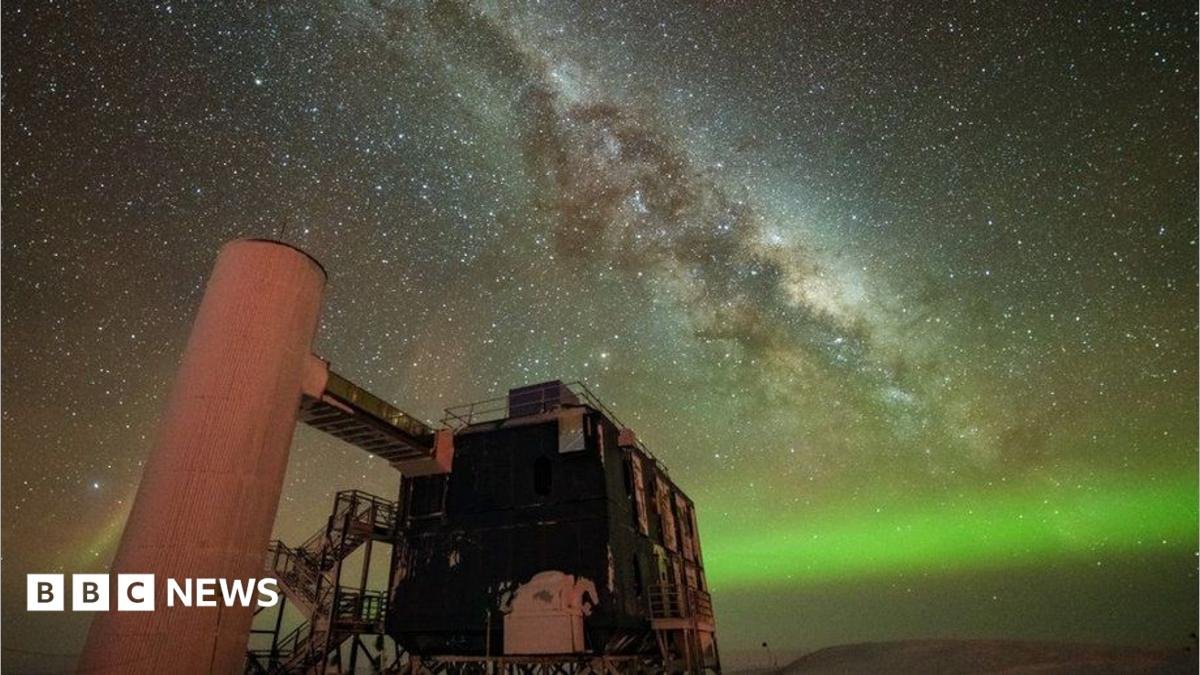
Scientists celebrate a major physics award while astronauts prepare to return home from their latest mission in orbit.
Humanity continues to explore the deepest mysteries of space this October. Researchers recently gained new tools to study the distant cosmos. Meanwhile, astronauts prepare for a safe return from their mission in orbit.
Scientists celebrate a major award for detecting invisible particles from space. These discoveries help us understand the high-energy events in far-off galaxies. Simultaneously, robotic explorers on Mars find surprising rocks that challenge our understanding of the Red Planet.
Why this matters
These events show how humanity tracks the universe from many angles. Understanding neutrinos allows experts to see past the limits of normal telescopes. This new type of astronomy reveals violent events that occurred billions of years ago.
Also, the Mars mission provides a direct look at the history of our solar neighbor. Finding light-colored rocks suggests that complex geological processes happened there long ago. Such data helps us learn if Mars could have supported life in the past.
Furthermore, these missions require precise coordination and international teamwork. Keeping crews safe during their return to Earth remains a top priority. Every successful landing reinforces our ability to sustain long-term human presence in space.
New Discoveries and Upcoming Returns
Prof. Francis Halzen won the Nobel Prize in Physics for his work on the IceCube Neutrino Observatory. This massive detector sits deep within the ice at the South Pole. It uses light sensors to spot tiny particles called neutrinos as they pass through Earth.
Next, the Perseverance rover continues its work on Mars. It recently discovered a field of light-toned boulders near the Jezero crater. The team believes these rocks might have come from deep underground during ancient asteroid impacts.
Meanwhile, four astronauts prepare to leave the International Space Station. They belong to the SpaceX Crew-12 mission. The team includes experts from NASA, the European Space Agency, and Roscosmos.
After that, the crew will undock their spacecraft from the station. They plan to splash down off the coast of California. Weather conditions will determine the exact timing for this return trip.
How we got here
- 1988: Prof. Francis Halzen first presented his vision for detecting neutrinos at the South Pole.
- 2020: NASA launched the Perseverance rover mission to explore the Jezero crater on Mars.
- August 2026: The rover began exploring the “Lac de Charmes” region on the Martian surface.
- October 2026: The Royal Swedish Academy of Sciences awarded the Nobel Prize in Physics to Prof. Halzen.
- October 2026: NASA announced the scheduled return date for the SpaceX Crew-12 members.
What happens next
Now, NASA and SpaceX managers are watching the weather in the Pacific Ocean. They need calm conditions to ensure a safe splashdown. The crew will communicate with flight controllers during their long descent back to Earth.
Then, the agency will hold a briefing to discuss the mission results. Scientists will also look at the new data from Mars. They want to test the theory that asteroids dug up the light-colored rocks.
Finally, the success of these projects will guide future exploration. New research into neutrinos will likely open more windows into the early universe. International space agencies will continue to plan deeper missions for years to come.