
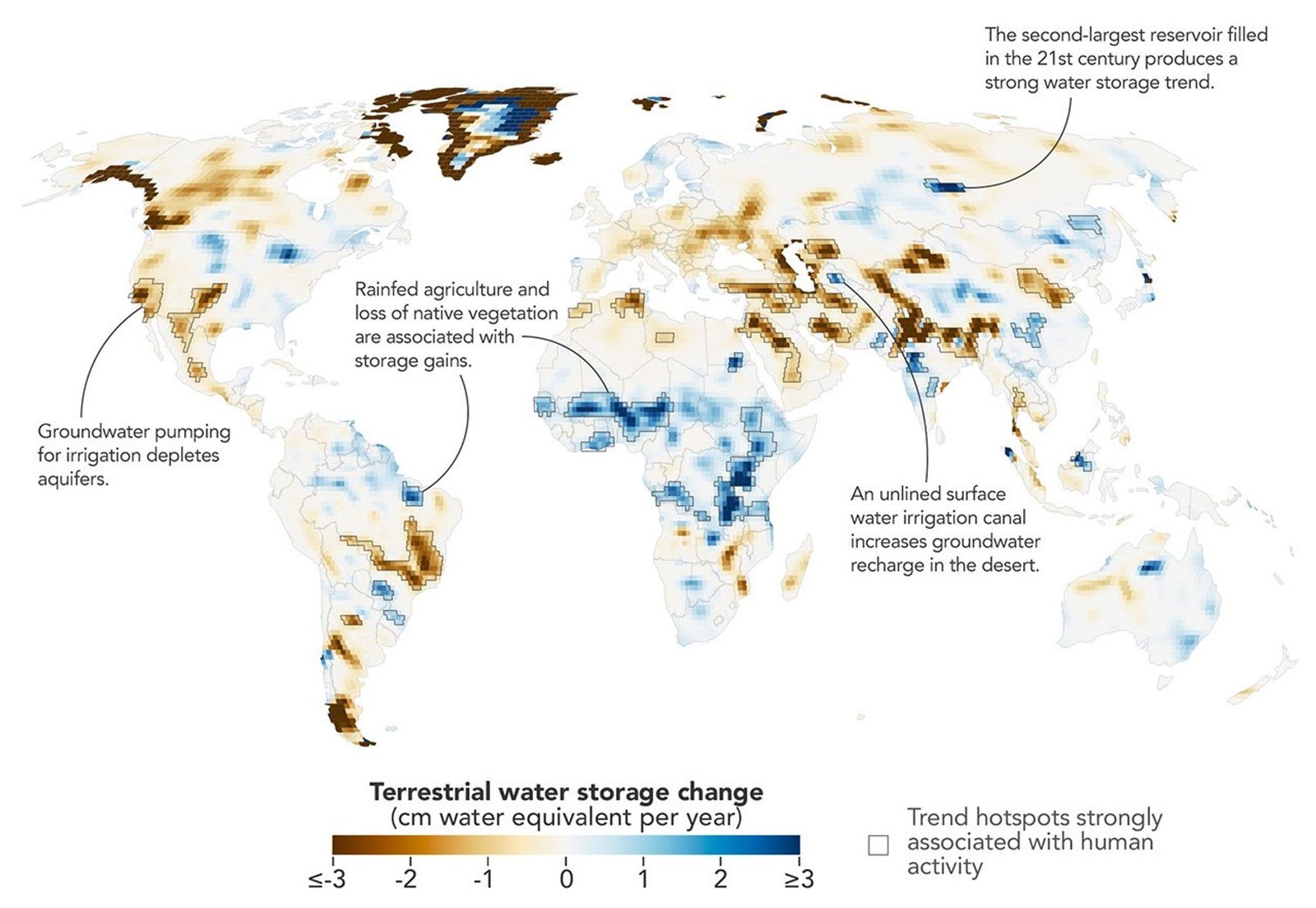
A new NASA study uses satellite gravity data to show how human activities like irrigation and dam construction significantly alter Earth's water storage.
Humans change how water moves through our planet. A recent NASA study reveals the specific areas where these effects are the strongest. Researchers used two decades of satellite data to track changes in water storage.
Next, the team studied how water shifts in lakes, rivers, and soil. They analyzed data from April 2002 to November 2025. This research highlights how human actions impact global water supplies.
Also, the scientists identified 40 regions influenced by human activity. Common factors include irrigation, large reservoirs, and changes in land use. These trends appear on every continent except for the polar regions.
Meanwhile, human activities had more impact than climate in four specific areas. California’s Central Valley and northern India are two key examples. Farmers there rely heavily on groundwater, which lowers local water storage levels.
Then, the researchers used gravity data to measure these shifts. The GRACE and GRACE-FO satellite missions track tiny changes in Earth’s mass. Because water is heavy, these satellites effectively act as a giant scale.
After that, the team combined twenty years of satellite passes. This approach provided much higher spatial detail than older studies. It allowed them to spot human impacts that were previously hidden from view.
As a result, the team confirmed that groundwater pumping causes major declines. Northern India shows a steeper drop in water levels than scientists once thought. Melting glaciers only explain a small part of this loss.
Still, some farming practices show different results. In parts of Africa and Brazil, water levels rose after farmers planted new crops. Efficient water use by certain plants helps store more water in the ground.
Finally, the new map tracks large engineering projects like dams and canals. For instance, the Boguchany Reservoir in Russia shows a massive impact on water storage. Remote areas are now easier to monitor with this improved data.
Now, experts want to study how these changes affect water downstream. Better data helps leaders manage water during droughts. This technology remains a vital tool for the future of our planet.