
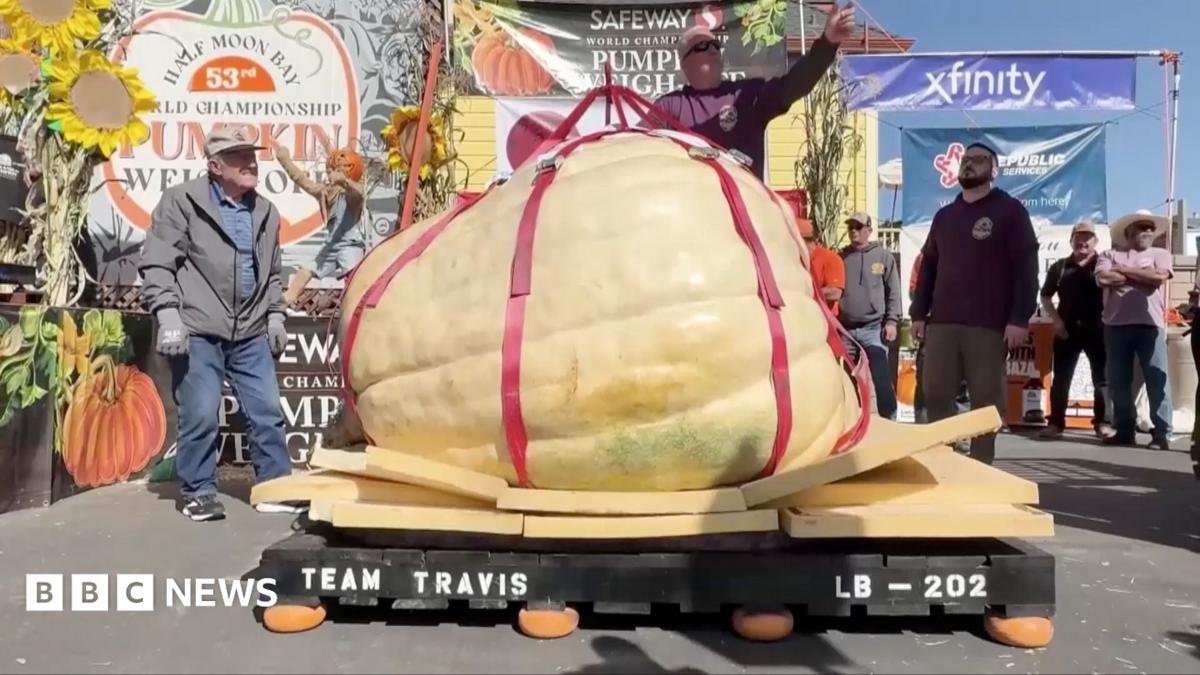
A Minnesota farmer aims for a new world record while NASA telescopes uncover secrets about mysterious objects floating in deep space.
Why this matters
Our world currently balances between grand agricultural feats and deep space exploration. These events show human curiosity in every environment. We track giant crops on Earth while seeking answers in the stars.
Also, both pursuits require patience and advanced science. Growers refine their soil to produce massive vegetables. Meanwhile, NASA builds tools to map the vast, dark reaches of space.
As a result, we gain knowledge about our home planet and the universe. These achievements reflect our drive to push boundaries. We constantly seek to understand the limits of nature.
Harvesting records and mapping the dark
Travis Gienger recently won a giant pumpkin contest in California. He brought his massive gourd all the way from Minnesota. It weighed 2,389 pounds, marking his fifth win in this event.
However, Gienger sets his sights on a global title. A squash in England recently reached 2,857 pounds. He remains focused on that new target despite his current victory.
Next, NASA scientists look at a different kind of giant. The SPHEREx telescope is busy finding brown dwarfs. These objects exist between the size of stars and planets.
Meanwhile, these “dark wanderers” roam space alone without a host star. They heat themselves from within instead of burning like typical stars. Scientists compare them to the gas giants in our solar system.
After that, researchers used the telescope to study 37 of these objects. They found rich atmospheres filled with water and methane. This helps experts understand how these strange worlds evolve over time.
Finally, we also observe rare sights in our own atmosphere. A photographer in New Jersey recently caught images of supernumerary rainbows. These form when water droplets are exactly the right size.
How we got here
- 2018: A photographer captures rare rainbows over the New Jersey shore after a storm.
- March 2025: NASA launches the SPHEREx space telescope to map the infrared sky.
- October 2026: Travis Gienger wins his fifth giant pumpkin contest in Half Moon Bay, California.
- October 2026: Scientists publish findings in The Astrophysical Journal about the atmospheres of brown dwarfs.
- October 2026: A squash in England sets a new world record at 2,857 pounds.
What happens next
Now, NASA will continue to use SPHEREx to analyze more brown dwarfs. Scientists want to study thousands of these objects to improve their models. They expect to learn more about how these dark worlds function.
Then, Travis Gienger will likely prepare his next season of farming. He plans to chase the world record again. He will need to grow a much larger pumpkin to beat the English record.
Also, weather experts will keep watching the skies for unique optical events. These phenomena remind us to look up and notice the science in our daily lives. Each new discovery adds to our growing map of the universe.