

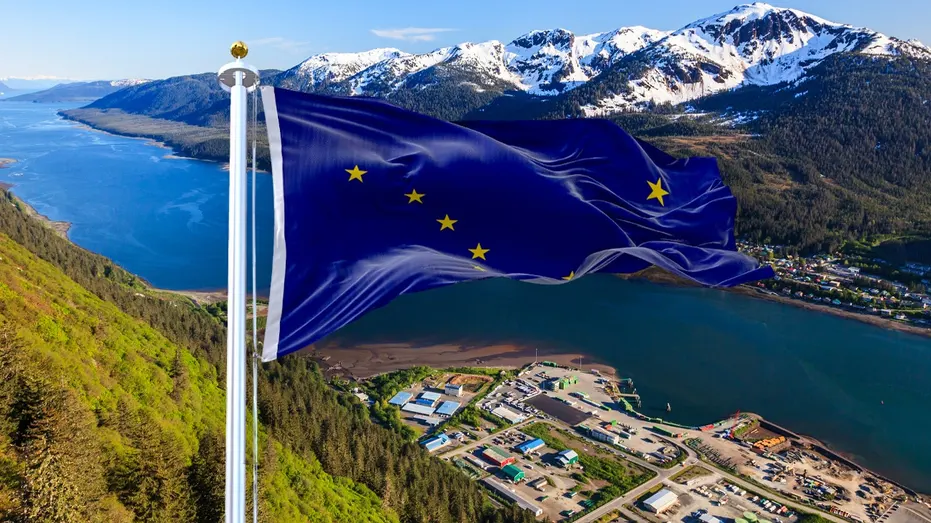
A crowded field of gubernatorial hopefuls has been narrowed following a competitive primary, setting the stage for a high-stakes general election in Alaska.
The landscape for Alaska’s upcoming gubernatorial election shifted significantly following the conclusion of a crowded primary contest. Seventeen pairs of candidates for governor and lieutenant governor competed for a spot on the general election ballot, aiming to succeed the term-limited Republican incumbent, Michael Dunleavy. The selection process involved a diverse array of hopefuls, including former state legislators, local business owners, and individuals from prominent political families, all vying for voter support in a high-stakes race.
Former state Representative Jonathan Kreiss-Tomkins, running alongside Zac Johnson, emerged at the top of the field, setting a strong pace for the general election. They were closely followed These two teams, along with two other successful pairs, have secured their place on the November ballot, where they will participate in Alaska’s unique electoral system. The primary results have effectively culled a field that once featured 34 candidates, focusing the political conversation on a smaller group of contenders.
The race has been marked Begich, a key figure in this election, represents a family whose influence in the state dates back to the early years of statehood. His father, Nick Begich Sr., served in both the state and federal legislatures before his untimely disappearance during a flight in the early 1970s. This legacy continues to resonate with voters, as Tom’s brother, Mark Begich, also served as a U.S. senator, maintaining the family's long-standing connection to Democratic politics in the region.
Other candidates are also leveraging familial legacies to reach the electorate. Timothy Hickel, running alongside Republican Michael Loren Gilbert, brings the name of his father, the late Governor Wally Hickel, into the fold. The elder Hickel served two nonconsecutive terms as governor and held a position in the Nixon administration. This blend of historical institutional knowledge and modern political ambition creates a complex dynamic, as voters weigh the merits of fresh faces against those carrying the weight and recognition of long-established political brands.
While the Democratic field is anchored eaturing candidates with distinct visions for the state's future. Among the leading voices are business owner Bernadette Wilson, who emphasizes her multi-generational roots in the Kenai region, and former Anchorage Mayor David Bronson. These candidates are navigating a political environment where traditional party lines are tested rs across the ideological spectrum.
Policy priorities emerging from the Republican side include a focus on energy independence and infrastructure development. For instance, Michael Loren Gilbert has proposed ambitious plans to expand the state’s energy dominance and has raised the possibility of establishing a highway connection to the Lower 48. These proposals aim to address long-standing logistical challenges in the state, offering voters tangible solutions to economic concerns. The presence of candidates like Click Bishop, a former state senator, further adds to the depth of expertise within the Republican ranks.
Alaska’s adoption of ranked-choice voting adds a layer of complexity to the general election process. Unlike traditional primaries where the winner takes all, this system requires voters to rank candidates in order of preference. If no candidate secures a majority, the lowest-performing candidates are systematically eliminated, and their votes are redistributed based on the voters' secondary preferences. This mechanism encourages candidates to seek support from outside their core base, as second-choice votes can ultimately determine the outcome of a close race.
The uncertainty surrounding the transition from the Dunleavy administration has created a rare opening for opposition parties to challenge the status quo. While Alaska is generally characterized as a Republican-leaning state, the shifting demographics and the nature of the ranked-choice system suggest that the path to the governor’s mansion is not guaranteed for any single party. As the candidates transition into the final phase of their campaigns, they must balance their ideological commitments with the need to build a coalition large enough to survive the elimination rounds of the general election.