

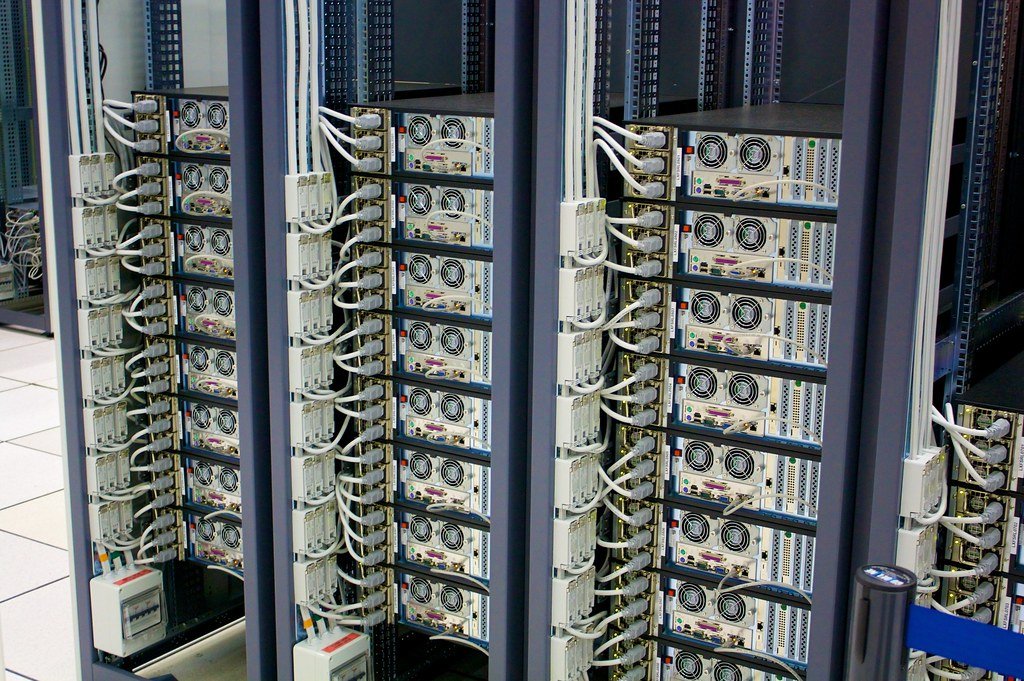
The world’s data centres will use twice as much electricity by 2030 as they do today, driven by the artificial intelligence boom — and their carbon emissions will rise by 70 percent as the United States and China turn to fossil fuels to power them, the International Energy Agency has warned.
Key Points
- IEA data centre electricity demand — global data-centre electricity use will rise from 485 terawatt-hours in 2025 to about 950 terawatt-hours by 2030, the IEA said in its World Energy Outlook 2026.
- AI accounts for about three-quarters of that growth, and AI data centres alone will need an extra 350 terawatt-hours a year by 2030 — more than the entire annual power consumption of Great Britain.
- In the US, gas is expected to supply about 60% of data-centre electricity by 2030; in China, about half of AI data-centre power will come from coal.
- Investors are expected to put about $4 trillion into data centres globally by 2030, after $565 billion in 2025.
The IEA’s annual World Energy Outlook, published on Thursday, is the agency’s most influential publication, and its warning lands in the same week that Anthropic, the AI company behind Claude, raised a record $81.3 billion in the largest stock market debut in history. The agency based its forecasts on data showing that annual global shipments of AI servers have risen eighteen-fold since 2020, and on satellite imagery tracking the construction of 93 large “AI factories” around the world.
Data centres used about 485 terawatt-hours of electricity in 2025, a rise of 17 percent on the year before, while use by AI-focused data centres rose 50 percent. The IEA’s central outlook puts the total at about 950 terawatt-hours by 2030 — roughly 3 percent of global electricity demand — with AI-focused data-centre consumption tripling over the same period. The agency stressed that its scenarios are conditional pathways, not forecasts, but the direction is clear: the AI boom is becoming one of the largest new sources of electricity demand in the world.
The fossil fuel split
The regional picture is where the story gets uncomfortable. In the United States, gas is expected to provide about 60 percent of data-centre electricity by 2030. In China, roughly half the power for AI data centres is expected to come from coal, with the rest from renewables and smaller amounts from nuclear and very little from gas. The European Union is the outlier: the IEA forecasts that renewables will cover about 70 percent of data-centre electricity there, followed by nuclear, with gas and coal making up little of the rest.
The agency also warned that power infrastructure is struggling to keep pace. Modern data centres take two to three years to build, while power transmission lines typically take four to eight years — and about 90 percent of new data-centre capacity is projected to emerge in North America and the Asia-Pacific region, intensifying local power strains. The Outlook calls for 26 million kilometres of new power lines by 2035, while about 16 million kilometres of existing lines need replacement or refurbishment.
What happens next
The IEA’s warning puts the AI industry’s energy appetite at the centre of the climate debate, just as governments are weighing how to power the next wave of AI infrastructure. Energy use per AI task has fallen sharply in recent years, the agency notes, but falling use per task does not mean total use falls — the sheer growth in AI computing overwhelms the efficiency gains. The question now is whether the grids, the power lines and the clean energy needed to feed the AI boom can be built fast enough to keep the emissions curve from rising with it.
For background on the AI boom, see our report on Anthropic launching faster, cheaper Claude models ahead of its planned IPO, and on Nvidia beating third-quarter forecasts. More in our Technology section.
Sources: The Guardian via Mezha, “IEA warns datacentre emissions could rise 70% by 2030” (https://mezha.net/eng/news/mezha-e8c932b6c2d918e326c8c146_iea_warns_datacentre/); Unite.AI, “IEA Scenario Links AI Growth to Doubling of Data Center Power Use” (https://www.unite.ai/iea-scenario-links-ai-growth-to-doubling-of-data-center-power-use/).