

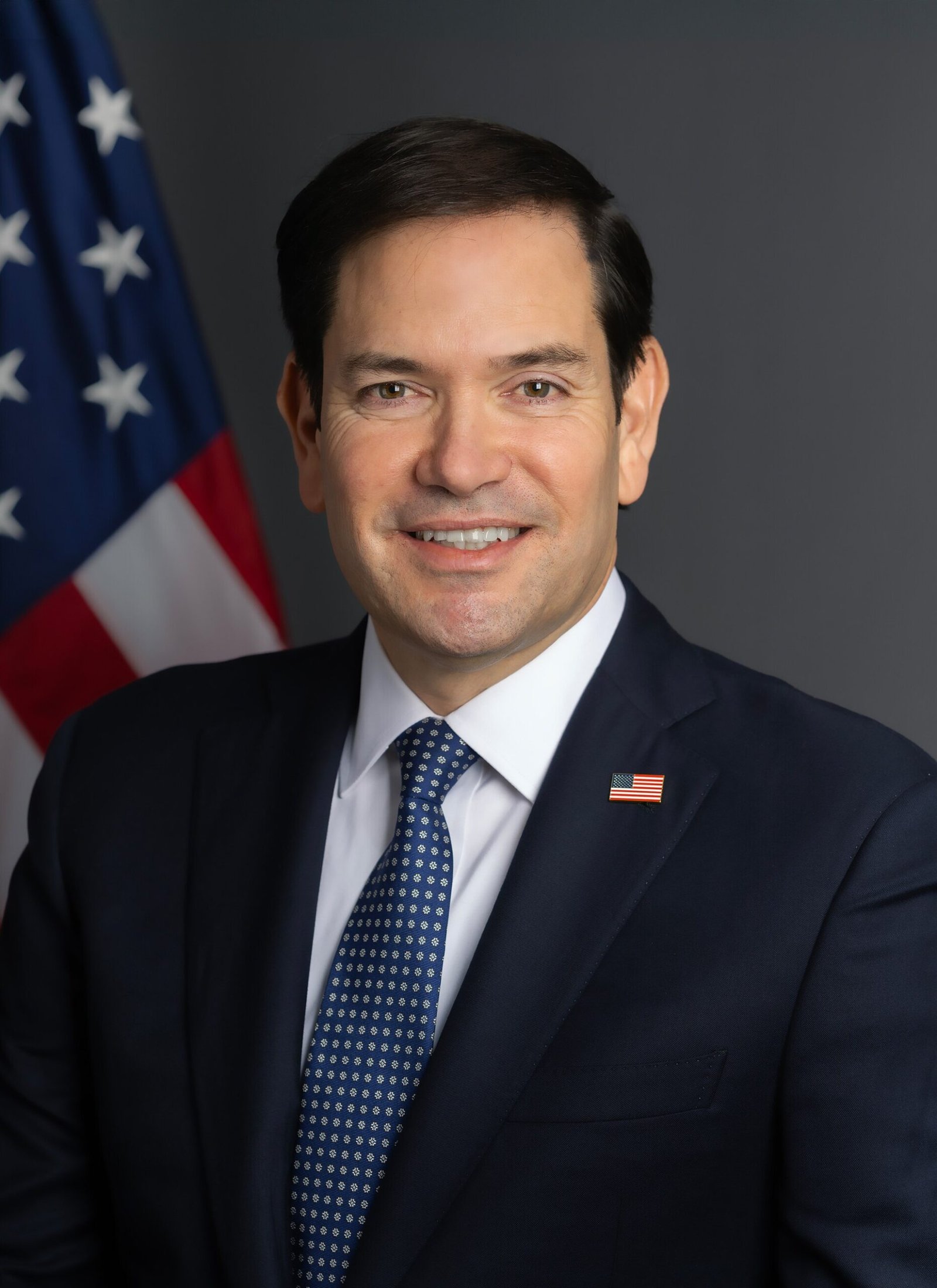
Secretary of State Marco Rubio has acknowledged that Americans are struggling in the current economy, in the most candid admission yet from a senior Trump administration figure that the cost of living decided the midterm elections.
Key Points
- Rubio people are struggling — the secretary of state told the Federalist Society on Friday evening: “I think we have to recognise that people are struggling. There’s no doubt about it.”
- He said the health of the economy “has nothing to do with the stock market” and depends on whether families can afford what they need.
- The speech, at the Federalist Society’s National Lawyers Convention in Washington, was his first major address outside his diplomatic duties since the 3 November midterms, in which Republicans suffered heavy losses.
- Rubio also defended the war in Iran and railed against what he called the “weaponisation” of international law to constrain the United States.
Rubio gave the sweeping speech to fellow conservatives on Friday evening, 13 November, delivering the Federalist Society’s 25th annual Barbara K. Olson Memorial Lecture, titled “Enemies in War, in Peace Friends”, at the Mayflower Hotel in Washington. His comments touched on the core issue of the midterm elections — economic pain — that US voters cited in delivering massive losses to his Republican Party, handing Democrats control of Congress.
“The health of our economy has nothing to do with the stock market. The health of their economy is whether they have enough money to be able to afford the things they need,” he said. The distinction was striking: President Donald Trump has frequently pointed to stock-market performance as evidence that the economy is doing well, while voters cited higher costs, tariffs, the war with Iran and the administration’s unfulfilled campaign promise to lower prices as factors behind the party’s losses.
A warning about the next generation
Rubio went further, warning of a “legitimate fear” that this could be the first generation to leave the next one worse off — which he called “un-American”. He urged conservatives to think beyond individual election cycles, arguing that lasting national prosperity requires sustained work over years and decades. He did not announce a new cost-of-living programme or present a detailed economic policy package during the remarks, and as secretary of state he is not the official responsible for domestic economic policy.
The speech also carried the overtones of a campaign address. Rubio, who has declined in recent days to discuss 2028 “in any form or fashion”, spoke off-script in an unscripted portion of the appearance that followed a more confrontational prepared keynote, offering an optimistic, ambition-centred portrait of the United States even as speculation about a presidential bid continues.
What comes next
The question now is whether the administration acts on the message Rubio delivered. Affordability has moved to the centre of the political debate, and the electoral setback has put renewed pressure on Trump and Republican leaders to explain why many households continue to feel squeezed despite strong markets. Rubio has named the problem in public. The policy answer, if one comes, will have to follow.
For background on the midterms, see our report on why the US midterm elections matter for Congress and Trump, and on Alaska electing its first Democratic governor since 1998. More in our Politics section.
Sources: Associated Press via The Hindu, “Rubio acknowledges ‘people are struggling’ economically in speech after GOP midterm wipeout” (https://www.thehindu.com/news/international/rubio-acknowledges-people-are-struggling-economically-in-speech-after-gop-midterm-wipeout/article71702746.ece); The Economic Times, “Rubio acknowledges in wake of GOP midterm losses that ‘people are struggling’ economically” (https://economictimes.indiatimes.com/news/international/world-news/rubio-acknowledges-in-wake-of-gop-midterm-losses-that-people-are-struggling-economically/articleshow/135819796.cms).