

Every hurricane headline carries the same shorthand — “Cat 3,” “major hurricane,” “storm surge” — and almost none of them stop to explain it. The category is a single number derived from a single measurement, and it deliberately ignores the hazards that usually do the worst damage. With the Atlantic season running until November 30 and the 2027 season’s name list already set, here is the whole vocabulary in one place: the Saffir-Simpson scale, what counts as a “major” hurricane, why a Category 1 can still kill, and the 21 names waiting for next year’s storms.
Key points
- The Saffir-Simpson scale rates hurricanes Category 1 to 5 on sustained wind speed alone: 74–95 mph at Cat 1, rising to 157 mph or higher at Cat 5.
- Category 3 and above (111 mph+) is a “major hurricane” — the threshold forecasters treat as capable of devastating damage.
- The category says nothing about storm surge, rainfall flooding or tornadoes — the National Hurricane Center stresses those hazards can be deadly at any category.
- A storm is named when it reaches tropical storm strength (39 mph). The 2027 Atlantic names begin: Ana, Bill, Claudette, Danny, Elsa…
- Landfall has a precise meaning — the moment the storm’s centre crosses the coast — and a storm can wreck a coastline without ever technically making it.
The Saffir-Simpson scale, category by category
The scale was built to do one job: turn a wind speed into an expectation of damage. It uses the hurricane’s maximum sustained winds — nothing else — and the National Hurricane Center’s summary of what each level does is sobering reading even at the bottom of the scale:
| Category | Sustained winds | What it does (NHC) |
|---|---|---|
| 1 | 74–95 mph | Very dangerous winds: roof, shingle and gutter damage to well-built homes; large branches snap; power outages lasting days |
| 2 | 96–110 mph | Extremely dangerous: major roof and siding damage; many trees snapped or uprooted, roads blocked; near-total power loss for days to weeks |
| 3 (major) | 111–129 mph | Devastating: major damage or loss of roof decking in well-built homes; electricity and water unavailable for days to weeks |
| 4 (major) | 130–156 mph | Catastrophic: most of the roof structure and some exterior walls lost in well-built homes; an area left uninhabitable for weeks or months |
| 5 (major) | 157 mph or higher | Catastrophic: a high percentage of framed homes destroyed, total roof failure and wall collapse; power out for weeks to months |
Two things worth noticing. First, there is no Category 6 — the scale is open-ended at the top, and a 157 mph storm and a 200 mph storm are both Category 5. Calls to extend the scale surface after every extreme storm, but the NHC keeps five categories because the damage description at Cat 5 is already total. Second, the jumps between categories are not linear in effect: wind damage grows far faster than wind speed, which is why the difference between a strong Cat 3 and a weak Cat 4 matters so much in a forecast.
From depression to hurricane: the ladder below Cat 1
A hurricane is the top of a ladder that starts over warm ocean water:
- Tropical depression — an organised system with sustained winds of 38 mph or less. It gets a number, not a name.
- Tropical storm — sustained winds of 39–73 mph. Crossing this line is what earns a storm its name from the official list.
- Hurricane — sustained winds of 74 mph or more. The same storm is called a typhoon in the western North Pacific and a cyclone in the Indian Ocean and around Australia — identical physics, regional vocabulary. Our coverage of Hawaii bracing for Hurricane Lowell sits in the Pacific wing of the same system.
- Major hurricane — a hurricane at Category 3 or higher. This is the label that changes evacuation decisions.
The category is not the whole storm
The National Hurricane Center states it plainly: the Saffir-Simpson scale “does not take into account other potentially deadly hazards such as storm surge, rainfall flooding, and tornadoes.” Three hazards do most of the killing, and none of them appear in the category number:
- Storm surge — the abnormal rise of seawater a storm’s winds push ashore, on top of the normal tide. It arrives as a wall-like flooding of low-lying coast, can reach well over 10 feet in the worst bays and inlets, and historically accounts for the largest loss of life in hurricanes. A weakening storm with a huge wind field can push a worse surge than a compact, stronger one.
- Rainfall flooding — slow-moving hurricanes can stall and drop feet of rain hundreds of miles inland, long after the wind headlines fade. Rivers, not coasts, carry this risk.
- Tornadoes — hurricanes spawn them, mostly in the outer rain bands and the storm’s front-right quadrant, sometimes far from landfall.
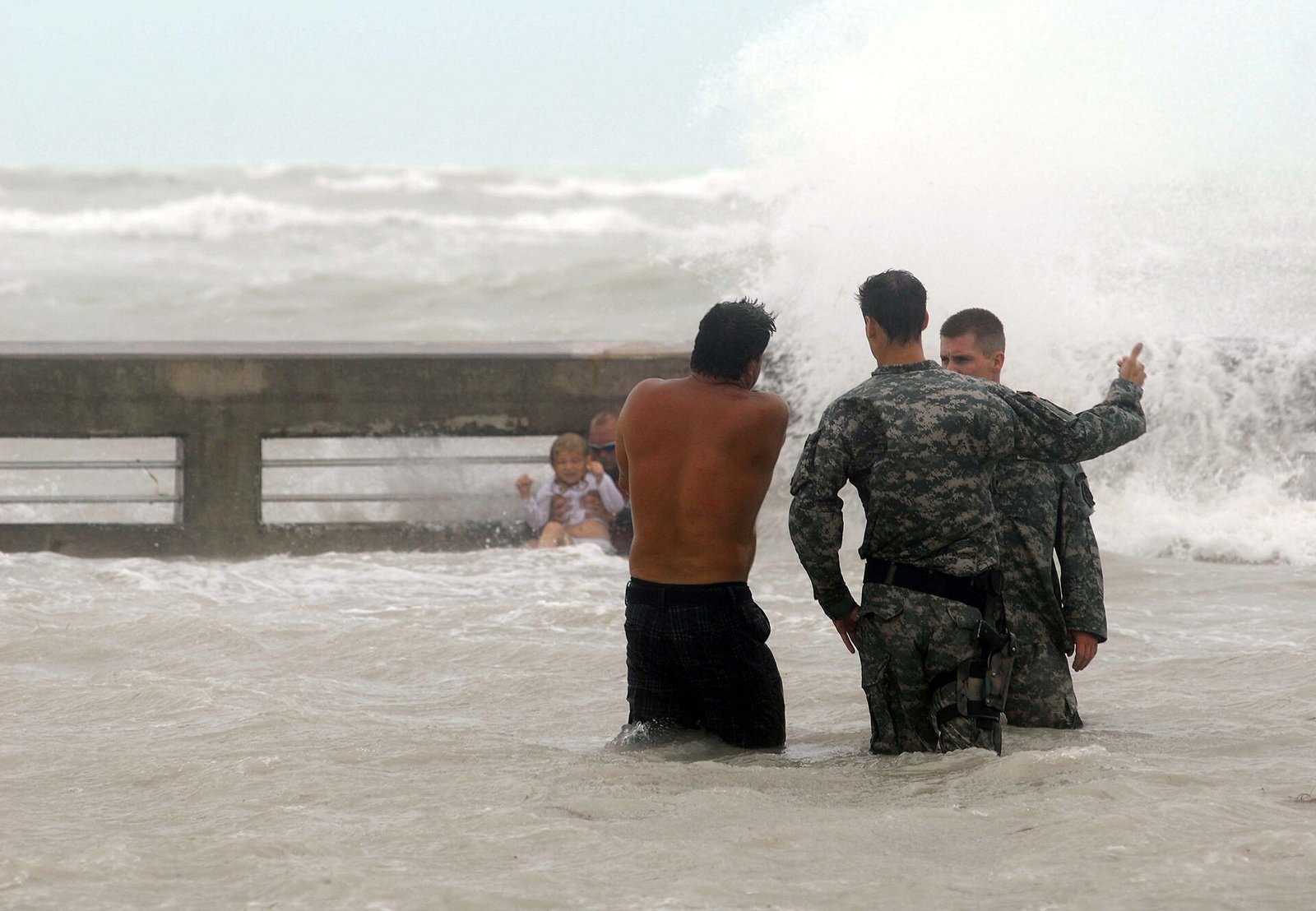
This is why forecasters beg people not to “only” prepare for the category. Satellite retrospectives of storms like Hurricane Isaias’s impact and recovery show the pattern clearly: the wind swath is narrow, the water footprint is enormous.
Landfall, the eye, and other words in every storm report
- Landfall: the moment the centre (eye) of the storm crosses the coastline. A hurricane can batter a coast for a day without making landfall if its centre stays just offshore — and “the storm has not yet made landfall” does not mean “the storm has not yet arrived.”
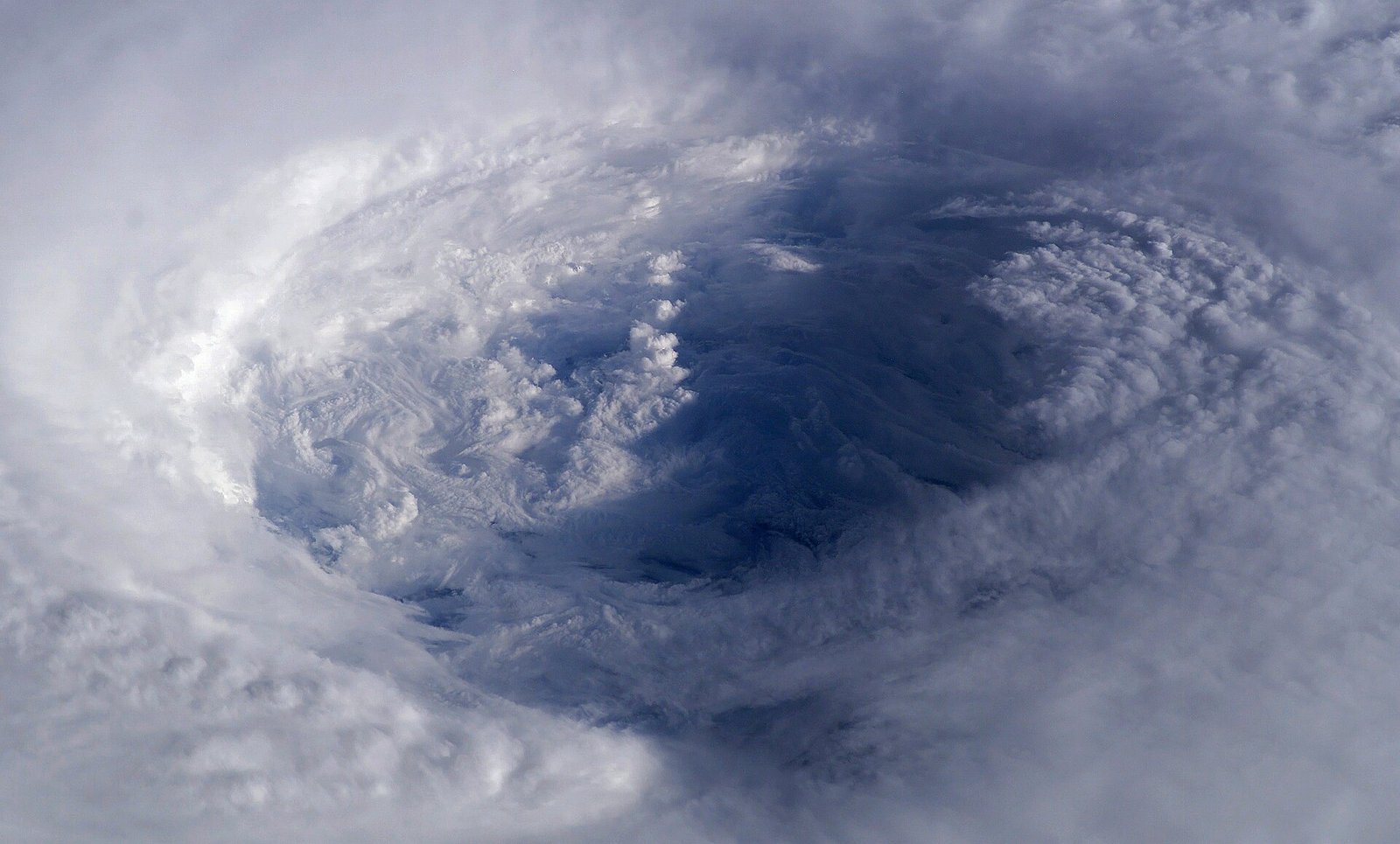
- Eye: the calm, roughly circular centre of a strong hurricane — sometimes 20–40 miles across — where winds drop and the sky can briefly clear. The worst winds ring it, in the eyewall.
- Storm surge vs storm tide: the surge is the storm-driven rise alone; the storm tide is the surge added to the astronomical tide — the water level people actually experience.
- Cone of uncertainty: the forecast graphic showing where the storm’s centre is likely to travel — not the size of its impacts. Damaging wind, surge and rain routinely extend far outside the cone.
- Nor’easter: a different beast entirely — a powerful low-pressure storm off the US East Coast whose strongest winds blow from the northeast. Nor’easters are not tropical, peak in the cold months, and drive coastal flooding and blizzards rather than surge-and-eyewall damage.
Tornadoes have their own scale: the EF scale
Because hurricanes spawn tornadoes, storm coverage uses a second scale — the Enhanced Fujita (EF) scale, which rates tornadoes by the damage they cause (wind speeds are estimates back-calculated from that damage): EF0: 65–85 mph · EF1: 86–110 · EF2: 111–135 · EF3: 136–165 · EF4: 166–200 · EF5: over 200 mph. The two scales are not interchangeable: a hurricane’s category is measured directly by instruments and aircraft; a tornado’s EF rating is usually assigned by survey teams after it passes.
How storms get their names — the 2027 list
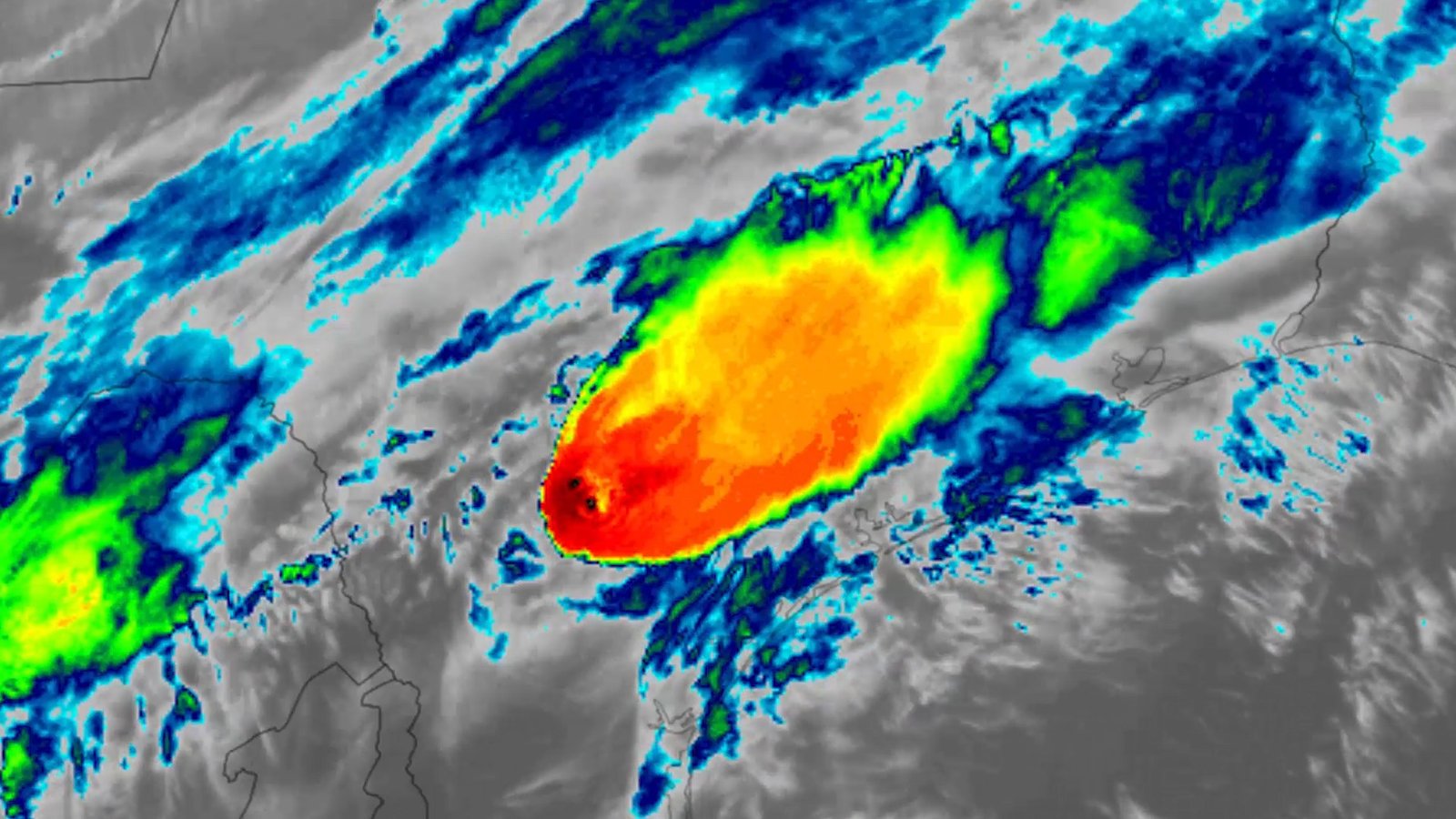
Atlantic storms have been named since the early 1950s. Today the lists are maintained by the World Meteorological Organization, which keeps six lists in a six-year rotation — the 2027 list is the 2021 list recycled, with one change: names of storms so deadly or costly that reuse would be insensitive are retired, and Imani replaces Ida (retired after 2021). A storm takes the next name on the list when it reaches tropical-storm strength. If a season ever exhausts all 21 names, additional storms draw from a separate WMO-approved alternate list — the Greek alphabet, used in the extraordinary 2020 season, was dropped.
The official 2027 Atlantic hurricane season names:
Ana · Bill · Claudette · Danny · Elsa · Fred · Grace · Henri · Imani · Julian · Kate · Larry · Mindy · Nicholas · Odette · Peter · Rose · Sam · Teresa · Victor · Wanda
The season itself runs from June 1 to November 30, 2027 — though storms occasionally form outside those dates and simply take the next name from the list for the calendar year they form in.
Same storm, different ocean, different name
The naming and category system above is the Atlantic’s. The physics is global: the eastern and central Pacific run their own name lists under the same WMO system — the season that produced the Pacific storms in our Hawaii–Hurricane Lowell coverage — and in the western North Pacific, a cyclone with sustained winds over 150 mph earns the additional label “super typhoon.” Different basins, different lists, one vocabulary of wind, water and warnings.
Pair this guide with the year’s other great sky events in our 2027–2028 eclipse calendar — and when the next named storm forms, this page is where its category, its surge threat and its place in the alphabet will be explained.
Frequently asked questions
What wind speed is a Category 3 hurricane?
111–129 mph sustained winds. Category 3 is the threshold of a major hurricane — the level at which the National Hurricane Center expects devastating damage, with electricity and water potentially unavailable for days to weeks.
What is a major hurricane?
Any hurricane rated Category 3, 4 or 5 on the Saffir-Simpson scale — sustained winds of 111 mph or higher.
Is there a Category 6 hurricane?
No. The scale tops out at Category 5 (157 mph and above), which already describes near-total destruction. Proposals for a Cat 6 appear after extreme storms, but the National Hurricane Center maintains five categories.
What is storm surge?
The abnormal rise of water generated by a storm, over and above the predicted astronomical tide — the sea pushed ashore by the hurricane’s winds. It is historically the deadliest hurricane hazard, and it is not reflected in the storm’s category.
What does landfall mean?
The moment the centre of the storm — its eye — crosses the coastline. Dangerous wind, surge and rain begin many hours before landfall and extend well beyond the landfall point.
What are the 2027 hurricane names?
Ana, Bill, Claudette, Danny, Elsa, Fred, Grace, Henri, Imani, Julian, Kate, Larry, Mindy, Nicholas, Odette, Peter, Rose, Sam, Teresa, Victor and Wanda — the official World Meteorological Organization list maintained by the National Hurricane Center.
Hurricane vs tropical storm — what is the difference?
Wind speed. A tropical storm has sustained winds of 39–73 mph (and carries a name); at 74 mph it becomes a hurricane and takes a category. Below 39 mph it is a tropical depression, identified by number.
Sources
- National Hurricane Center — Saffir-Simpson Hurricane Wind Scale: https://www.nhc.noaa.gov/aboutsshws.php
- National Hurricane Center — Tropical Cyclone Names (WMO six-list rotation; retired names; the Atlantic lists 2026–2031 including the full 2027 list): https://www.nhc.noaa.gov/aboutnames.shtml