
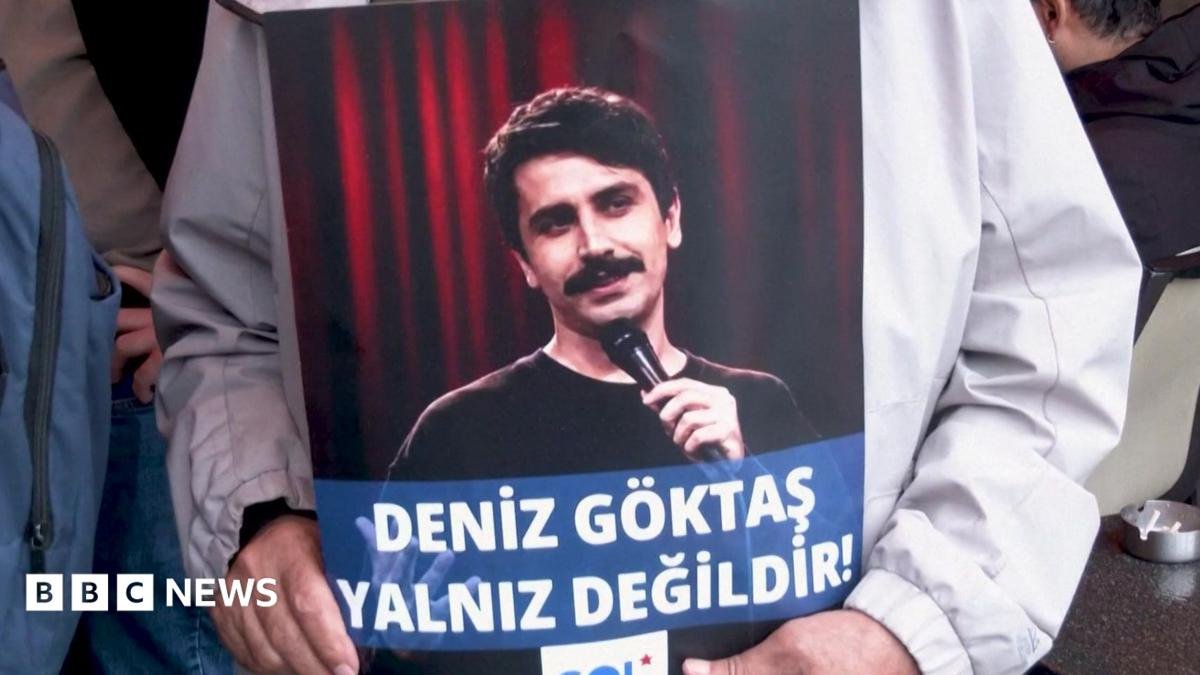
A Turkish court released comedian Deniz Göktaş after he served nearly three months in prison for insulting the president.
Why this matters
This court decision highlights the strict laws regarding political speech in Turkey. It shows how authorities use the legal system to target public figures. Many citizens now fear speaking openly about their leaders.
Also, this case reflects a larger trend of silencing dissent across the nation. Rights groups worry about the state of democracy and free expression. The situation creates a chilling effect on artists and performers alike.
A Comedian's Legal Battle
An Istanbul court recently convicted popular stand-up comedian Deniz Göktaş. The judge gave him a sentence of nearly 19 months. However, the court ordered his release for time already served.
Meanwhile, the judge placed a travel ban on the comedian. He cannot leave Turkey while the case moves to an appeals court. Göktaş faces this restriction despite his release from prison.
Prosecutors originally wanted a prison term of up to 12 years. They targeted his viral YouTube stand-up routine. One specific line called President Erdoğan a shy dictator.
However, Göktaş maintained his innocence throughout the trial. He insisted that his words were merely a political characterization. He argued that calling someone a dictator is not a crime.
Life Behind Bars and Beyond
The comedian spent 88 days in solitary confinement before his release. He returned to the courtroom with his wit still intact. He jokingly told the court that he quit smoking while locked away.
Also, his supporters gathered outside to celebrate the news. Many expressed surprise at the verdict. They did not expect a fair trial from the judicial system.
Finally, Göktaş reunited with his parents and friends after his release. He acknowledged his own happiness but pointed to others still in jail. He noted that many journalists and activists remain behind bars today.
How we got here
- July 2026: Police arrested Deniz Göktaş at Istanbul airport after he returned from a holiday.
- August 2026: Göktaş remained in solitary confinement while awaiting his formal trial.
- September 2026: The court convicted the comedian and ordered his release after 88 days served.
What happens next
The case will now proceed to an appeals court for a final decision. This process could take several months or even years. Göktaş must remain in the country during this time.
Furthermore, the comedian plans to return to the stage soon. He intends to rest with his family for a few days first. His future career may still face scrutiny from state authorities.
Finally, the broader crackdown on dissent likely will continue in Turkey. Observers will watch to see if other activists receive similar treatment. The status of other imprisoned figures remains a major concern.