
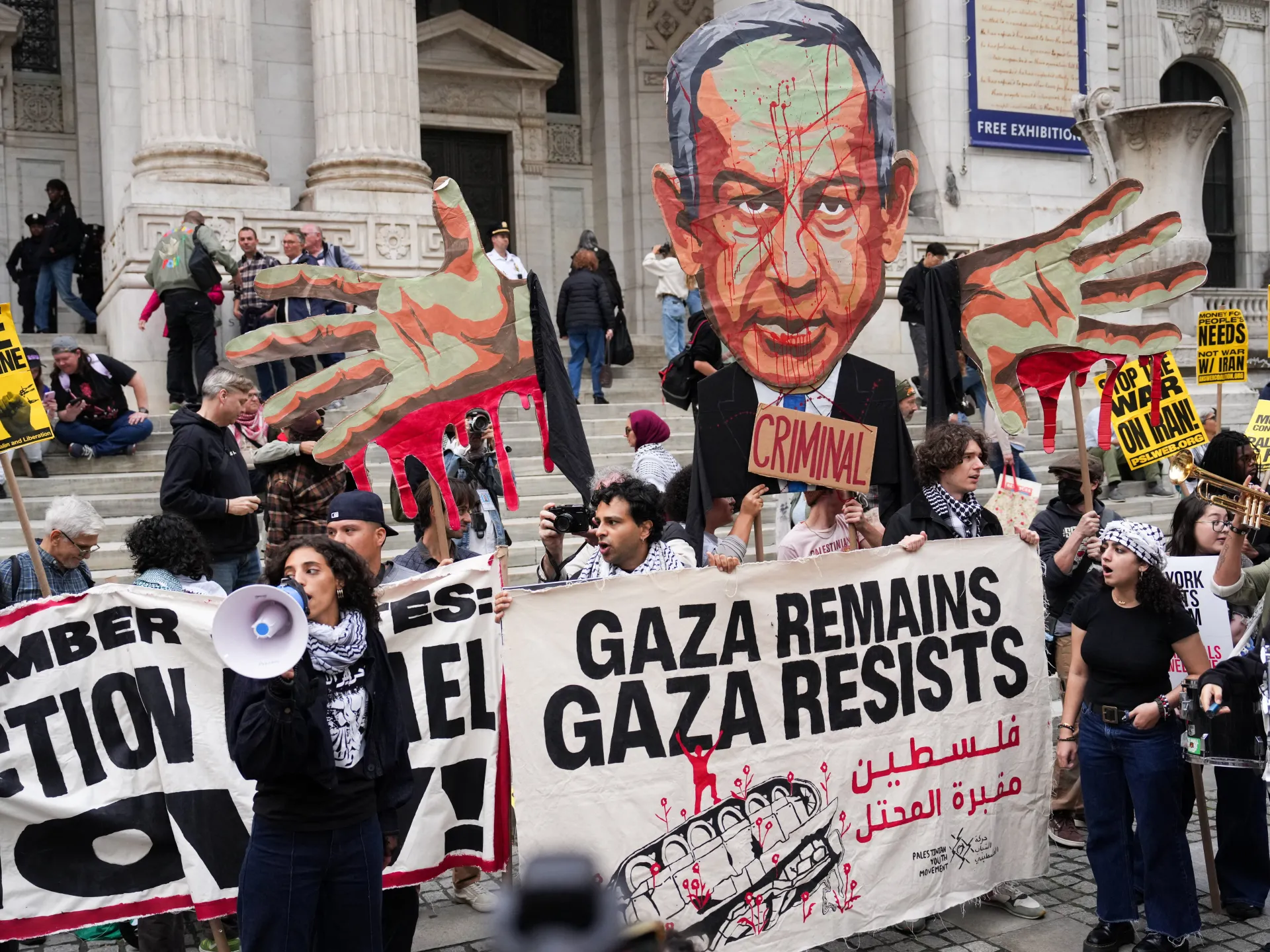
A protest near the United Nations headquarters led to the arrest of notable entertainers and local politicians as they rallied against Israeli Prime Minister Benjamin Netanyahu.
A high-profile demonstration outside the United Nations headquarters in New York City concluded in a series of arrests on Thursday as activists, including high-profile entertainers and local political figures, staged a blockade to protest the arrival of Israeli Prime Minister Benjamin Netanyahu. The assembly, which sought to challenge the Israeli leader’s presence at the annual UN General Assembly, drew a heavy law enforcement response as participants occupied thoroughfares and refused to disperse following official orders.
Among those taken into police custody were Academy Award-winning actress Susan Sarandon and Emmy-winning performer Hannah Einbinder. They were joined congressional candidate Darializa Avila Chevalier. The participants, many clad in uniform white apparel bearing slogans such as “Fund people, not bombs,” engaged in a sit-in that effectively paralyzed local traffic before officers moved to clear the scene. The arrests underscore the intensifying friction between the diplomatic community and domestic activists who argue that the international body is providing a platform to a leader they contend is responsible for human rights violations in Gaza.
The convergence of Hollywood figures and legislative officials in a direct-action protest signals a shift in the nature of political dissent regarding the Middle East conflict. When domestic political actors and public figures engage in civil disobedience alongside grassroots organizations, it elevates the visibility of foreign policy criticism from the fringes of protest movements to the mainstream media cycle. For the United Nations, this presents a unique security and diplomatic challenge: how to manage the fundamental right to protest against a visiting head of state while maintaining the neutrality and security of an international venue. This incident is not merely about the specific foreign policy grievances of the protesters; it represents a broader fracture in public consensus regarding the role of international diplomacy when that diplomacy intersects with active, high-casualty geopolitical conflicts.
While the focus at the UN headquarters centered on the arrests, the atmosphere inside the General Assembly hall was equally charged. As Prime Minister Netanyahu took the podium to address the body, a significant number of delegates exited the hall in a display of institutional protest against his administration’s current military strategy. The juxtaposition of the silent walkout inside the chamber and the vocal, physical resistance on the street highlights a bifurcated effort to isolate the Israeli leadership on the global stage.
Protesters articulated a clear moral argument against Netanyahu's presence, citing the international legal challenges the prime minister currently faces. Some participants explicitly questioned the validity of his address, referencing outstanding international warrants as a reason for his exclusion from global forums. The demonstration was not limited to the UN perimeter; concurrent gatherings, such as those at the New York Public Library, amplified the message of opposition through broader public displays, including banners and flags, ensuring that the discourse dominated the city’s political conversation during the diplomatic summit.
The individuals arrested during the demonstration now face the legal processing typical of civil disobedience charges in New York City. Beyond the courtroom, the fallout from these arrests is likely to fuel a sustained debate regarding the boundaries of free speech and the efficacy of street-level disruption in swaying foreign policy. Political analysts expect that the involvement of high-profile celebrities will ensure that the protest narrative continues to circulate on social media platforms, potentially putting increased pressure on US legislators to account for their stances on aid to Israel. Moving forward, the UN is expected to review its security protocols for visiting dignitaries to prevent future blockades, though such measures are unlikely to dampen the resolve of protest organizers who have signaled that their campaign against the current Israeli administration will continue throughout the duration of the General Assembly session.