
Israeli striker Sayed Abu Farchi was dismissed during a Nations League match against Austria after a goal celebration that officials deemed inflammatory.
The incident involving Sayed Abu Farchi transcends the boundaries of typical athletic misconduct, highlighting the increasing friction between international sporting events and the ongoing geopolitical climate. When athletes use the pitch as a platform for symbolic expression, they test the limits of FIFA’s regulatory framework regarding neutral conduct. The referee’s rapid decision to issue a second yellow card underscores the strict enforcement of Law 12, which mandates that celebrations remain free of inflammatory or provocative gestures. This case serves as a poignant reminder that even in the high-stakes environment of the UEFA Nations League, the intersection of national identity and individual action remains under intense scrutiny, particularly when the imagery chosen mirrors the instruments of conflict currently dominating global headlines.
During the UEFA Nations League match in Linz, Austria, 20-year-old Israeli forward Sayed Abu Farchi found himself at the center of a disciplinary firestorm. After scoring a 55th-minute header that equalized the match against Austria, the Colorado Rapids player engaged in a celebration that immediately drew the referee’s ire. Farchi, who plays professionally in Major League Soccer, extracted the corner flag from the pitch, kneeled, and positioned the pole in a manner that observers interpreted as a simulated weapon discharge.
The official on the field required only moments to process the action, issuing a second yellow card to the striker just four minutes after he had been initially booked. This sequence of events resulted in an immediate dismissal, leaving Israel to navigate the remainder of the match with ten men. The outcome was ultimately unfavorable for Israel, as Austria capitalized on the numerical advantage to secure a 3-1 victory, with late goals from Phillipp Mwene in the 90th minute and Sasa Kalajdzic during stoppage time.
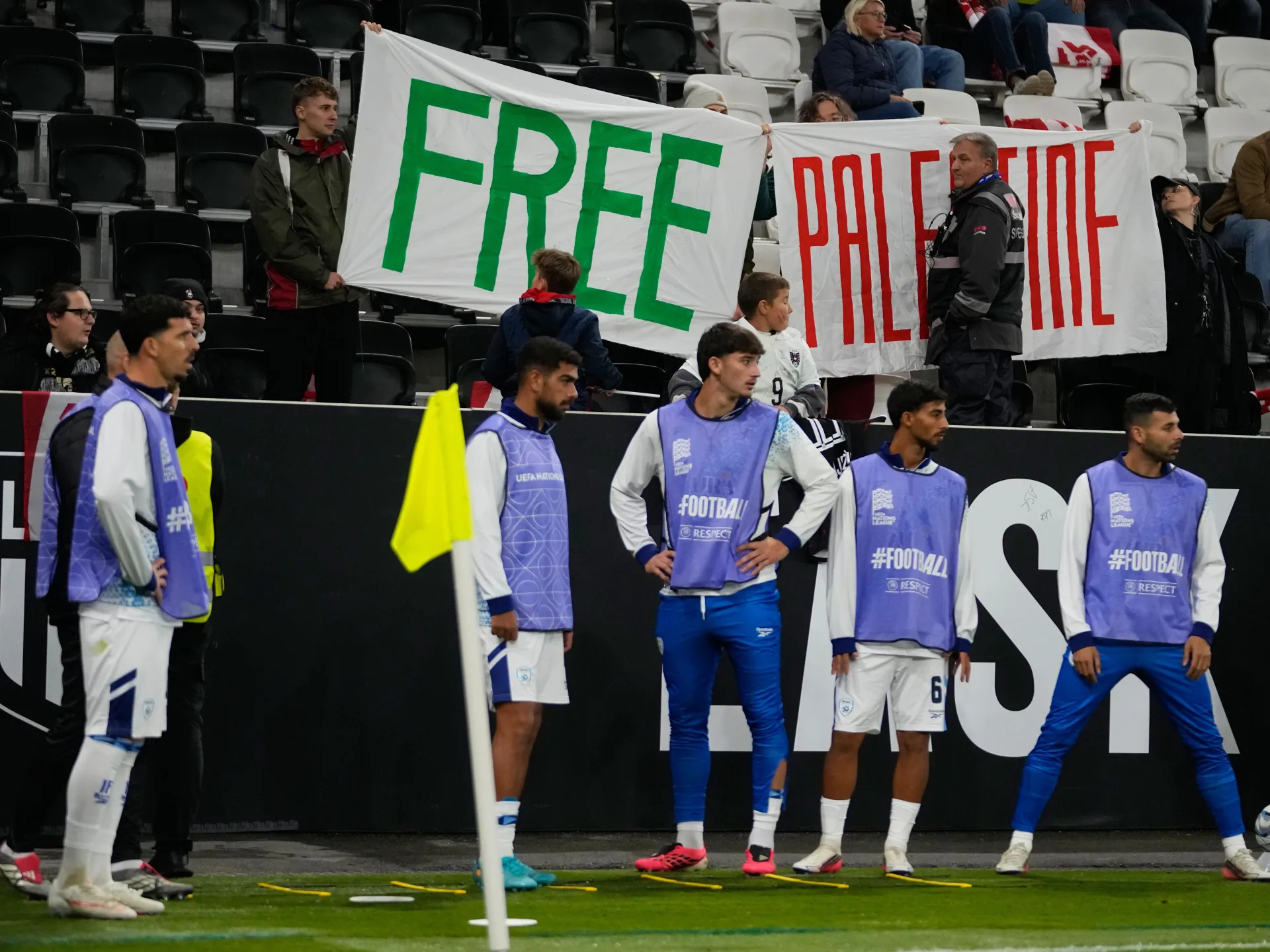
The disqualification occurred against a backdrop of broader diplomatic resistance regarding Israel’s participation in the Nations League. Various international football associations have expressed unease, with the Republic of Ireland’s football governing body confirming that their formal petition to avoid future pairings with Israel was denied y the presence of political iconography in the stands, including “Free Palestine” banners displayed during tournament play.
As UEFA continues to navigate these complex pairings, the upcoming match between Israel and the Republic of Ireland—scheduled for Sunday at the Nagyerdei Stadion in Hungary—is being closely monitored. The decision to host this contest at a neutral venue reflects the league's cautious approach to managing the heightened security and political tensions surrounding Israel’s current tournament schedule.
While the immediate consequence of the red card is a suspension for the player, the incident likely triggers an internal review ammatory” conduct clause of the IFAB regulations. Analysts suggest that the league will face sustained pressure to clarify its stance on political expression, especially as the Ireland-Israel fixture approaches. Should further protests or inflammatory gestures occur, UEFA may be forced to reconsider its current security protocols for neutral-site matches to prevent the competition from becoming a recurring venue for political demonstration.