

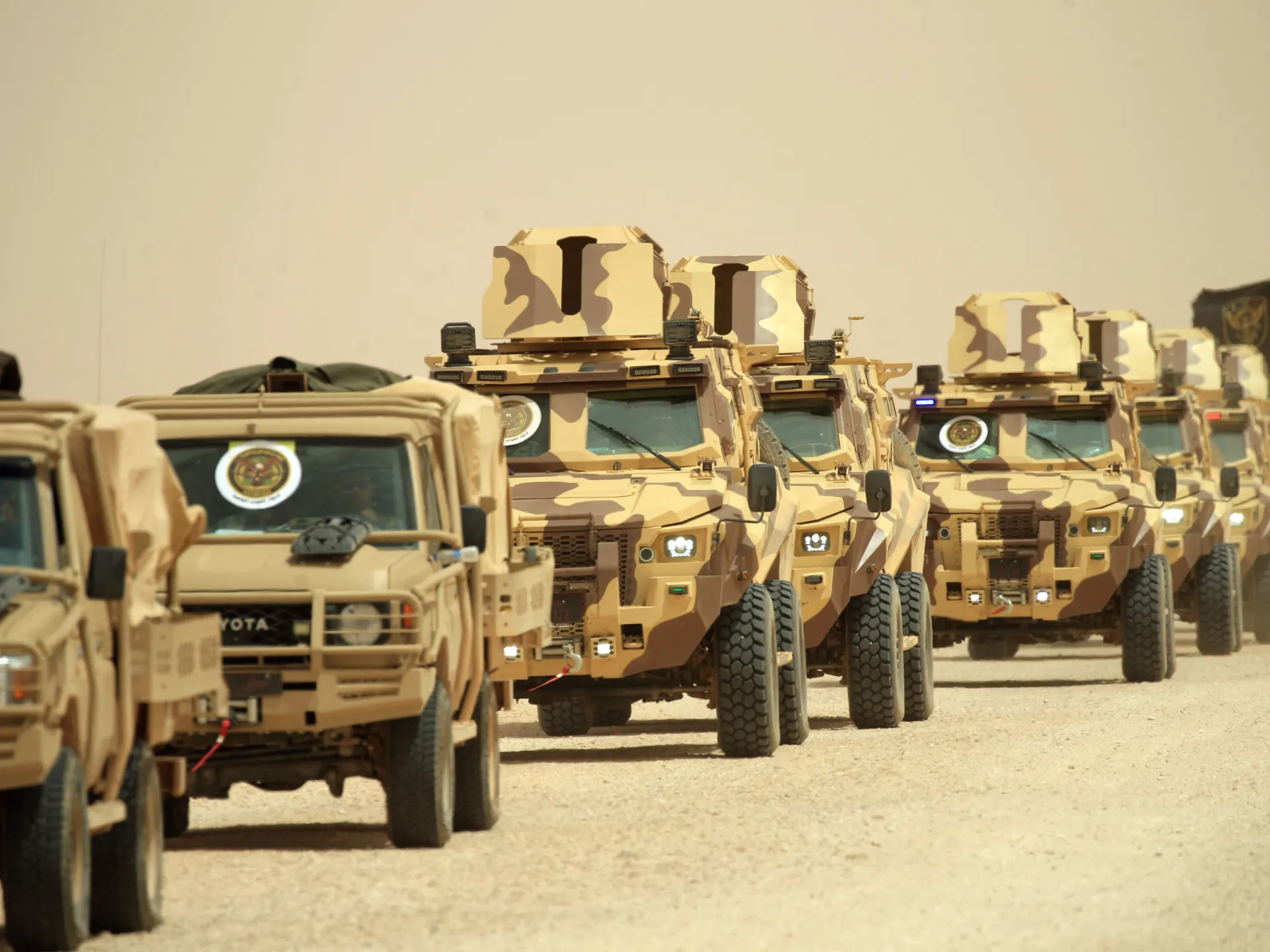
Major-General Fawzi al-Mansouri, a senior intelligence official for the eastern Libyan military, was killed in an explosive attack in Benghazi.
The security landscape in eastern Libya has been shaken head of military intelligence for the self-styled Libyan National Army (LNA). The official was killed on Monday evening in a violent explosion that occurred as he was entering his personal vehicle outside his residence in the Hawari district of Benghazi. Local security officials confirmed the incident, noting that an improvised explosive device had been strategically placed to detonate upon his departure.
This brazen attack represents a significant blow to the LNA, which maintains control over the eastern regions of the North African nation. As a key figure in the military intelligence apparatus, al-Mansouri had been tasked with overseeing sensitive security operations in a region that remains fraught with political instability and the presence of various armed factions. The precision of the strike suggests a sophisticated level of planning, raising concerns about the security protocols intended to protect high-level military leadership in the area.
In the aftermath of the explosion, the government based in eastern Libya moved quickly to address the incident. Osama Saad Hammad, the prime minister of the eastern administration, issued a formal statement denouncing the killing as a treacherous act of terrorism. He committed his government to conducting a thorough investigation to identify those responsible for the orchestration, funding, and execution of the assassination.
Hammad emphasized that there is zero tolerance for individuals who employ violence against the state. His remarks underscore a broader effort istent security threats. as an attack on the integrity of the state itself rather than a localized security failure, signaling an intent to pursue a rigorous crackdown on suspected perpetrators.
The death of al-Mansouri serves as a stark reminder of the ongoing fragility within Libya. Since the 2011 NATO-supported uprising that resulted in the removal of Muammar Gaddafi, the country has struggled to establish a unified national identity or a singular governing authority. The 2014 split between rival factions—one based in the east and the other in the west—created a fractured landscape where multiple power centers compete for influence and legitimacy.
While a 2020 ceasefire agreement was successful in halting large-scale military confrontations, the nation remains deeply divided. The LNA, which operates primarily in the east, maintains a distinct military and political structure that often finds itself at odds with the internationally recognized Government of National Unity based in Tripoli. This dual-administration system continues to complicate efforts to secure the country, as armed groups and political rivals vie for control over territory and resources.
The assassination highlights the recurring difficulty of maintaining public safety in Benghazi and surrounding areas. Despite the LNA's assertions of control, the ability of actors to plant explosives in residential districts demonstrates significant gaps in intelligence and physical security. Such events often trigger cycles of retaliation and heighten tensions between the eastern and western political blocs, potentially jeopardizing the fragile peace process that has been maintained in recent years.
Moving forward, the international community and domestic observers will be watching closely to see how the eastern administration handles the investigation. The outcome could dictate the immediate trajectory of security policy in the region. If the government fails to identify the culprits, it may embolden further attacks; conversely, a high-profile investigation could lead to increased military presence and stricter surveillance measures in Benghazi, further complicating the daily lives of residents in the pursuit of security.