

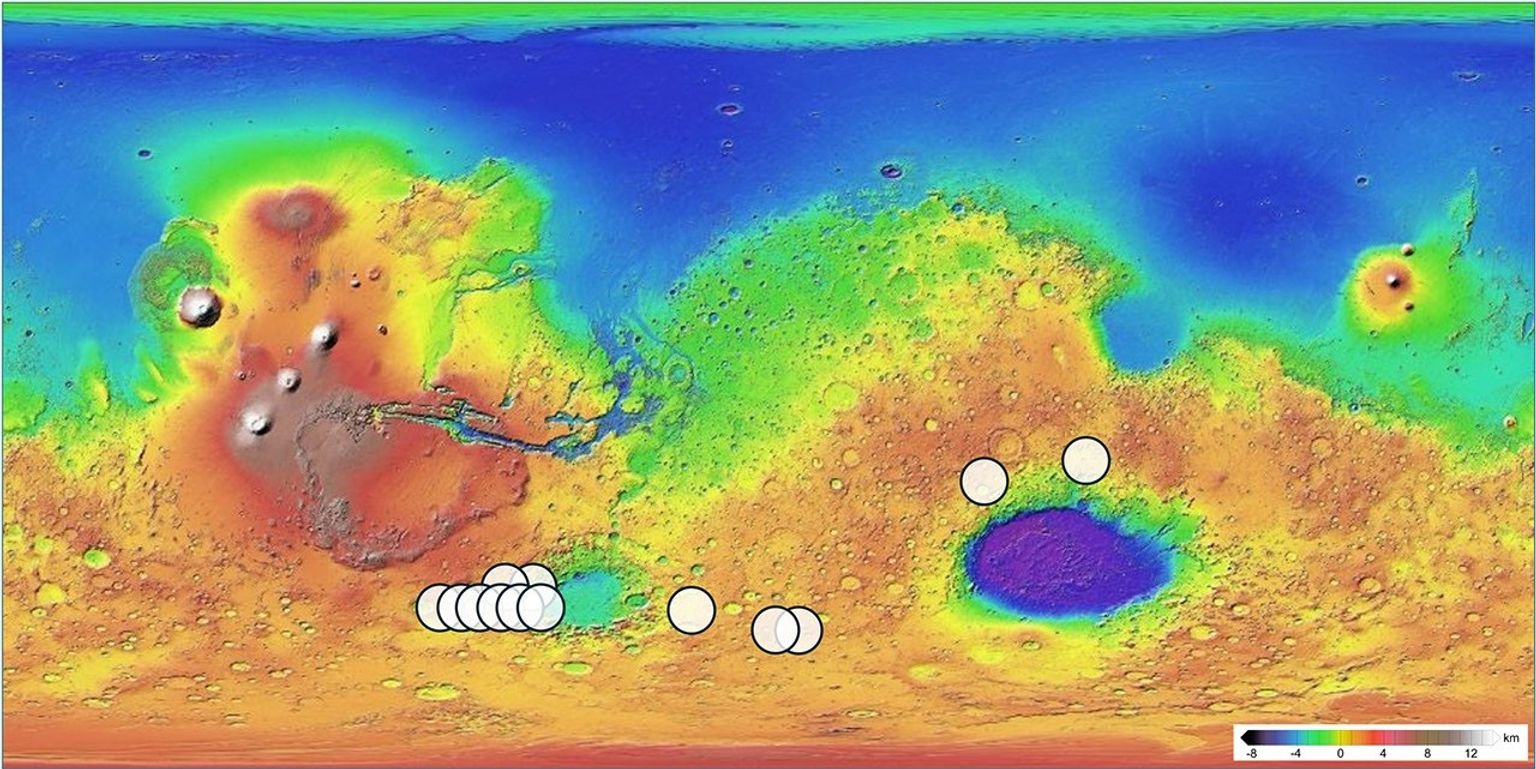
A new map identifies 13 potential locations on Mars where the ancient Teghaza 001 meteorite may have originated.
Researchers recently created a new global map of Mars. This image highlights 13 specific locations on the planet. These areas match the unique chemistry of a meteorite named Teghaza 001.
Also, experts consider Teghaza 001 one of the oldest Martian rocks found on Earth. Scientists study these space rocks to learn more about the history of Mars.
Next, the team analyzed clues within the meteorite. These details suggest the rock came from the southern highlands of the Red Planet. This region contains very old surface material.
Meanwhile, the base map uses data from NASA’s Mars Global Surveyor. The Mars Orbiter Laser Altimeter instrument provided these vital measurements. It helped experts build an accurate view of the planet.
Then, researchers used information from the Mars Reconnaissance Orbiter. This tool helped them find matching minerals in various parts of the map. They marked these spots with white circles.
However, scientists acknowledge they cannot know the exact origin for sure. Meteorites often travel long distances before landing on our planet. Mapping helps narrow down the possibilities significantly.
After that, the team compared the chemical makeup of the rock to these 13 sites. The mineralogy provides a strong link to the southern Martian landscape. This connection gives us a better picture of the planet's past.
Finally, NASA continues to these findings through its official Photojournal archive. People can explore the latest space data online. These maps turn complex science into clear visual information.