
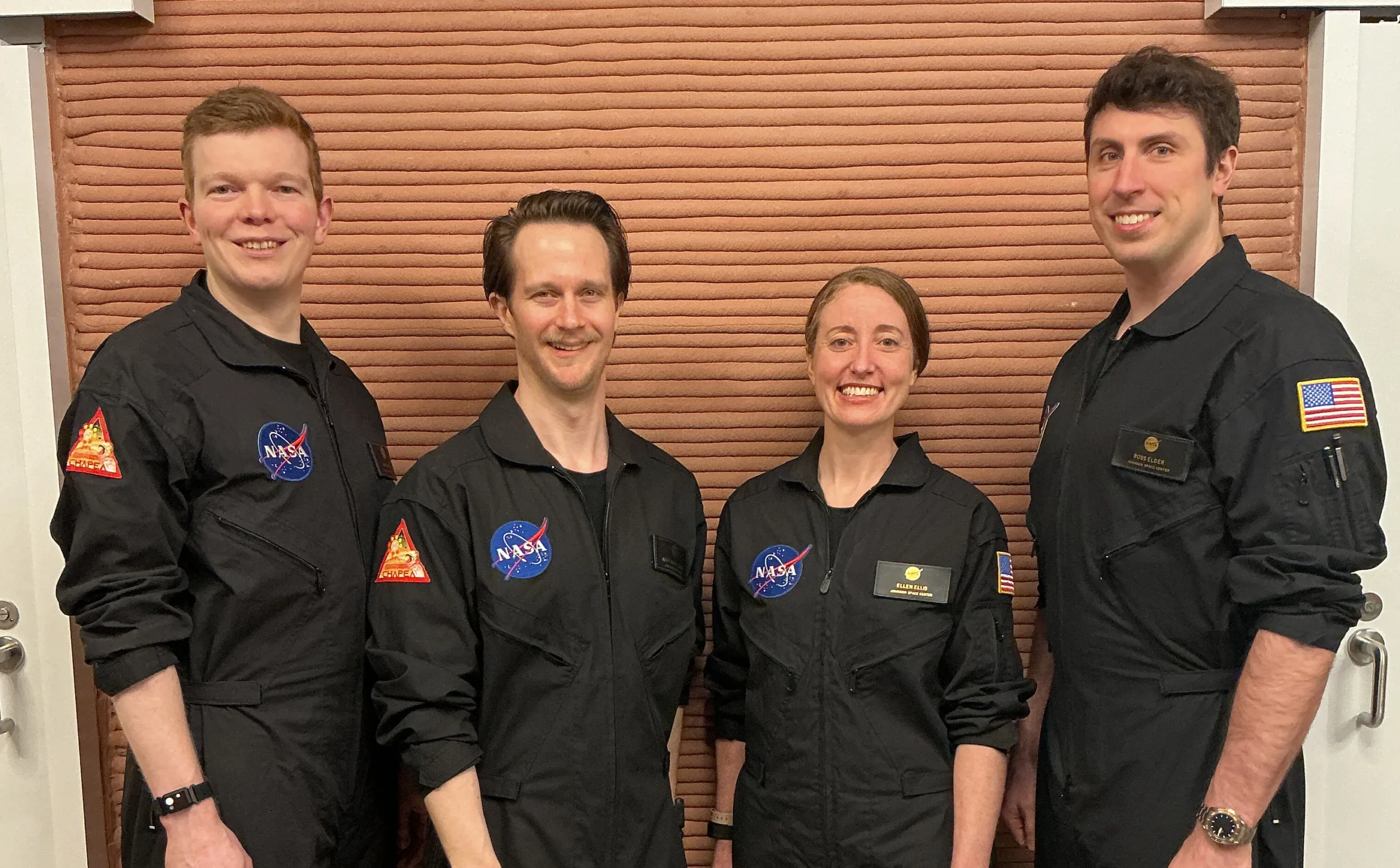
Four crew members spent one year in a simulated Mars habitat at NASA's Johnson Space Center to prepare for future deep space missions.
Four dedicated crew members recently finished one full year inside a simulated Mars habitat. They live at NASA's Johnson Space Center in Houston. This mission tests how people handle the challenges of deep space travel.
Also, the team operates within the Crew Health and Performance Exploration Analog, known as CHAPEA. They simulate life on the Red Planet by growing plants and managing sparse resources. They even perform spacewalks on a fake Martian surface.
Next, the crew includes Ross Elder, Ellen Ellis, Matthew Montgomery, and James Spicer. These four individuals entered their 1,700-square-foot home on October 19, 2025. They have spent 365 days in complete isolation.
Meanwhile, NASA scientists monitor the team closely. They collect health and performance data to study the effects of long-duration spaceflight. This information helps NASA plan for future human missions to Mars.
After that, the crew will leave their habitat on October 31. They will finally reunite with their families in person. They have only communicated through email during the past year due to simulated delays.
Now, the team must complete two weeks of debriefings. These sessions allow researchers to study how the crew adapted to life in isolation. Experts want to learn how to keep future astronauts healthy and productive.
For example, the data shows how limited food supplies affect mission goals. It also helps NASA improve support systems for long communication delays. These delays can last up to 45 minutes each way.
Still, this mission provides vital insights for space agencies. Michael Stenger says the study helps them understand medical and psychological care needs. The results will support future exploration of the Moon and beyond.
Finally, the Human Research Program continues its important work. They study how space travel changes human bodies and behaviors. This research ensures astronauts stay safe as they travel further into our solar system.