
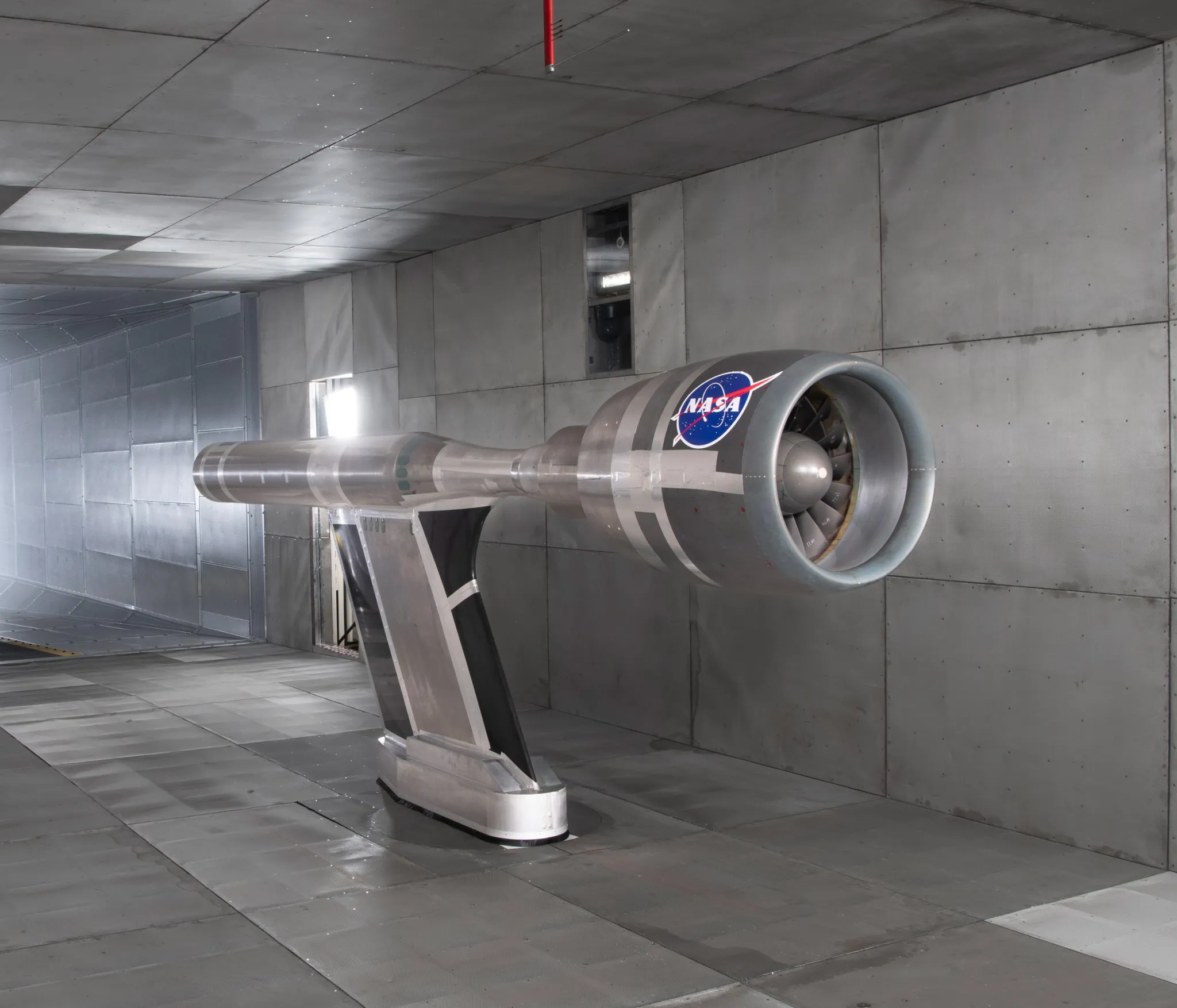
NASA Glenn Research Center uses advanced facilities like wind tunnels and acoustic labs to study engine noise and improve aircraft design.
NASA Glenn Research Center operates several world-class facilities for testing aircraft engines. These sites allow researchers to study aerodynamics and acoustics in controlled environments. Key facilities include the 9- by 15-Foot Low-Speed Wind Tunnel and the Aero-Acoustic Propulsion Laboratory.
The 9- by 15-Foot Low-Speed Wind Tunnel helps scientists study engine noise during takeoff and landing. Recent upgrades improved airflow and reduced background noise for better accuracy. A new microphone system now tracks sound from experimental engine parts.
Meanwhile, the Aero-Acoustic Propulsion Laboratory uses a large dome to minimize community noise. This dome features thousands of fiberglass wedges to prevent sound reflections. It currently houses specialized rigs for testing jet nozzles and turbofan engines.
The Small Hot Jet Acoustic Rig is one of these important test tools. It helps scientists understand how jet flow creates noise. Researchers use advanced measurement techniques to map turbulence and validate computer models for quieter engine designs.
Also, the Nozzle Acoustic Test Rig evaluates noise reduction concepts before full-scale testing. It simulates flight conditions to test military and commercial engine models. This facility has helped discover important technologies like chevron nozzles used on modern planes.
Additionally, the DGEN AeroPropulsion Research Turbofan serves as a flexible test bed. It provides data on engine performance and noise sources. This information helps engineers improve turbofan predictions and develop new mitigation strategies.
Finally, the Acoustical Testing Laboratory supports both aeronautics and space exploration missions. This chamber uses rubber and fiberglass to create a quiet testing space. It helps calibrate equipment and test components for the International Space Station.
These facilities allow NASA to explore complex acoustic challenges. By testing scale models, engineers time and money. These efforts ultimately lead to quieter and more efficient aircraft for the public.