

Experts say recovery for earthquake survivors will likely be a lifelong endeavour, given the physical and mental toll.
Ricardo Contreras’s new leg rests on a wooden countertop.
More than four months after twin earthquakes struck Venezuela, the 24-year-old is still recovering from his injuries.
When he was trapped beneath the rubble on the night of June 24, he waited hours to be rescued. His left leg had been pinned beneath a fallen door frame, limiting its blood circulation. It had to be amputated.
“One of the biggest achievements is that we survived,” Ricardo said, glancing towards his 16-year-old brother, Andres Contreras. “At first, when I found out Andres was well, I didn’t care about my leg too much. I would have chosen a thousand times over for Andres to be OK.”
But now Ricardo is adapting to his new reality.
He and his brother are still undergoing physiotherapy for their injuries. On a scorching afternoon, he sits in a small workshop in the hills of northwestern Caracas, waiting to do rehabilitation exercises to prepare for his new prosthetic leg.
“Now it’s about regaining a little of the independence I had before the earthquake, because that’s what limits me most,” Ricardo said.
But recovery is only part of the challenge he is facing. His parents died in the collapse.
Resources and aid have also grown scarcer, particularly as global attention faded and international donations dried up.
As of September, the United Nations Children’s Fund (UNICEF) said it had secured only $29.5m of the $65.7m needed to continue its earthquake support in Venezuela, a shortfall of 55 percent.
Separately, that same month, the International Red Cross said its Venezuela response effort was only 39.8 percent funded.
Not only are survivors like Contreras left to grapple with loss of limbs and family members, but they now face the prospect of lifelong health costs — with dwindling support.
From rescue to recovery
More than 6,500 people have been confirmed dead as a result of the earthquakes, according to government authorities.
At least 226,696 people have received hospital treatment for injuries. The government says it has compiled a census of amputees, but no details have been made public.
At Ortoprotecnica, a Caracas workshop that makes prosthetic limbs, director Bianca Damaso is helping survivors like Ricardo through the next stages of recovery.
For those who have lost limbs, it typically takes two to three months of physiotherapy, rehabilitation and preparation to be ready for a prosthesis — sometimes longer depending on how their wounds heal and any pre-existing health conditions.
“It’s a very individual process where you have to support each person from where they are, because some are very anxious to have the prosthesis already, but their skin hasn’t even healed yet,” Damaso explained.
She said there are more than 100 types of knees to choose from, as well as more than 200 skin shades.
But the process does not end with the first fitting. Children may need five or six replacement prostheses as they grow, while adults might require ongoing adjustments and repairs.
Then there are the psychological hurdles. Many earthquake survivors wonder about practical realities like whether they will walk again, whether they will need a wheelchair or whether they will be able to urinate independently.
Many, in Damaso’s experience, also question whether they will find a partner who will love them.
“Right now, the challenges for them are going to be more than just physical. They’re mental battles,” Damaso said.
There is one rule she is adamant about in her workshop: “We tell them that the only thing that’s forbidden here is saying, ‘I can’t.’”
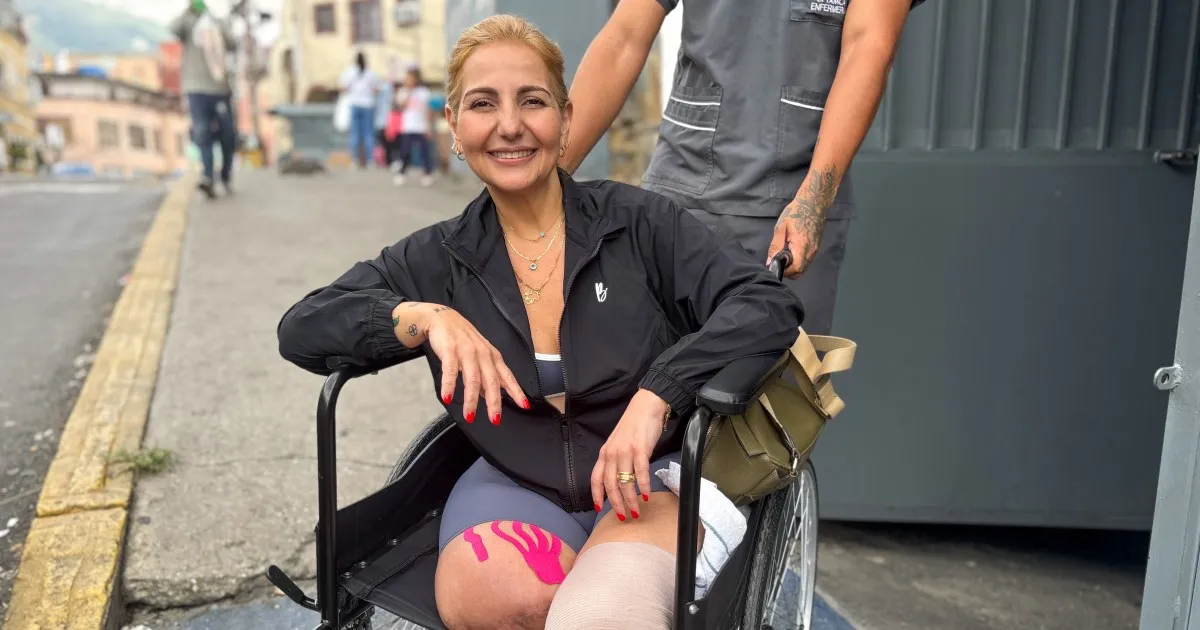
“That motivates me every morning to get up and say, ‘One day less to go.’ It’s painful, yes, but we’re getting closer to the goal,” Bechara told Al Jazeera.
Before the earthquake, Bechara ran her own business and had an active life, training regularly with high-intensity CrossFit workouts. Her children saw her as an independent mother who did not depend on anyone.
“Now I am the opposite, a mum who needs their help, a dependent mum,” Bechara said.
After the earthquakes struck, Bechara was stuck in the rubble for 23 hours, immobilised by a piece of heavy furniture that crushed her legs.
She describes her recovery as an “emotional rollercoaster”. She said she allows herself to cry on the harder days but tries to keep looking ahead.
“Because if I don’t see the future for myself, no one else will.”
More than just limbs
But readjusting to routines can be difficult for those who have sustained life-altering injuries — not to mention other losses.
So far, Ricardo is optimistic about his daily activities. He has resumed work at his family’s truck parts business, as well as his university studies. A new semester of classes has started, and he uses crutches to get around.
“I was really quite nervous. I was even worried about where the classes will be because we have three floors and also the distances are long,” Ricardo said.
But his concerns quickly melted away. The professors even moved his lessons to ground-floor classrooms to make the courses more accessible.
“It was actually great going back,” Ricardo explained. “My classmates have always been there, helping me.”
The most difficult adjustment, however, has been grappling with the loss of loved ones.
“If my leg hurts, I take a pill, but with that, there’s nothing I can do. There’s no cure, there’s no remedy, there’s nothing,” Ricardo told Al Jazeera.
His mum and dad both died from suffocation during the earthquakes while the family was waiting to be rescued. Their building was one of dozens in the state of La Guaira to collapse.
“I fell in the bathroom hugging my mother, and Andres fell near my father. She was telling me she was fine, but I saw that her head was covered with concrete, with a wall on top, and dust,” Ricardo said.